Skid Fabrication
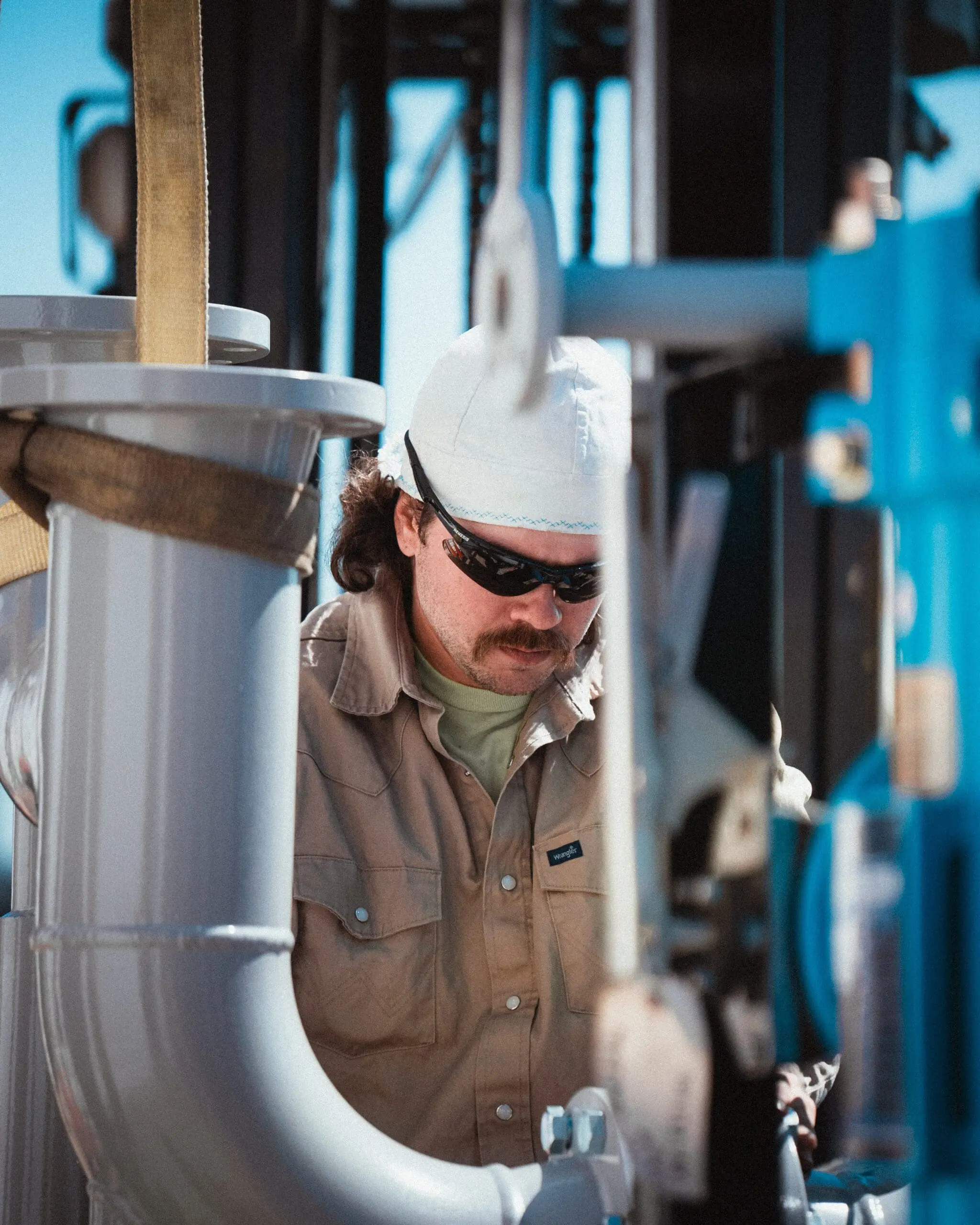
CUSTOM SKID FABRICATION IN ILLINOIS
Custom Industrial Skid Fabrication for Process, Pump & Utility Systems
DePue Mechanical fabricates custom mechanical skid systems for industrial plants across Illinois. From field verification and constructability coordination through structural fabrication, piping, equipment setting, QA/QC, testing and onsite installation, our team helps move complex mechanical work out of the operating facility and into a controlled shop environment.
We fabricate process skids, pump skids, utility skids, chemical feed and dosing skids, heat exchanger skids and other project-specific mechanical packages around equipment selected for your process.
CUSTOM SKID FABRICATION
Skid Fabrication From Shop to Site
- When Modular Skid Fabrication Makes Sense
- Process, Pump, Utility & Equipment Skids Built Around Your Project
- Field Verification Before Fabrication
- VDC, Constructability & Fabrication Coordination
- Equipment Procurement & Mechanical Integration
- Industrial Skid Fabrication in Our Illinois Fab Shop
- QA/QC Documentation Built Into the Fabrication Process
- Hydrotesting, Inspection & Project-Specific NDE
- Factory Acceptance Testing Before the Skid Leaves the Shop
- Transportation, Rigging & Onsite Skid Installation
- Mechanical Startup Support After Installation
- Built for Plants, Engineers & General Contractors
- What Helps Us Scope a Custom Skid Project
- Process Skid Fabrication for an Operating Chemical Facility
When Modular Skid Fabrication Makes Sense
A skid can move a significant portion of mechanical fabrication and assembly away from the active jobsite and into a controlled shop environment. For operating plants, that can be especially valuable when installation windows are limited, production must remain online, or multiple trades and systems need to come together in a constrained area.
DePue works with plants, engineering firms and general contractors on skid packages for new process lines, plant expansions, equipment replacements, utility upgrades and process modifications.
- Reduce field fabrication inside active production areas
- Complete shop and field work in parallel when the schedule allows
- Minimize work required during planned shutdown or tie-in windows
- Improve access for fabrication, inspection and testing
- Preassemble piping, equipment and structural components before delivery
- Reduce field fit-up and modification risk through earlier coordination
- Support safer, more controlled fabrication conditions
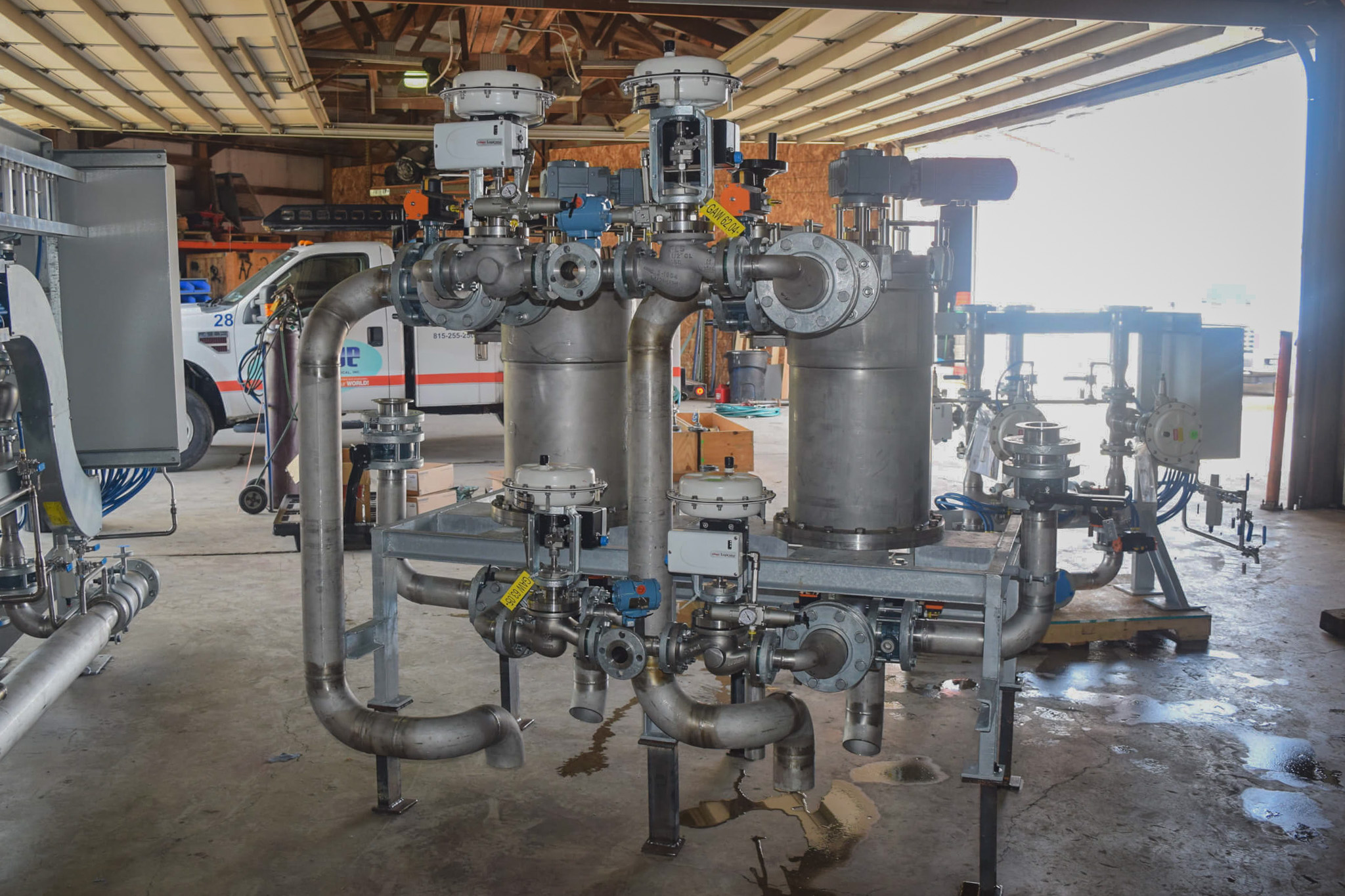
Process, Pump, Utility & Equipment Skids Built Around Your Project
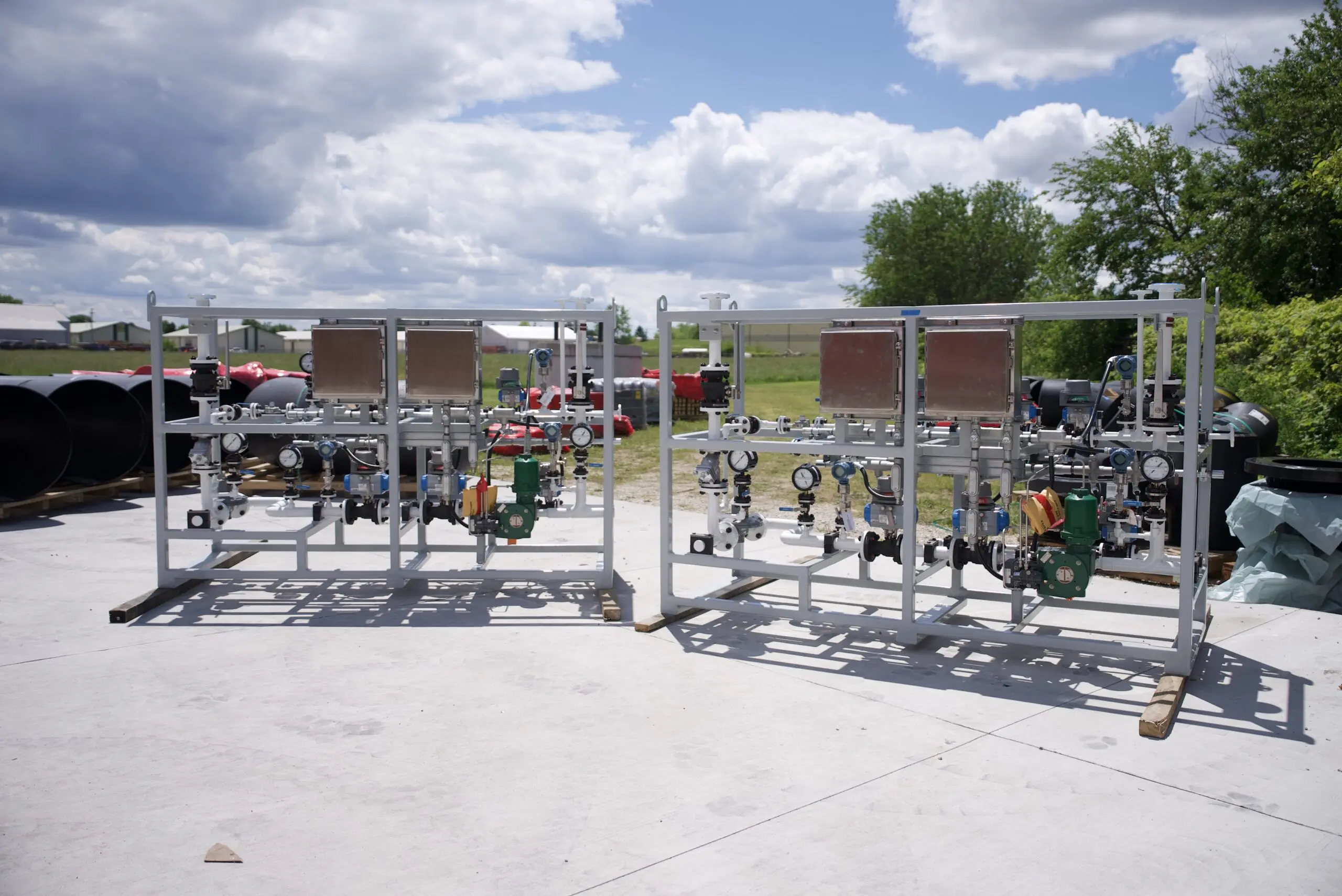
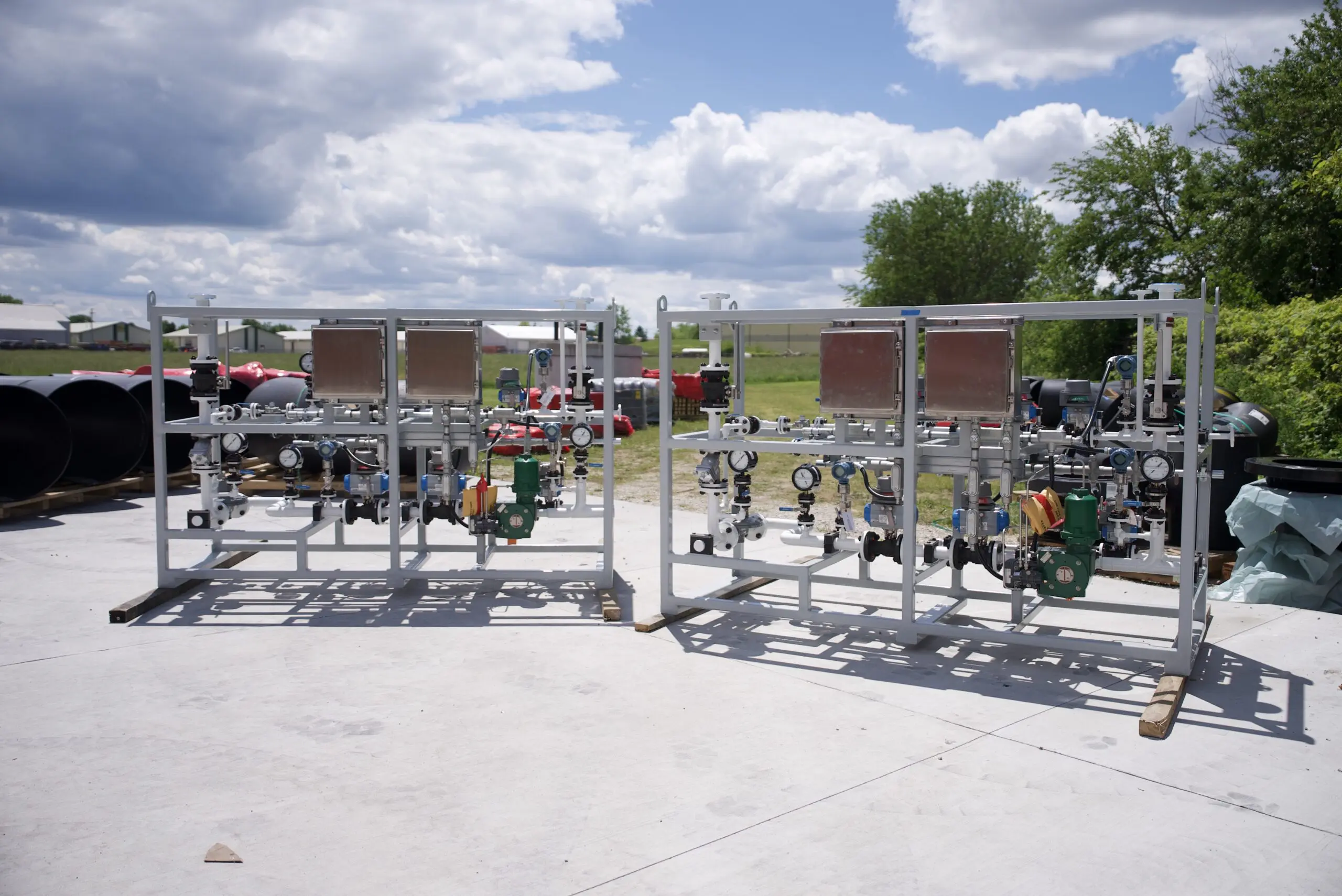
DePue fabricates custom skid packages around the requirements of the process—not around a standard catalog configuration. Depending on the project, we can procure specified third-party equipment, fabricate the structural frame and piping, set equipment, install valves and mechanical instrumentation, complete required testing and install the finished skid onsite.
DePue does not manufacture the pumps, tanks, heat exchangers, instruments or other proprietary process equipment. Instead, we procure project-specified equipment from the appropriate manufacturers when included in our scope and integrate it into the mechanical skid package.
- Process skids
- Pump skids
- Utility skids
- Chemical feed and dosing skids
- Heat exchanger skids
- Equipment skids
- Mechanical skids
- Piping skids and modular piping assemblies
- Valve and manifold assemblies
- Other custom skid-mounted mechanical systems
Planning a custom mechanical skid?
Discuss Your Skid Project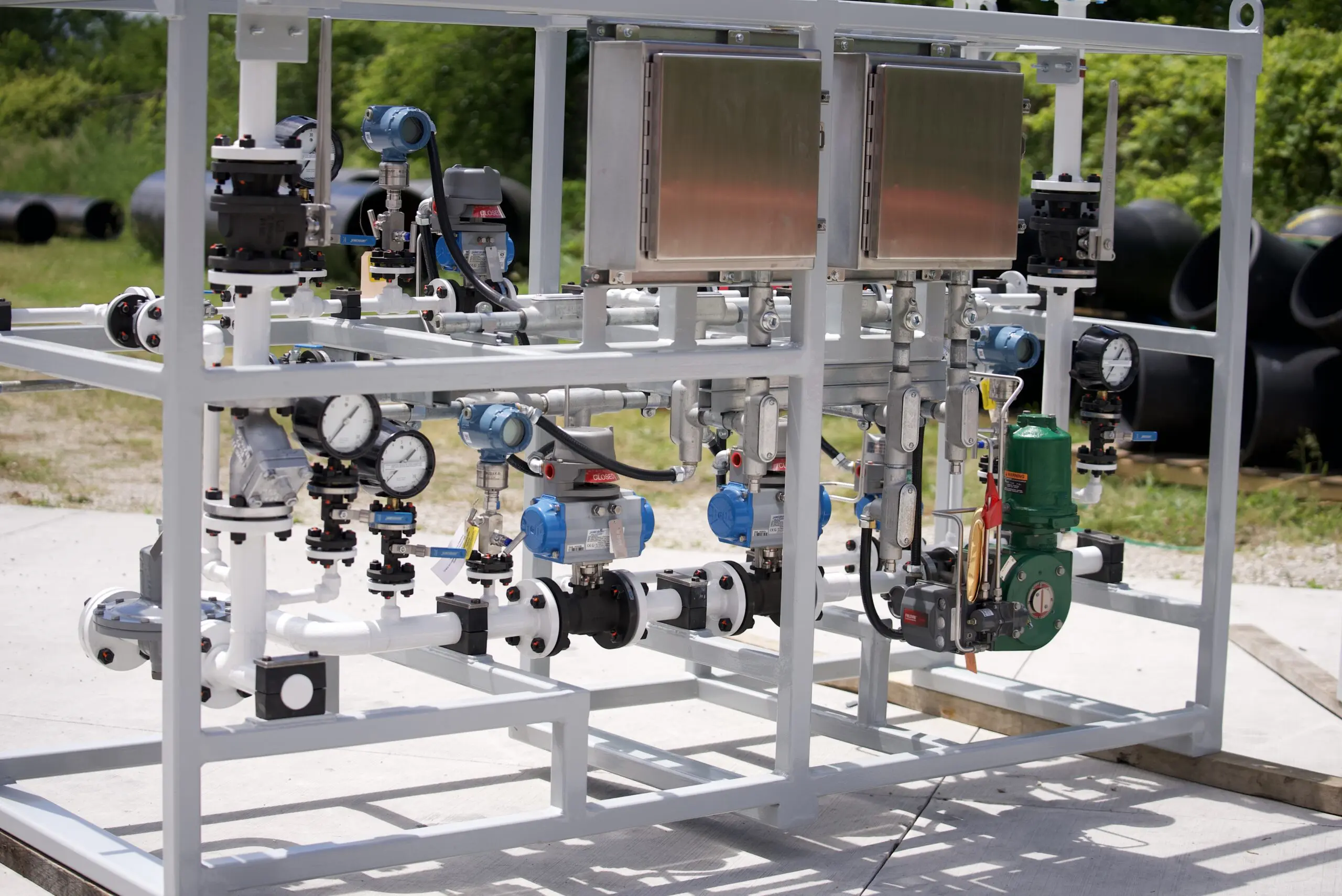
Field Verification Before Fabrication
A skid only creates an installation advantage if it fits the facility where it is going.
DePue normally performs field verification on skid projects to confirm existing conditions, connection points, available space, access, clearances and installation constraints before fabrication progresses. When conditions are complex or additional spatial information is needed, 3D scanning can be incorporated into the verification and coordination process.
This allows potential installation conflicts to be addressed while the skid can still be modified efficiently in the shop rather than during a critical field installation window.
- Existing-condition verification
- Tie-in point confirmation
- Field measurements
- Equipment and piping clearances
- Access and rigging considerations
- Installation sequencing review
- Shutdown and tie-in requirements
- 3D laser scanning when appropriate
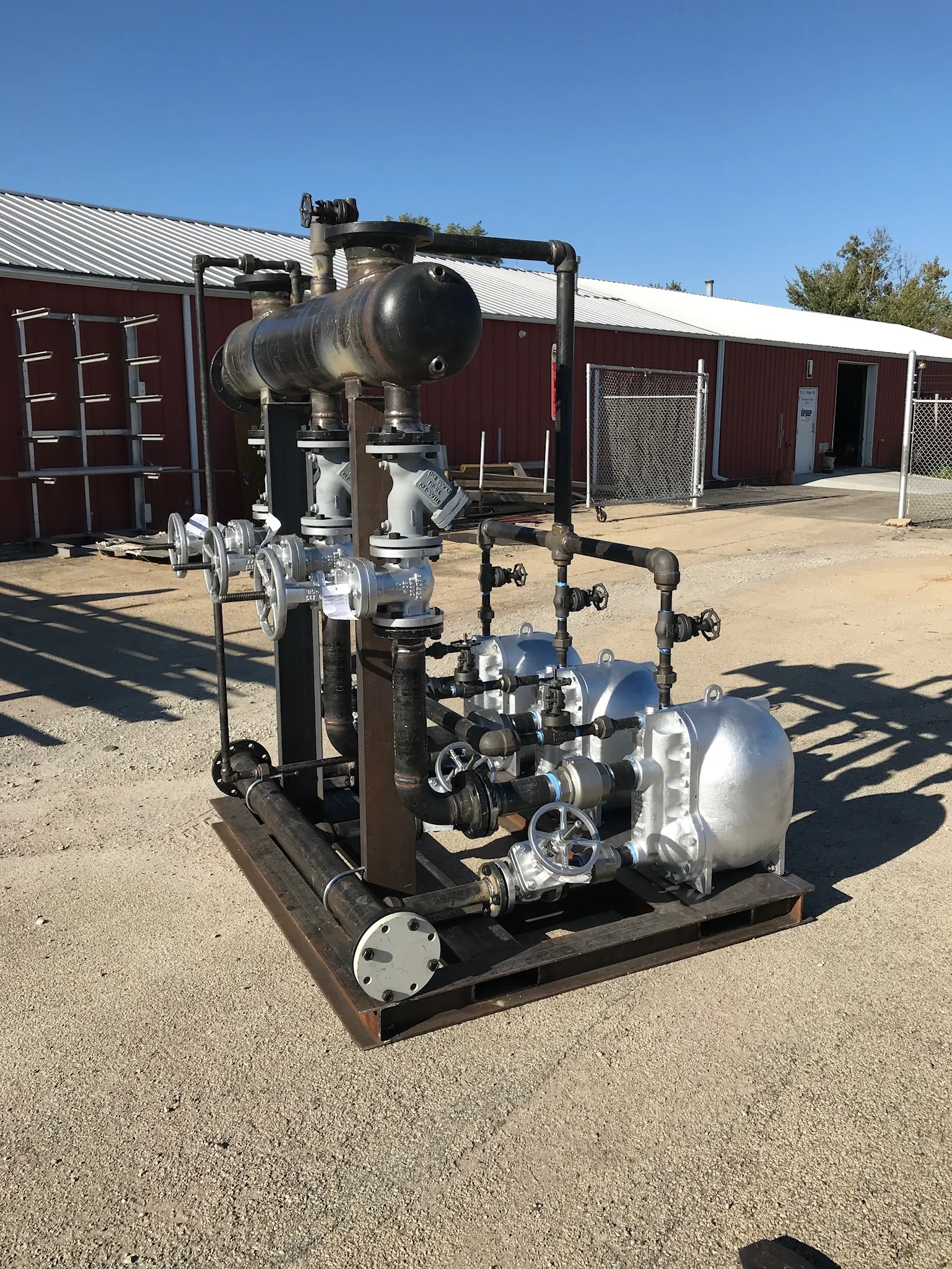
VDC, Constructability & Fabrication Coordination
Skid fabrication requires coordinated information before steel and pipe reach the shop floor. Isometrics, spool drawings, bills of material and related fabrication documents are normally provided by the owner, engineer or other project design party.
When additional support is needed, DePue's BIM and VDC team can assist with constructability, layout and fabrication coordination for applicable projects.
The goal is not simply to model the skid. It is to make sure equipment, piping, structural framing, connection points and field interfaces can be fabricated and installed as intended.
- Review of project drawings and specifications
- Constructability coordination
- Skid and equipment layout support
- Piping routing coordination
- Structural and mechanical interface review
- Fabrication detailing support when included in scope
- Coordination with engineer-provided isometrics and spool drawings
- BIM/VDC coordination with surrounding systems
- 3D coordination where project conditions warrant it

Equipment Procurement & Mechanical Integration
DePue can procure project-specified pumps, heat exchangers, tanks, instruments and other equipment from third-party manufacturers when included in our scope. Once received, our team integrates that equipment into the mechanical skid package.
This provides plants, engineers and project managers with a mechanical contractor capable of coordinating equipment receiving, structural fabrication, equipment setting, piping and mechanical instrumentation rather than managing each element as a separate field activity.
Electrical and controls wiring remains the responsibility of the appropriate electrical or controls contractor.
- Third-party equipment procurement
- Equipment receiving and coordination
- Structural base and frame fabrication
- Equipment setting
- Process and utility piping
- Valves
- Gauges
- Flowmeters
- Transmitters
- Other mechanically installed instrumentation
- Mechanical connection of skid components
- Coordination with electrical and controls contractors
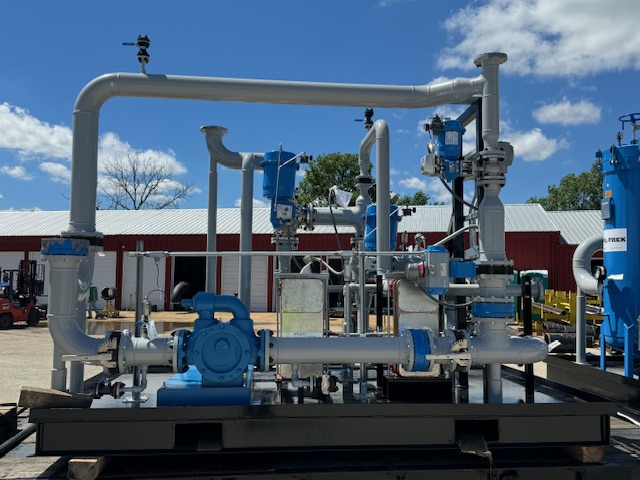
Industrial Skid Fabrication in Our Illinois Fab Shop
DePue's fabrication capabilities allow piping, structural steel, equipment and mechanical components to be assembled in the shop before they reach the plant.
Our fabrication facility includes a large assembly area for modular projects and a separate stainless-steel fabrication area. Depending on the process and project specification, skid work may involve carbon steel, stainless steel and other specialty materials.
DePue also performs orbital and sanitary welding for applicable process systems.
- Structural skid frame fabrication
- Carbon-steel piping
- Stainless-steel piping
- Specialty materials based on project requirements
- Orbital welding
- Sanitary welding
- Process piping fabrication
- Utility piping fabrication
- Equipment setting
- Valve and instrumentation installation
- Large modular assembly capability
- Separate stainless-steel fabrication area
Explore related fabrication capabilities.
View Pipe Fabrication Services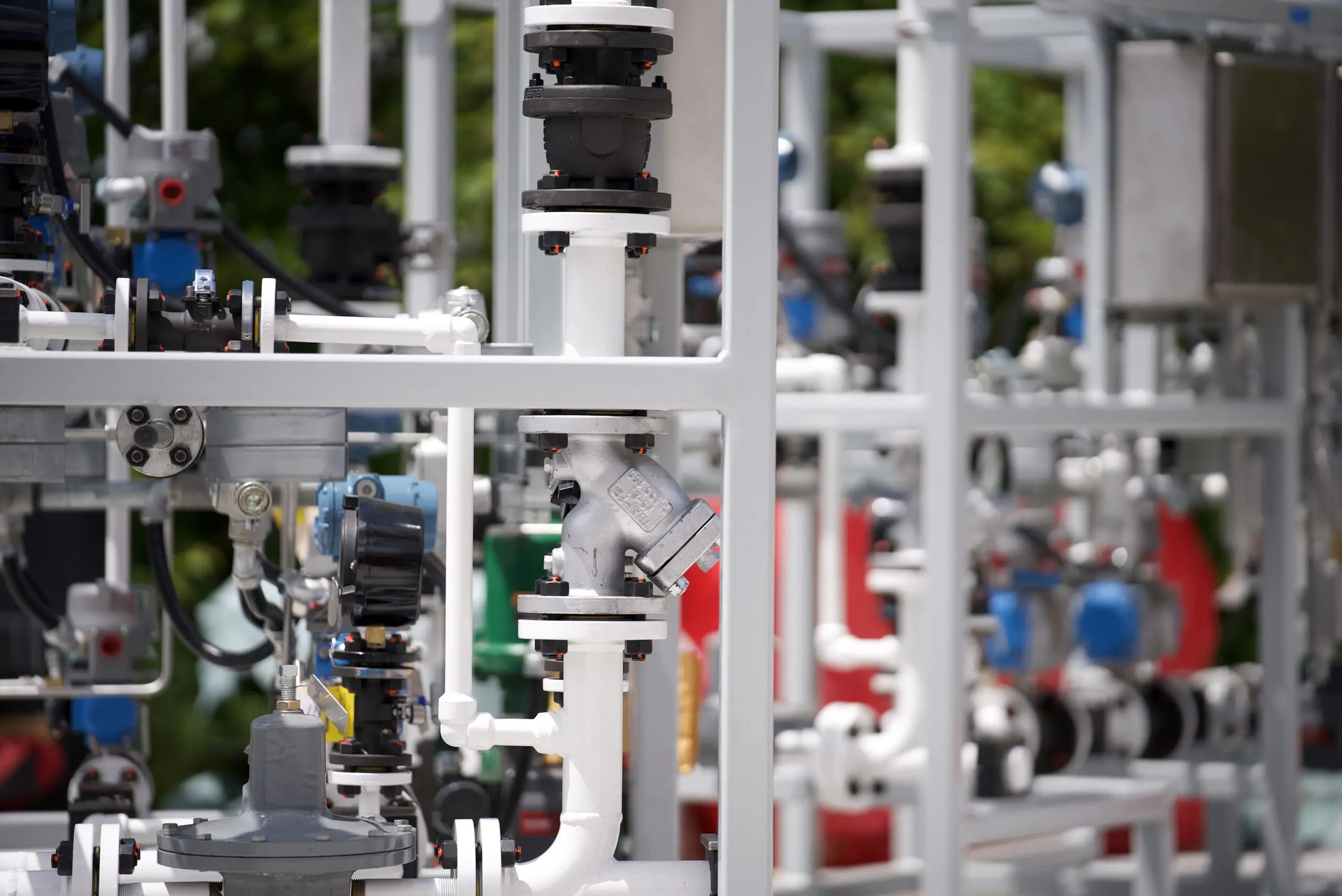
QA/QC Documentation Built Into the Fabrication Process
Quality documentation should not become something the project team has to chase after fabrication is complete.
DePue maintains project-specific quality records through our QC database as part of standard fabrication practice. Depending on project requirements, customers can also receive access to a shared cloud database that provides visibility into QC documentation and project progress while fabrication is underway.
Standard project records can include pressure and hydrotest documentation, material certifications, MTRs, weld maps, WPS/PQR documentation, inspection records and turnover documentation.
MTR mapping and torque mapping can also be provided as additional services when required.
- Pressure-test documentation
- Hydrotest records
- Material certifications
- Material Test Reports (MTRs)
- Weld maps
- WPS/PQR documentation
- Inspection records
- Project turnover packages
- Customer-accessible cloud QC tracking on applicable projects
- MTR mapping available when required
- Torque mapping available when required
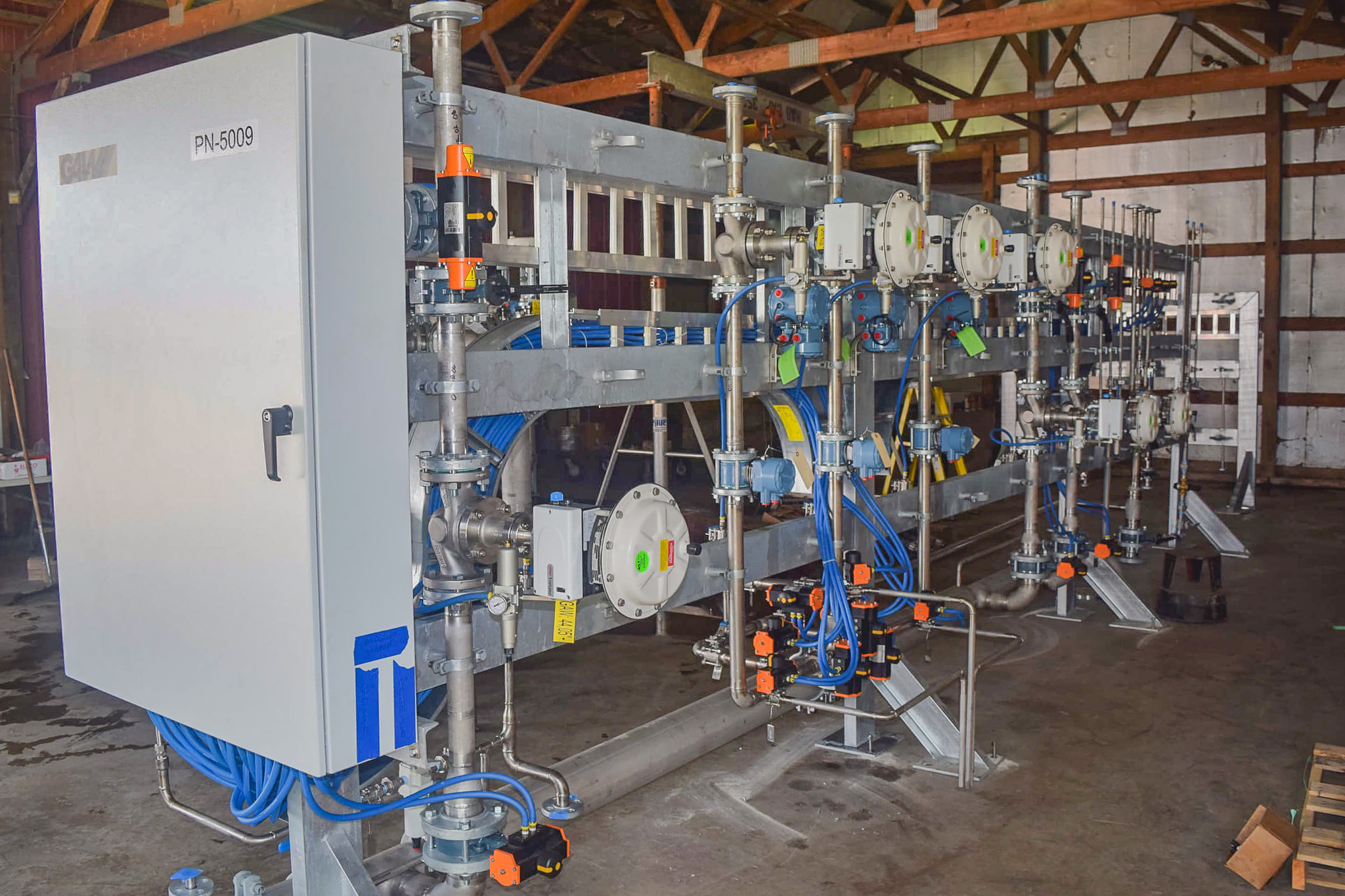
Hydrotesting, Inspection & Project-Specific NDE
Testing and inspection requirements vary based on the piping system, applicable code, project specification and customer requirements.
Internal visual inspection is part of DePue's standard quality process. Hydrotesting and other required pressure testing are performed as applicable to the project. When additional nondestructive examination is required, DePue coordinates qualified third-party NDE services according to the governing specification or customer requirements.
Rather than applying the same test package to every skid, inspection and testing are matched to the system being fabricated.
- Internal visual inspection
- Hydrotesting
- Required pressure testing
- Third-party NDE coordination when specified
- Radiographic testing when required
- Ultrasonic testing when required
- Liquid/dye penetrant testing when required
- Magnetic-particle testing when required
- Inspection and test documentation through the QC system
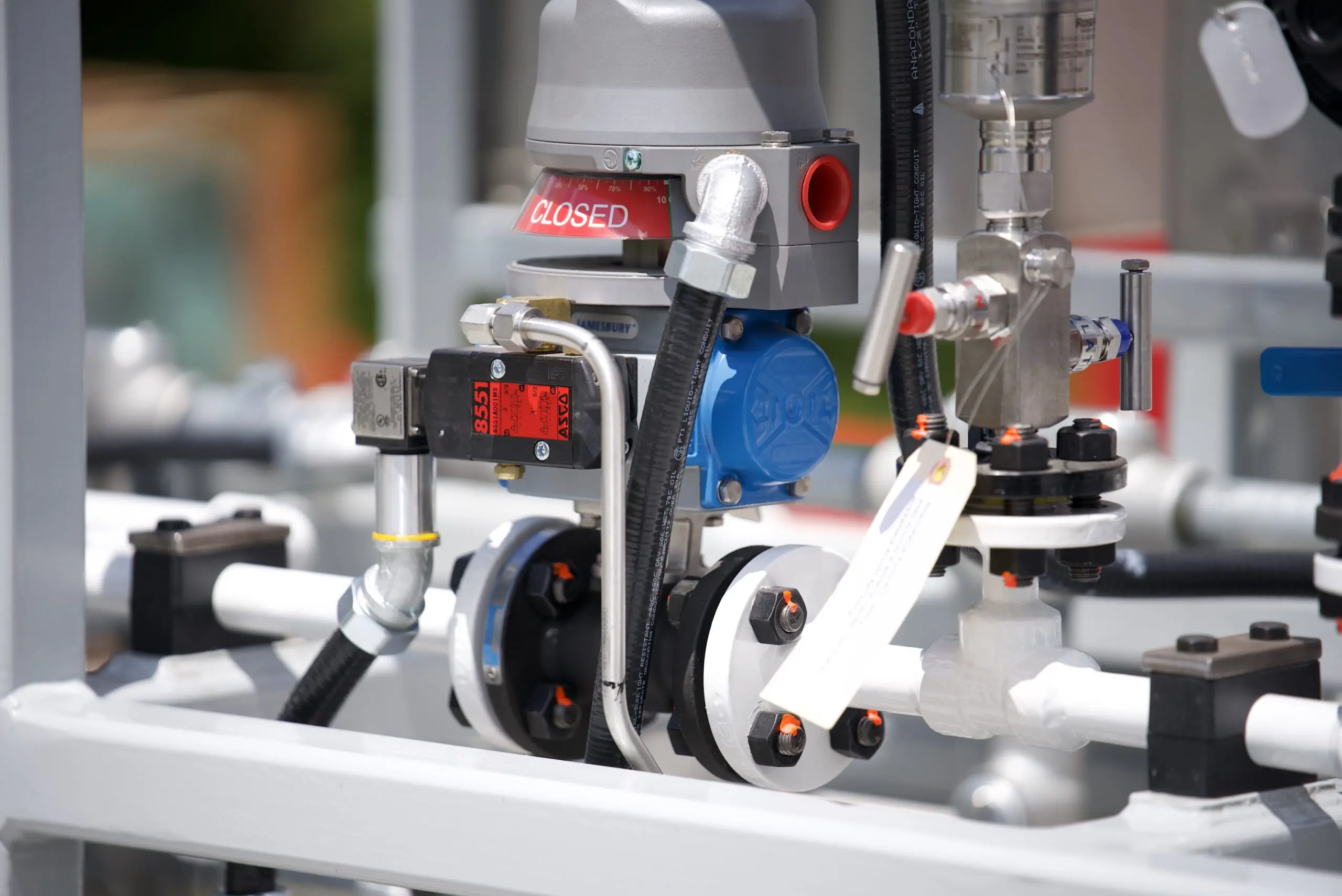
Factory Acceptance Testing Before the Skid Leaves the Shop
When Factory Acceptance Testing is part of the project requirements, FAT can take place at DePue's fabrication shop before the skid is shipped to the plant.
The end user, DePue and applicable electrical and controls partners can review the assembled skid and check project-specific components and functions while the package is still in the controlled shop environment.
This gives the project team an opportunity to identify and resolve issues before transportation and field installation rather than discovering them after the skid reaches the facility.
- FAT performed at DePue's shop when required
- End-user participation
- Mechanical review
- Coordination with electrical contractor
- Coordination with controls contractor
- Component verification
- Pre-shipment issue resolution
- Documentation based on project requirements
Transportation, Rigging & Onsite Skid Installation
The work does not have to end when fabrication is complete.
DePue plans skid transportation and installation around the size, weight, access and requirements of the specific project. Heavy lifts can be coordinated with qualified crane providers, and our field crews can receive, rig, set and mechanically connect the skid at the facility.
Because DePue understands both the fabricated package and the field conditions, transportation, setting and tie-in requirements can be considered earlier in the project rather than after the skid is already built.
- Transportation planning
- Shipping coordination
- Lift planning
- Crane coordination for heavy lifts
- Rigging
- Skid setting
- Equipment setting
- Mechanical field installation
- Process and utility piping tie-ins
- Coordination around planned outage windows
- Field modifications when project conditions require them
Need to verify existing site conditions?
Schedule a Site Walkdown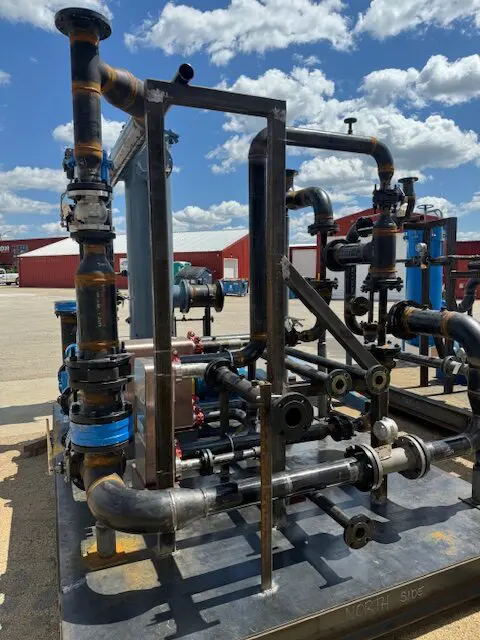
Mechanical Startup Support After Installation
After the skid is set and mechanical tie-ins are complete, DePue can support the plant and other project partners during mechanical startup.
Our role is mechanical startup assistance—not full process commissioning. Equipment manufacturers, controls contractors, electrical contractors, engineers and plant personnel may each have responsibilities during startup depending on the system.
DePue's field team can remain involved to address mechanical conditions, connections and adjustments associated with our installed scope.
- Mechanical startup assistance
- Support during equipment startup
- Mechanical connection verification
- Coordination with plant personnel
- Coordination with OEM representatives
- Coordination with controls and electrical contractors
- Mechanical corrections or adjustments within DePue's scope
Built for Plants, Engineers & General Contractors
The amount of support DePue provides depends on where the project begins.
An owner-direct plant may involve DePue early while a new process line, utility upgrade or equipment replacement is still being developed. An engineering firm may already have approved drawings, specifications, isometrics and equipment selections ready for fabrication. A general contractor or project manager may need a mechanical partner capable of taking a defined package through fabrication, installation and turnover.
DePue's role can be tailored to the project rather than forcing every skid through the same delivery model.
- Owner-direct industrial projects
- Plant Manager and Maintenance Manager projects
- Plant and Project Engineer coordination
- Engineering-firm fabrication packages
- GC and Project Manager coordination
- New process lines
- Plant expansions
- Equipment replacements
- Utility upgrades
- Process modifications
- Planned shutdown and tie-in work
Have a skid package ready for pricing?
Request a Project QuoteWhat Helps Us Scope a Custom Skid Project
Every skid project starts at a different stage, so a complete fabrication package is not required before contacting DePue.
If drawings and specifications have already been developed, our team can review them for fabrication and installation requirements. If the project is earlier in development, field verification, constructability and VDC coordination may help identify what still needs to be defined.
The more information available at the beginning, the more accurately the team can evaluate scope, procurement requirements, schedule and testing.
- P&IDs and process information when available
- Skid layouts
- Isometrics and spool drawings
- Bills of material
- Equipment specifications
- Piping materials and specifications
- Applicable code requirements
- Testing and NDE requirements
- Existing-condition information
- Tie-in locations
- Site access and installation constraints
- Shutdown or outage requirements
- Required delivery date
- Installation responsibilities
Not everything has to be finalized before we talk.
Review Your Skid Scope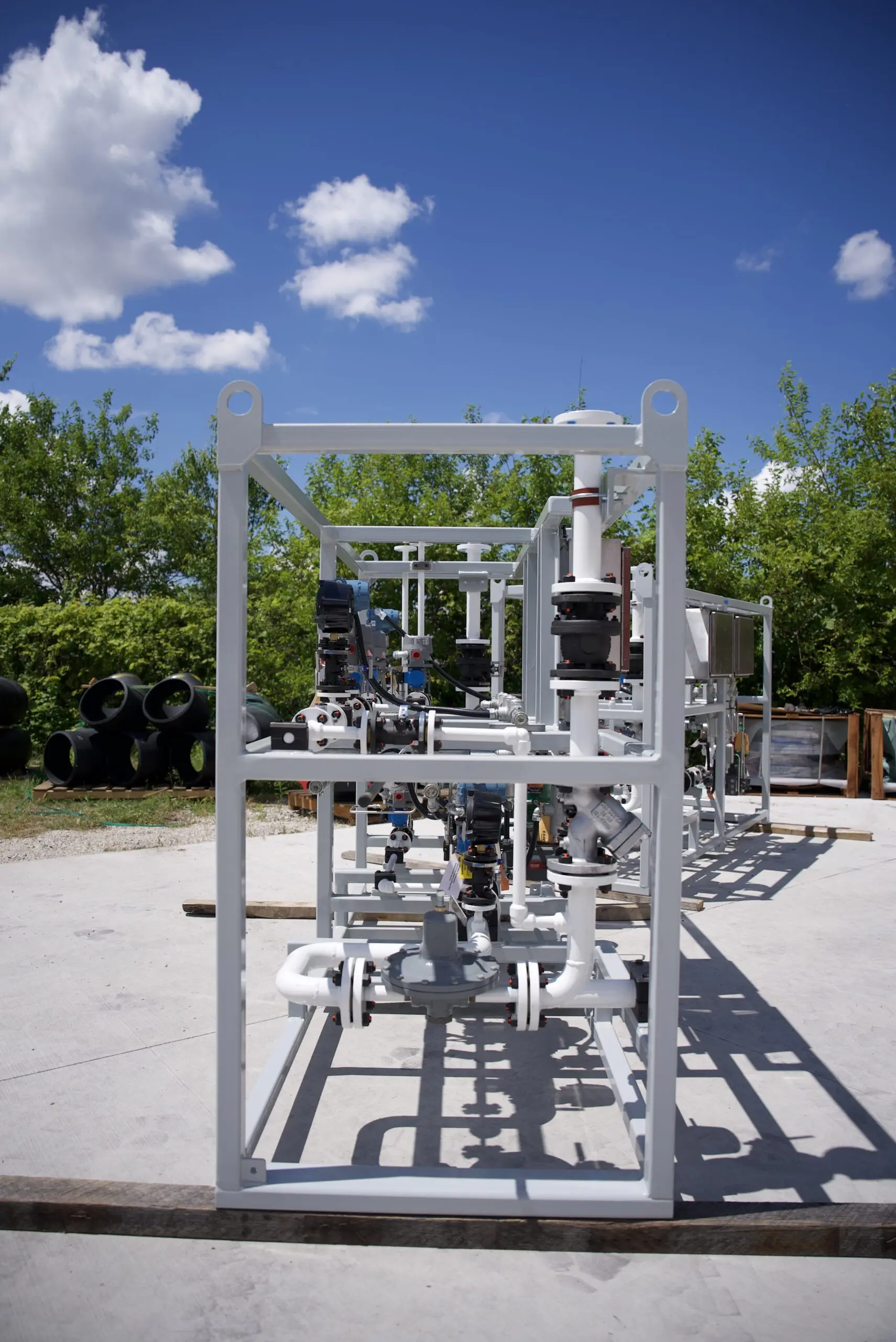
Process Skid Fabrication for an Operating Chemical Facility
For a Midwest chemical-processing project, DePue prefabricated carbon-steel and stainless-steel process piping for modular skids before field installation.
The project extended beyond shop fabrication. DePue rigged and set the skid packages, completed process and utility tie-ins during planned outage windows and provided mechanical support during startup.
By moving fabrication into the shop and coordinating the field installation around the plant's operating schedule, the project demonstrates the advantage of treating skid fabrication as part of the overall mechanical construction plan—not as an isolated fabrication activity.
- Carbon-steel process piping
- Stainless-steel process piping
- Shop prefabrication
- Modular skid installation
- Rigging and equipment setting
- Process and utility tie-ins
- Work coordinated around outage windows
- Third-party inspection of applicable code welding
- Mechanical startup support
- Zero safety incidents on the referenced project
See how the project was planned and executed.
View the GAW Skid Project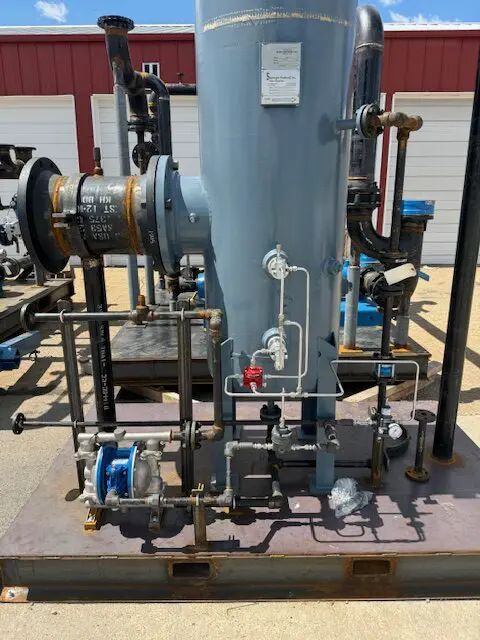
CUSTOM SKID FABRICATION FAQ
Questions Plant & Project Teams Ask Before Fabrication
A: DePue fabricates custom process skids, pump skids, utility skids, chemical feed and dosing skids, heat exchanger skids, equipment skids, piping skids and other project-specific mechanical skid systems. Each package is built around the process requirements, equipment and specifications of the individual project.
Q: Does DePue manufacture the pumps, tanks, heat exchangers or instruments used on a skid?
A: No. DePue is the mechanical skid fabricator and installer, not the OEM manufacturer of the proprietary equipment. When included in our scope, we can procure project-specified pumps, heat exchangers, tanks, instruments and other equipment from third-party manufacturers and integrate them into the fabricated skid package.
Q: Can DePue work from drawings supplied by our engineer?
A: Yes. Isometrics, spool drawings, bills of material and related fabrication documents are commonly supplied by the owner, engineer or other project design party. DePue can fabricate from those documents and can also provide VDC, constructability and fabrication-coordination support on projects where additional development is required.
Q: Does DePue field-verify the installation area before fabricating a skid?
A: Field verification is normally part of DePue's skid-project process when site conditions affect the fabricated package or installation. Our team can verify dimensions, tie-in points, clearances, access and other existing conditions. 3D scanning can also be used when complex conditions warrant additional spatial information.
Q: What QA/QC documentation can DePue provide with a skid?
A: Standard project records can include pressure-test and hydrotest documentation, material certifications and MTRs, weld maps, WPS/PQR documentation, inspection records and turnover documentation. For applicable projects, customers can also receive access to a shared cloud QC database to review progress and project quality records during fabrication. MTR mapping and torque mapping can be provided as additional services when required.
Q: What nondestructive examination does DePue perform on skid piping?
A: Internal visual inspection is standard. Additional NDE is based on the piping system, applicable specification, code and customer requirements. When radiography, ultrasonic testing, liquid penetrant testing, magnetic-particle testing or another method is required, DePue coordinates the appropriate qualified third-party NDE provider.
Q: Can Factory Acceptance Testing be performed before shipment?
A: Yes. When FAT is required, Factory Acceptance Testing can take place at DePue's fabrication shop before shipment. DePue, the end user and applicable electrical and controls partners can review the assembled skid and verify project-specific components and functions before the package is transported to the facility.
Q: Does DePue install instrumentation and controls?
A: DePue can physically install mechanical instrumentation such as gauges, transmitters, flowmeters and valves as part of the skid package. Electrical power, controls wiring, instrumentation wiring and electrical terminations are completed by the appropriate electrical or controls contractor.
Q: Does DePue install the skid after fabrication?
A: Yes. When included in the project scope, DePue can coordinate transportation and heavy lifting, rig and set the skid, complete process and utility piping tie-ins and perform the associated mechanical field installation.
Q: How long does custom process skid fabrication take?
A: Lead time depends on the complexity of the skid, completeness of engineering information, third-party equipment procurement, material availability, testing and inspection requirements, FAT requirements, transportation planning and the facility's installation schedule. DePue reviews these factors during project planning rather than applying one standard lead time to every skid.
Q: What affects the cost of a custom skid fabrication project?
A: Cost is influenced by skid size and complexity, structural requirements, piping materials and sizes, equipment procurement, instrumentation, welding requirements, testing and NDE, QA/QC documentation, FAT, transportation, rigging, field installation and the condition of the existing facility. A defined scope allows these variables to be evaluated accurately.
Q: Does DePue commission the complete skid system?
A: DePue provides mechanical startup assistance and coordination for our installed scope but does not claim full process commissioning. Startup may also involve the plant, equipment manufacturers, engineers, electrical contractors and controls contractors depending on the system.
Q: Where does DePue provide skid fabrication services?
A: DePue's primary skid fabrication and installation market is Illinois. Our team may support select work outside Illinois for established and legacy clients depending on project requirements.
Recent Projects
We listen. We respond. We deliver.
-
Modular Skid Fabrication and Turnkey Installation for GAW Process Upgrade
Modular Skid Fabrication and Turnkey Installation for GAW Process Upgrade
Learn more