Industrial Utility Piping Contractor in Illinois
Serving Illinois
Plant Utility Piping for Steam, Compressed Air, Water, Gas, Heating, and Cooling Systems
When plant utility piping is undersized, leaking, poorly supported, or failing to keep up with production demand, the entire facility feels it. Steam pressure drops, compressed air demand spikes, chilled water capacity falls short, condensate return problems waste energy, and unreliable process water piping can interrupt production equipment.
DePue Mechanical is an industrial utility piping contractor serving manufacturing plants, food and beverage facilities, process environments, commercial mechanical systems, water treatment operations, and GC-led construction projects across Illinois.
Industrial utility piping includes the piping systems that support production, process equipment, mechanical systems, and plant infrastructure. These systems may carry steam, condensate, compressed air, chilled water, hot water, glycol, process water, plant water, or fuel gas where included in the project scope and applicable requirements.
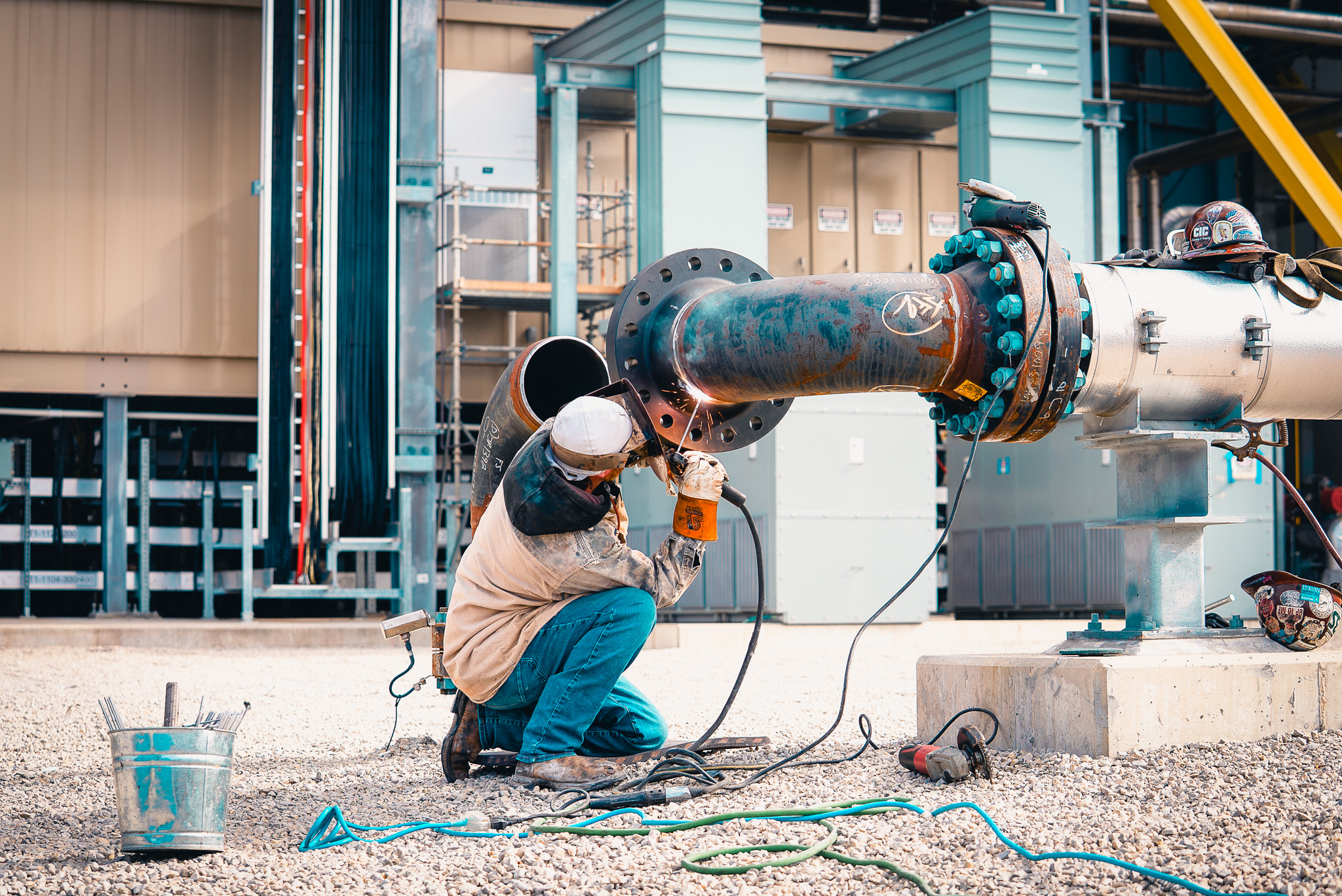
As a utility piping contractor, DePue installs, modifies, replaces, fabricates, and ties in piping systems serving boilers, chillers, compressors, pumps, heat exchangers, air handlers, tanks, skids, production equipment, and utility headers.
Utility piping may not always touch the product directly, but it keeps the facility operating. These systems deliver the steam, air, water, gas, heating, cooling, and process support that production depends on every day.
For broader piping capabilities, visit our industrial piping contractor in Illinois page.
Industrial Utility Piping Capabilities
Utility Piping Services for Industrial Facilities
- Utility Piping Problems We Help Solve
- Industrial Utility Piping Services
- Steam and Condensate Piping
- Compressed Air Piping
- Chilled Water, Hot Water, and Glycol Piping
- Process Water, Plant Water, and Utility Water Piping
- Utility Piping Equipment Tie-Ins
- Prefabricated Utility Piping
- Shutdown and Tie-In Support for Utility Piping
- Utility Piping for Food, Beverage, and Process Facilities
- Utility Piping for General Contractors and Construction Managers
- Technical Capabilities
- Industries Served
- Why DePue Mechanical for Industrial Utility Piping
- Related Piping Services
Utility Piping Problems We Help Solve
Utility piping issues often show up as production problems. A facility may experience inconsistent pressure, poor temperature control, unreliable compressed air, leaking condensate lines, failing pipe supports, corroded piping, or utility headers that cannot support new equipment.
The right utility piping contractor has to understand more than the pipe itself. The work must account for flow, pressure, temperature, equipment access, pipe supports, thermal expansion, isolation valves, drainage, testing, startup requirements, and the production schedule.
DePue supports facilities dealing with:
- Aging or leaking steam, condensate, air, water, glycol, or gas piping
- Undersized utility piping limiting production capacity
- Compressed air pressure drops at production equipment
- Steam distribution or condensate return problems
- Chilled water or glycol piping that cannot support process cooling demand
- Hot water piping tied to heating, cleaning, or process support
- Boiler, chiller, compressor, pump, heat exchanger, or skid tie-ins
- Utility piping reroutes in congested mechanical rooms or pipe racks
- Pipe support, vibration, alignment, or expansion issues
- Planned shutdown tie-ins with limited outage windows
- Prefabricated piping assemblies needed before installation begins
- Utility piping scopes within GC- or CM-led construction projects
Need more information?
Schedule a Plant Walkthrough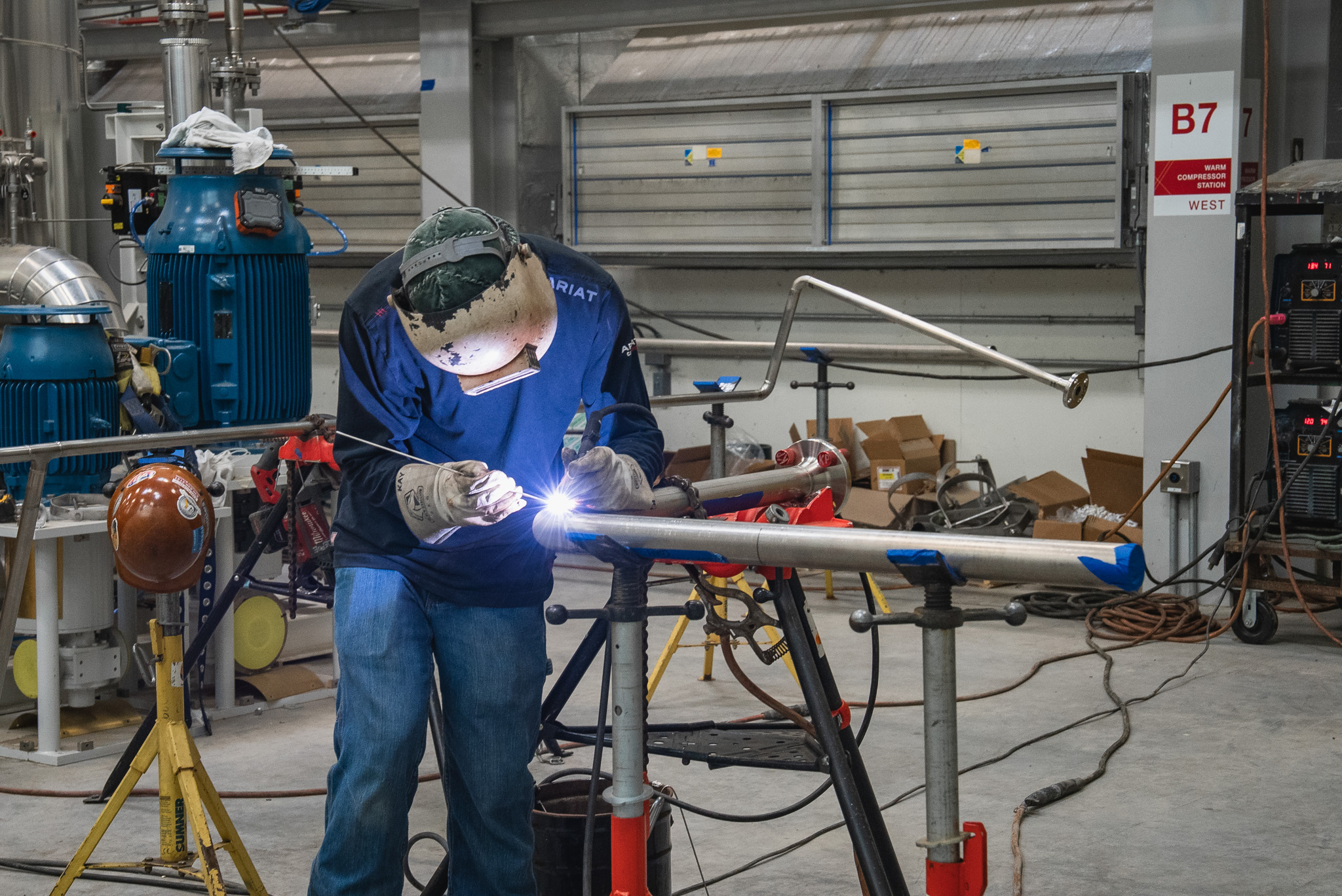
Industrial Utility Piping Services
DePue Mechanical provides utility piping installation, replacement, modification, fabrication, and tie-in support for active facilities and new construction projects.
Each scope is planned around the facility’s operating requirements. That may include field verification, utility isolation planning, equipment access, lift access, hot work controls, prefabricated spool installation, shutdown sequencing, testing, flushing, and startup coordination.
For production process systems, visit our process piping contractor page.
Our utility piping services may include:
- Steam piping
- Condensate return piping
- Compressed air piping
- Fuel gas or natural gas piping where included in the project scope and applicable requirements
- Hot water piping
- Chilled water piping
- Glycol piping
- Process water piping
- Plant water piping
- Boiler piping connections
- Chiller piping connections
- Pump suction and discharge piping
- Heat exchanger piping
- Air compressor piping
- Utility headers and branch piping
- Equipment tie-ins
- Pipe rack and overhead utility piping
- Valve station installation
- Pipe supports, hangers, guides, and anchors
- Prefabricated utility piping assemblies
- Shutdown tie-ins and outage piping support
- Pressure testing, flushing, leak checks, and turnover coordination
Need more information?
Process Piping Contractor
Steam and Condensate Piping
attention to pressure and temperature conditions. Poorly planned steam piping can create reliability problems, water hammer concerns, condensate return issues, maintenance access problems, and energy loss.
DePue supports steam and condensate piping work for boilers, heat exchangers, process equipment, humidification systems, washdown systems, heating systems, and production support utilities.
Steam work has to be coordinated around safety, pressure conditions, system isolation, hot work controls, testing, and startup. When project specifications require code welding, inspection, or documentation, the piping scope should be planned around those requirements before fabrication or installation begins.
For utility piping tied to steam, condensate, boiler external piping, or other pressure-retaining systems, DePue can support pressure piping welding and PP Stamp pressure piping support when required by the scope.
For welding-related work, visit our boiler code welding page.
Steam and condensate piping work may include:
- Steam header installation or modification
- Condensate return piping
- Boiler piping connections
- Heat exchanger tie-ins
- Steam branch piping to process equipment
- Valve, strainer, trap station, vent, drain, and bypass installation where required by the project
- Pipe support and expansion coordination
- Shutdown tie-ins and pressure testing support
Need more information?
Boiler & Code Welding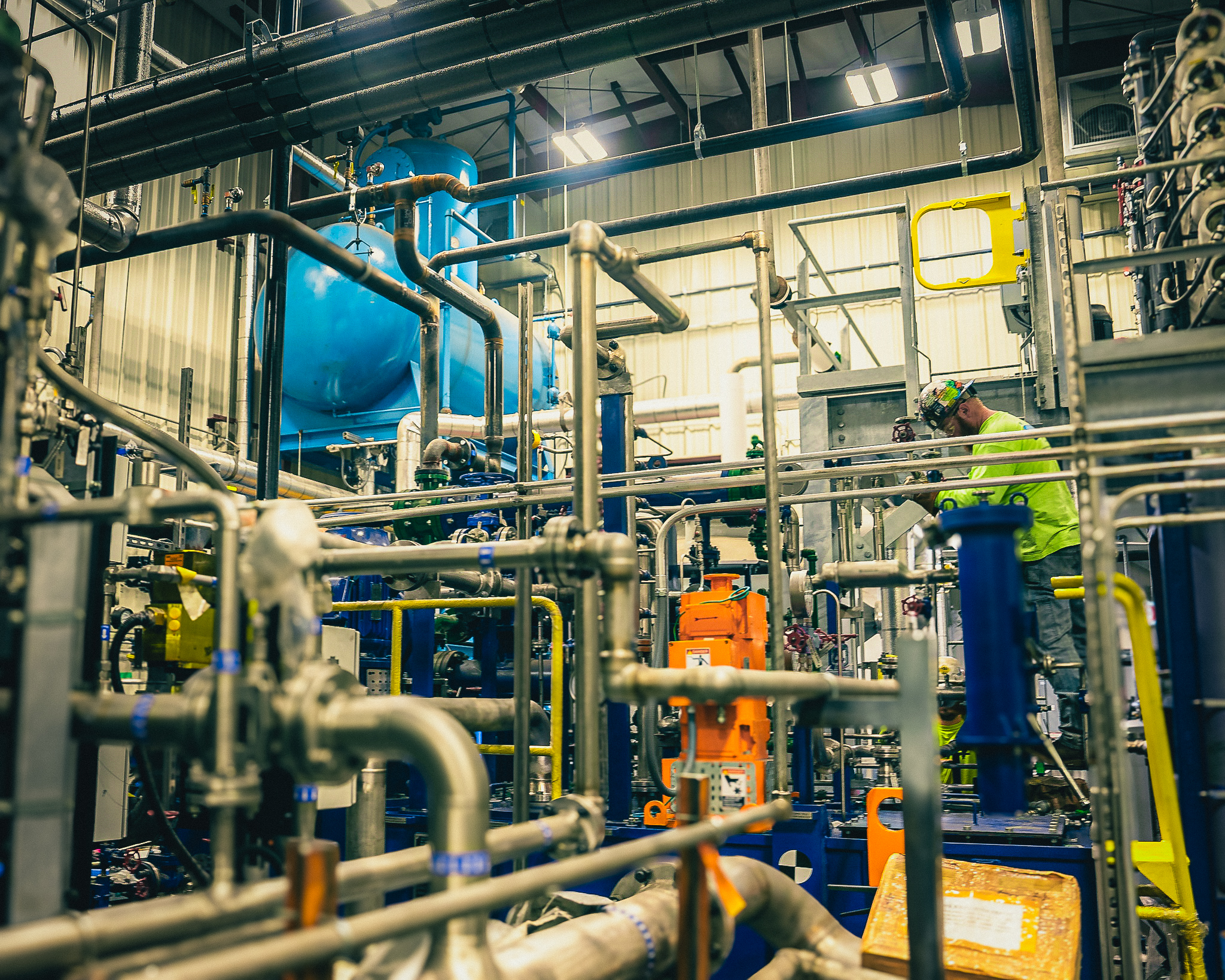
Compressed Air Piping
Compressed air is a critical utility in many industrial facilities. It may support production equipment, packaging lines, pneumatic controls, valves, tools, instrumentation, and plant operations. When air piping is undersized, leaking, poorly routed, or not properly supported, equipment performance can suffer.
DePue installs and modifies compressed air piping systems for active manufacturing and process facilities. Work may include compressor room piping, distribution headers, branch lines to equipment, drops to production areas, valve stations, air dryer or receiver connections, and prefabricated piping assemblies.
Compressed air piping should be planned around pressure demand, access for maintenance, condensate management where applicable, future equipment expansion, and the production areas being served.
Compressed air piping work may involve:
- Air compressor piping
- Main compressed air headers
- Branch piping to production equipment
- Equipment drops and isolation valves
- Receiver tank and dryer connections
- Rerouting or replacing leaking air lines
- Pipe support and vibration control
- Pressure testing and leak checks before startup
Need more information?
Let's Talk Compressed Air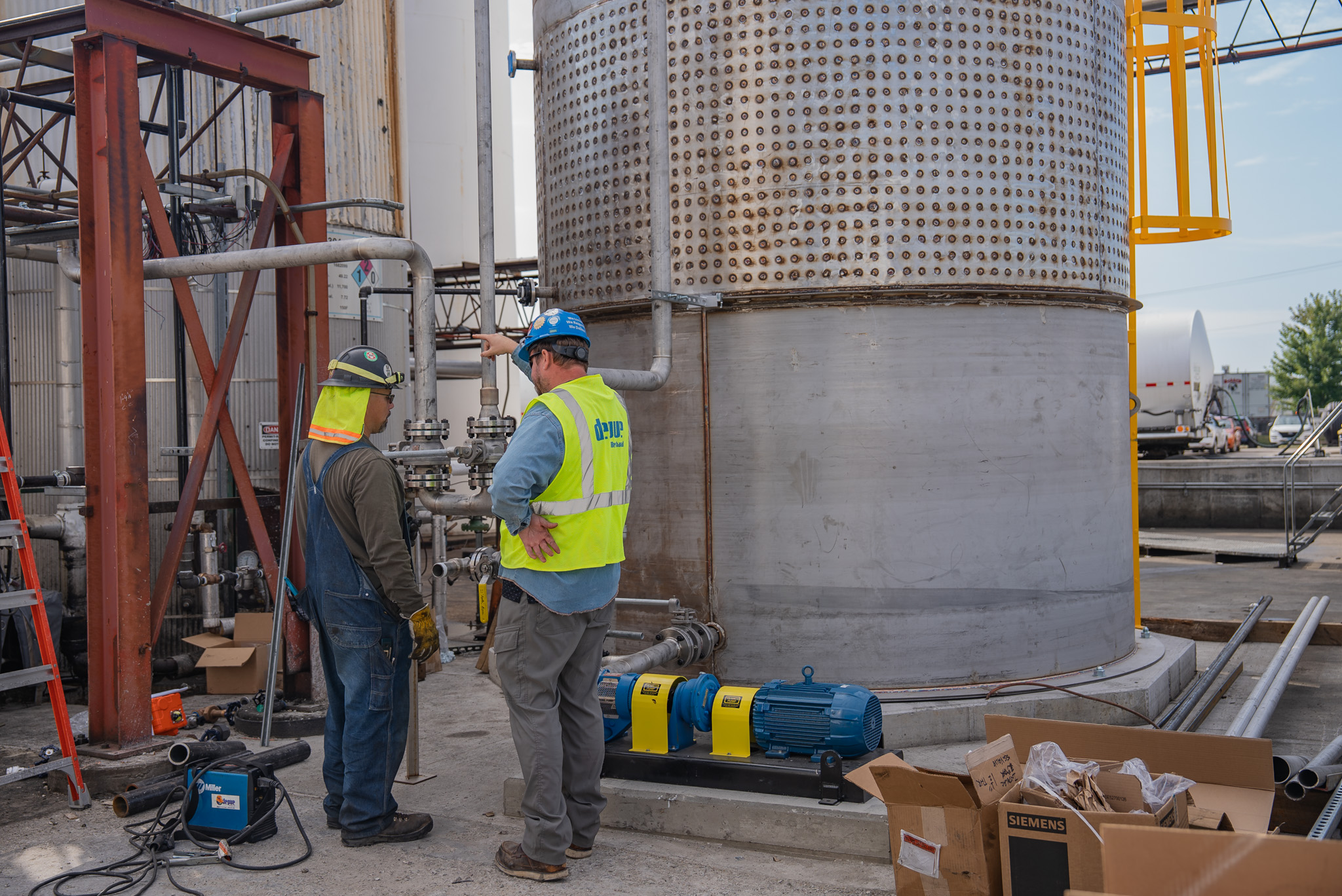
Chilled Water, Hot Water, and Glycol Piping
Heating and cooling utility piping supports production, process temperature control, building systems, air handlers, heat exchangers, chillers, boilers, pumps, and packaged mechanical equipment. When these systems are not routed or supported correctly, facilities can experience poor temperature control, pump alignment problems, leaks, restricted maintenance access, or startup delays.
DePue supports chilled water, hot water, and glycol piping for industrial and commercial mechanical systems. Work may include new installation, equipment replacement, piping modifications, tie-ins, prefabricated spools, pump connections, and system testing.
These systems often require coordination with HVAC equipment, process cooling loads, insulation, controls, commissioning, and shutdown windows.
For mechanical HVAC-related piping, visit our commercial HVAC contractor page.
Hydronic and thermal utility piping may include:
- Chilled water supply and return piping
- Hot water supply and return piping
- Glycol piping
- Boiler and chiller connections
- Pump suction and discharge piping
- Air handler and heat exchanger piping
- Expansion, support, and isolation valve coordination
- Flushing, pressure testing, and leak checks
Need more information?
Commercial HVAC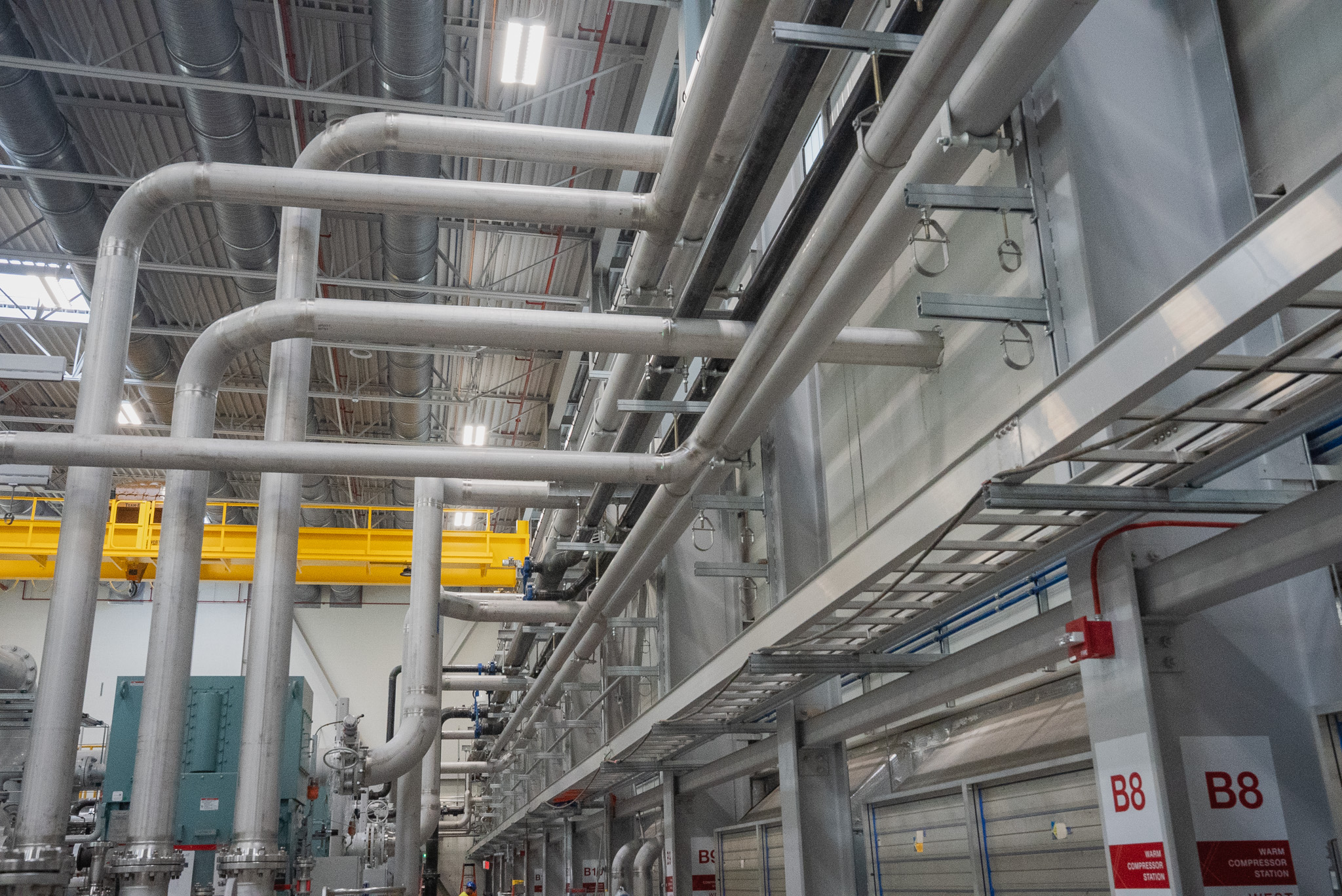
Process Water, Plant Water, and Utility Water Piping
Many industrial facilities rely on utility water systems to support production equipment, washing, cooling, heating, cleaning, process support, and equipment protection. These systems often connect to pumps, tanks, heat exchangers, filters, skids, hose stations, and treatment equipment.
DePue supports process water and plant water piping for manufacturing, food and beverage, water treatment, and process facilities. Work may include piping replacement, reroutes, pump connections, equipment tie-ins, valve stations, utility headers, and prefabricated sections built before shutdown work begins.
The work must be planned around water demand, operating pressure, pipe routing, access, system isolation, drainage, and startup requirements.
Utility water piping may involve:
- Process water piping
- Plant water piping
- Non-potable utility water piping
- Pump discharge and suction piping
- Tank inlet and outlet connections
- Heat exchanger and skid connections
- Filtration or treatment equipment tie-ins
- Valve, drain, vent, and gauge installation
- Pressure testing, flushing, and leak checks
Need more information?
Schedule a Plant Walkthrough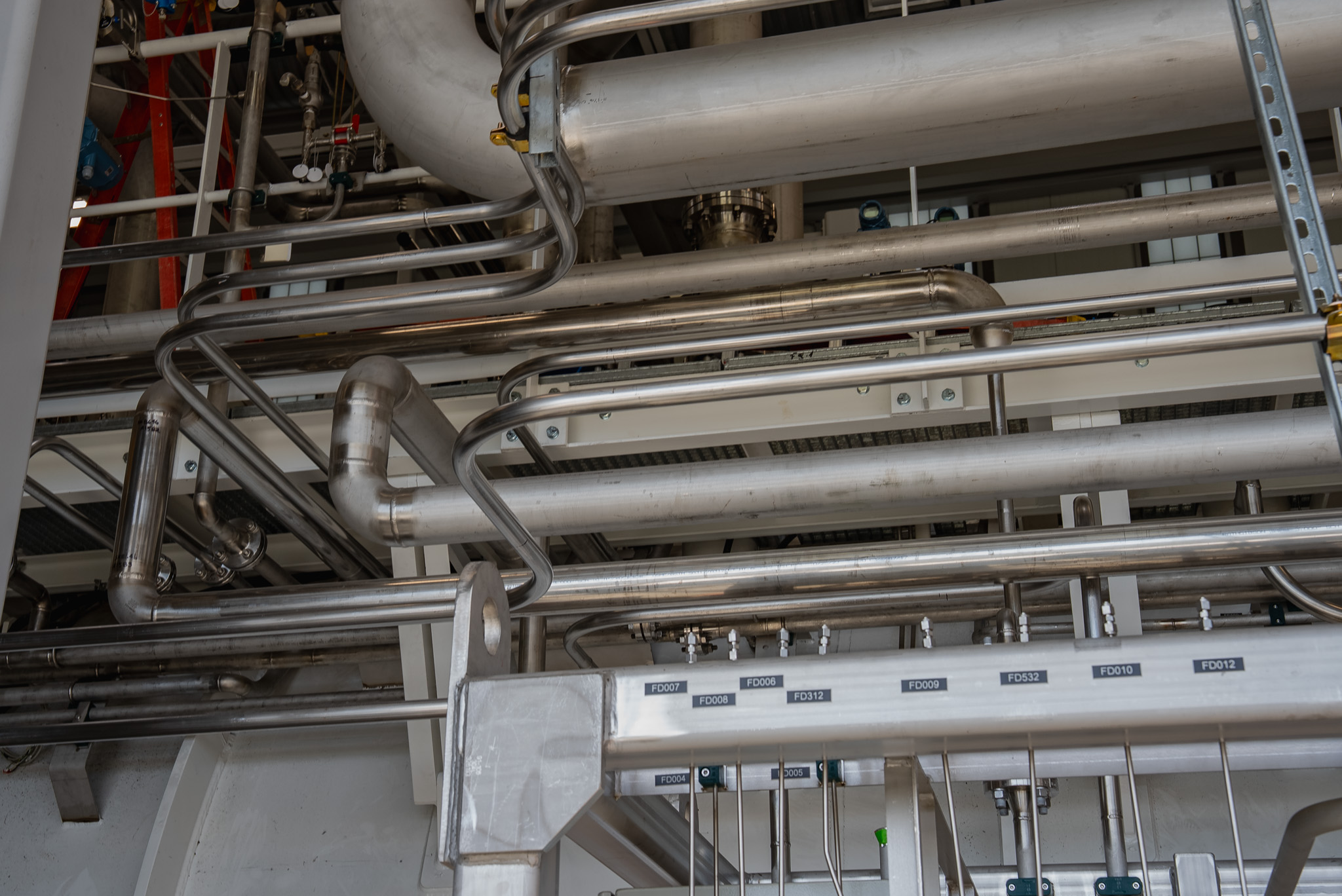
Utility Piping Equipment Tie-Ins
Utility piping projects often center on equipment connections. Boilers, chillers, compressors, pumps, heat exchangers, tanks, skids, air handlers, and process equipment all require piping that fits the equipment connections and the existing facility layout.
DePue supports equipment tie-ins that require careful field measurements, spool planning, flange orientation, valve access, support coordination, and installation sequencing.
Tie-ins are often where field conditions, equipment drawings, schedule pressure, and startup requirements come together. Proper planning reduces rework, outage risk, and field conflicts.
For equipment-related piping and fabrication, visit our pipe fabrication contractor page.
Utility equipment tie-ins may include:
- Boiler tie-ins
- Chiller tie-ins
- Air compressor connections
- Pump suction and discharge piping
- Heat exchanger piping
- Tank connections
- Process skid utility connections
- Air handler piping
- Utility branch piping to new production equipment
- Valve stations, bypasses, drains, vents, and isolation points
Need more information?
Pipe Fabrication Contractor
Prefabricated Utility Piping
Utility piping work often benefits from prefabrication. When pipe spools, valve stations, equipment connection assemblies, or rack sections are built before crews enter the field, installation can move faster and with less disruption.
DePue supports prefabricated utility piping assemblies for shutdowns, equipment replacements, mechanical room upgrades, pipe rack work, process support utilities, and GC-led construction projects.
Prefabrication is especially valuable when work must be completed during a weekend outage, night shift, holiday shutdown, or planned production stop.
For dedicated fabrication support, visit our pipe fabrication contractor page.
Prefabrication may include:
- Steam and condensate spools
- Compressed air piping assemblies
- Chilled water or glycol piping sections
- Pump connection piping
- Boiler and chiller connection spools
- Valve station assemblies
- Utility rack piping sections
- Shutdown-ready tie-in spools
- Replacement piping built before demolition begins
Need more information?
Pipe Fabrication Contractor
Shutdown and Tie-In Support for Utility Piping
Some utility piping work cannot be completed while systems are online. Steam headers, compressed air mains, process water lines, chilled water loops, fuel gas piping, and utility connections to production equipment may require planned shutdowns or carefully sequenced tie-ins.
DePue supports shutdown utility piping work by helping plan the scope before the outage begins. That includes field verification, material readiness, spool fabrication, isolation points, demolition sequencing, manpower planning, testing requirements, and startup coordination.
In shutdown work, the best outcome is safe isolation, accurate installation, tested piping, and utilities restored before production needs to restart.
For outage-driven work, visit our shutdown piping contractor page.
Shutdown utility piping may include:
- Replacing leaking or failing utility lines
- Installing prefabricated tie-in spools
- Connecting new equipment to existing utility headers
- Modifying steam, air, water, chilled water, hot water, glycol, or gas systems
- Installing bypass piping where required by the project
- Replacing valves, strainers, fittings, or support components
- Pressure testing and verifying the system before restart
Need more information?
Shutdown Piping Contractor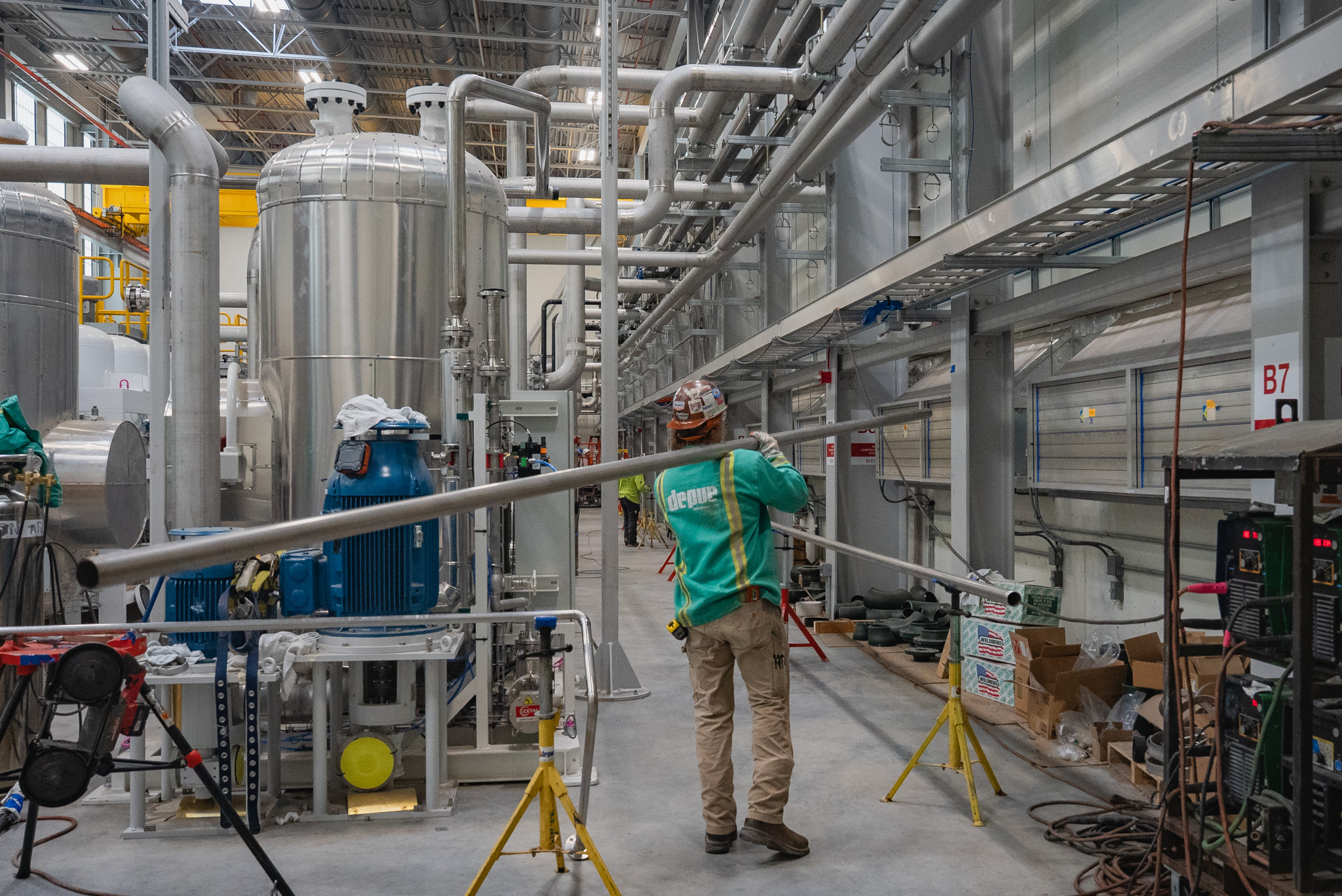
Utility Piping for Food, Beverage, and Process Facilities
Food, beverage, and process facilities depend on utility piping to support production equipment, cleaning systems, process temperature control, compressed air, steam, chilled water, glycol, hot water, and plant water systems.
DePue supports utility piping in food and beverage environments where work may need to be coordinated around production schedules, washdown areas, sanitation windows, stainless process lines, equipment access, and shutdown deadlines.
Utility piping must be routed so it supports production without creating access problems, sanitation conflicts, maintenance issues, or interference with process piping.
For sanitary and food production piping, visit our food-grade piping contractor page.
Utility piping in food and beverage facilities may include:
- Steam and condensate piping for process support
- Hot water piping for cleaning or production support
- Chilled water and glycol piping for cooling
- Compressed air piping for packaging and production equipment
- Utility water piping
- Boiler, chiller, pump, tank, and heat exchanger connections
- Utility tie-ins to stainless process systems or skids
- Prefabricated assemblies to reduce field time
Need more information?
Food-Grade Piping Contractor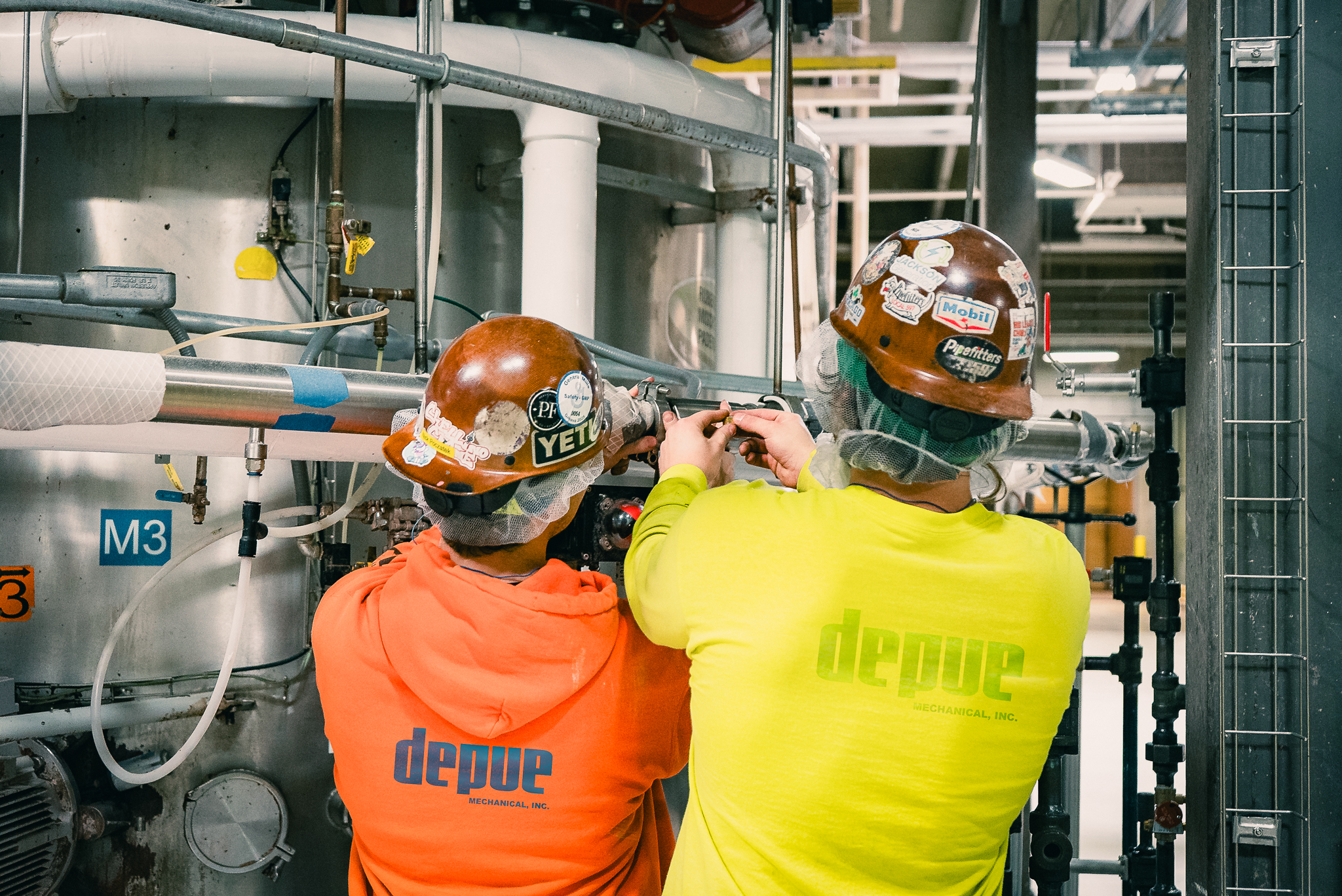
Utility Piping for General Contractors and Construction Managers
General contractors and construction managers need utility piping subcontractors that can coordinate early, fabricate accurately, and execute without creating schedule problems. Utility piping affects equipment setting, structural supports, electrical routing, controls, insulation, commissioning, and startup.
DePue supports GC- and CM-led projects that require steam piping, compressed air piping, chilled water piping, hot water piping, process water piping, equipment tie-ins, prefabricated assemblies, testing, and turnover coordination.
For broader subcontractor support, visit our mechanical contractor for general contractors page.
We can support:
- Bid packages for industrial utility piping scopes
- Utility piping installation for new construction or retrofit projects
- Field measurements and constructability review
- Prefabrication planning
- Coordination with mechanical, electrical, structural, and controls trades
- Equipment vendor coordination
- Shutdown and tie-in sequencing
- Testing, flushing, and turnover coordination
Need more information?
Mechanical Subcontractor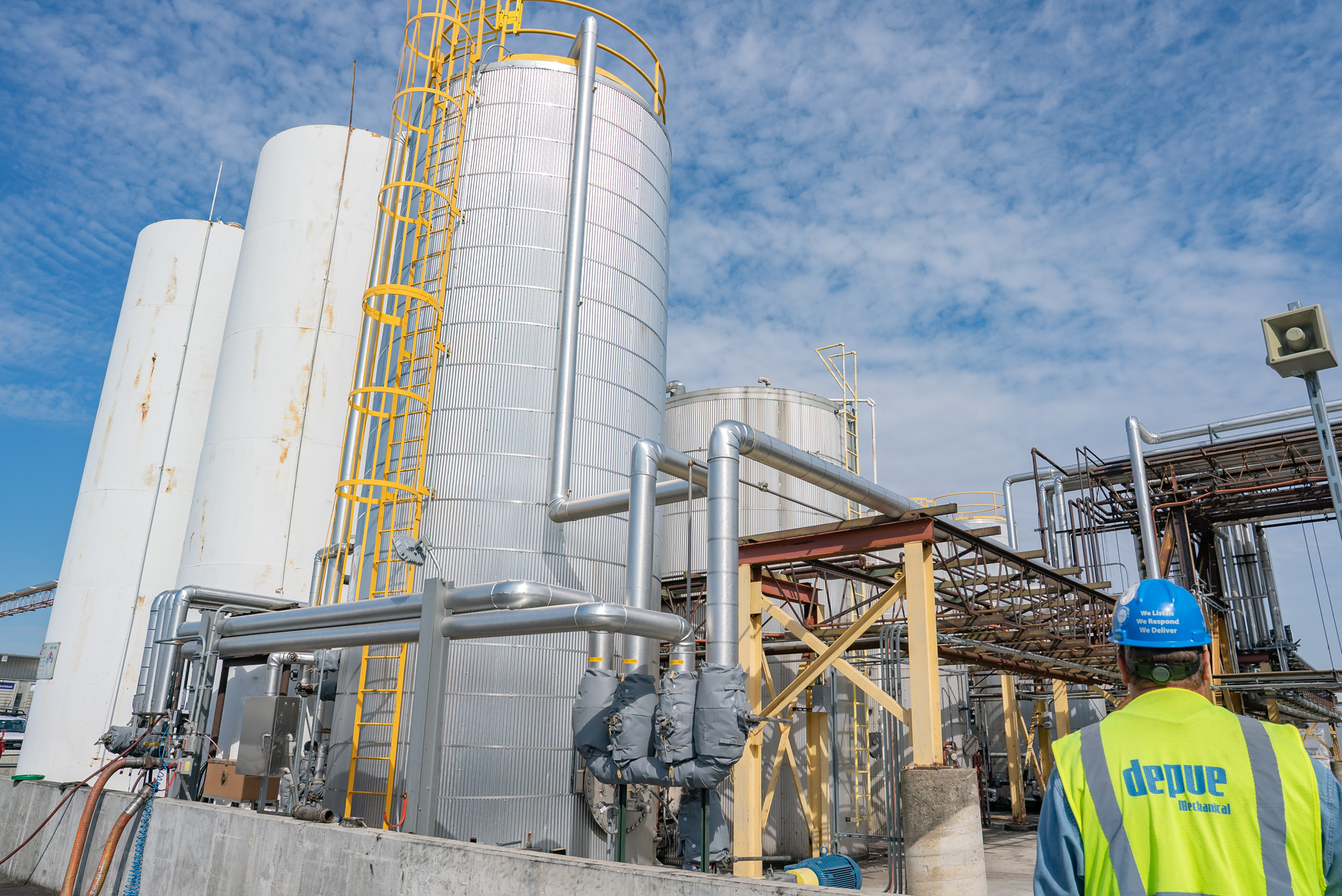
Technical Capabilities
Industrial utility piping requires practical attention to pressure, temperature, flow, supports, expansion, access, testing, and system startup. DePue approaches each project based on the drawings, piping specifications, equipment connections, operating conditions, and facility constraints.
Depending on the scope, quality control may include material verification, weld and fit-up checks, visual inspection, pressure testing, flushing, leak checks, and closeout documentation required by the project.
Technical capabilities may include:
- Carbon steel piping
- Stainless steel piping
- Steam and condensate piping
- Compressed air piping
- Fuel gas or natural gas piping where included in the project scope and applicable requirements
- Chilled water piping
- Hot water piping
- Glycol piping
- Process water and plant water piping
- Boiler, chiller, compressor, pump, tank, and heat exchanger connections
- Welded, flanged, threaded, grooved, or mechanically joined systems where appropriate
- Pipe supports, hangers, guides, anchors, and rack piping
- Valve stations, strainers, gauges, drains, vents, and instrument connections
- Pipe spool fabrication and prefabrication
- Hydrostatic testing, pressure testing, flushing, leak checks, and turnover coordination
Need more information?
Request a Plant Walkthrough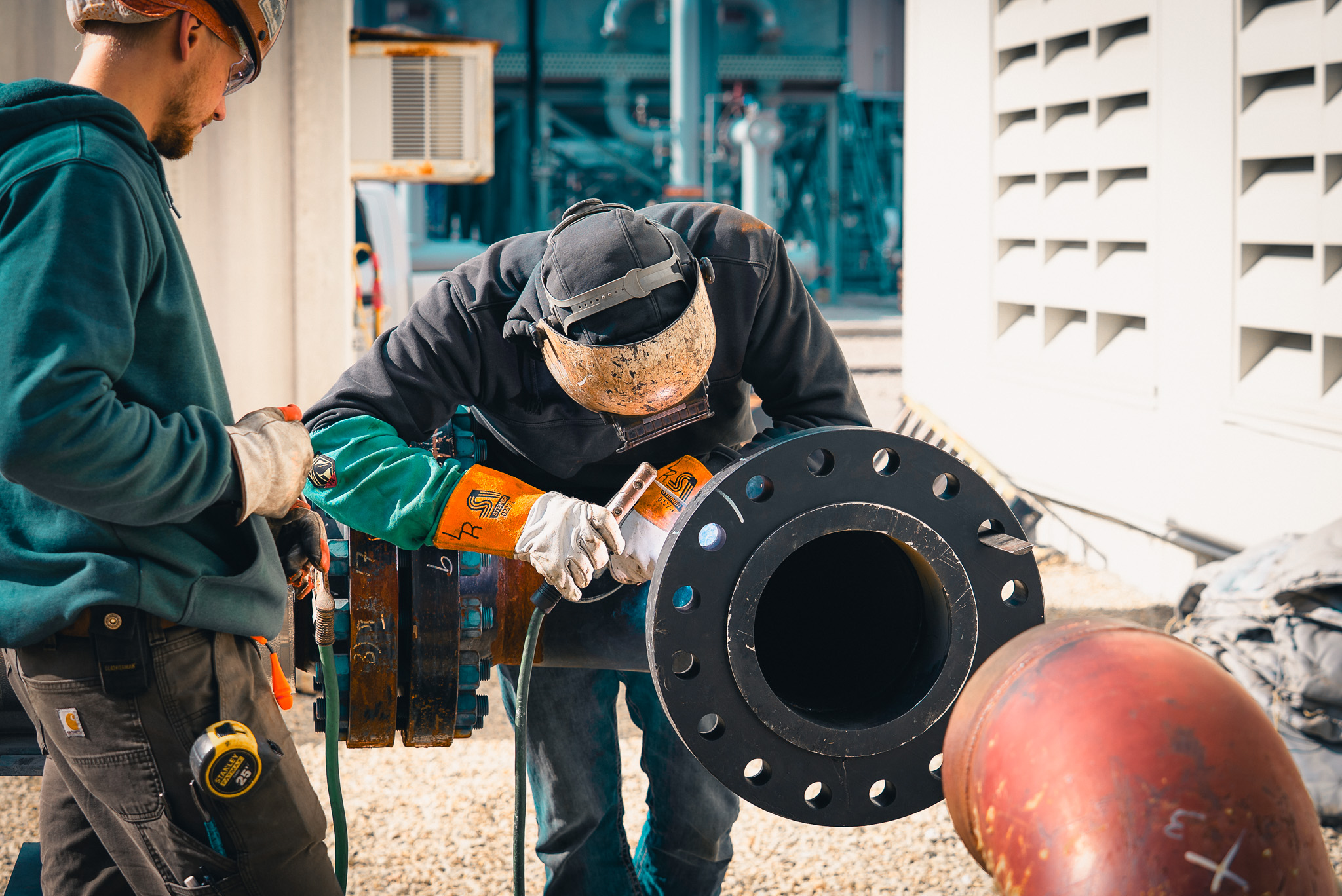
Industries Served
DePue Mechanical supports utility piping work for facilities where mechanical utilities are critical to production, safety, comfort, and system reliability.
Each facility has different utility piping demands. A manufacturing plant may need compressed air, process water, steam, and equipment tie-ins. A food plant may need steam, hot water, chilled water, glycol, and utility support around production equipment. A commercial mechanical project may require boiler, chiller, pump, and air handler piping coordinated with HVAC equipment and controls.
Typical environments include:
- Food and beverage manufacturing
- Industrial manufacturing plants
- Chemical and process facilities
- Water and wastewater treatment facilities
- Power and utility environments
- Commercial and institutional buildings
- Facilities with boilers, chillers, compressors, pumps, tanks, or heat exchangers
- Existing plants undergoing equipment upgrades
- GC- and CM-led industrial construction projects
Need more information?
Request a Piping Walkthrough
Why DePue Mechanical for Industrial Utility Piping
Utility piping has to be planned for how the facility actually operates. Drawings matter, but field conditions, equipment access, tie-in points, production schedules, shutdown windows, safety requirements, and startup deadlines often determine whether the project succeeds.
DePue Mechanical brings practical industrial piping and mechanical construction experience to utility piping projects across Illinois. Our team understands that utility piping work often involves active production areas, live systems, hot work controls, congested mechanical spaces, equipment tie-ins, prefabricated assemblies, testing, and turnover requirements.
The result is utility piping work planned around safety, production reliability, system performance, and long-term maintainability.
Facilities, engineers, GCs, and construction managers work with DePue when they need:
- An industrial utility piping contractor familiar with active facilities
- Steam, condensate, compressed air, water, glycol, and mechanical piping support
- Equipment tie-in experience for boilers, chillers, compressors, pumps, tanks, and heat exchangers
- Prefabrication support to reduce field installation time
- Shutdown planning and outage execution
- Practical routing and constructability input
- Testing, flushing, leak checks, and turnover discipline
- Coordination with plant teams, engineers, OEMs, GCs, and CMs
- A mechanical contractor that understands downtime risk
Need more information?
Our Safety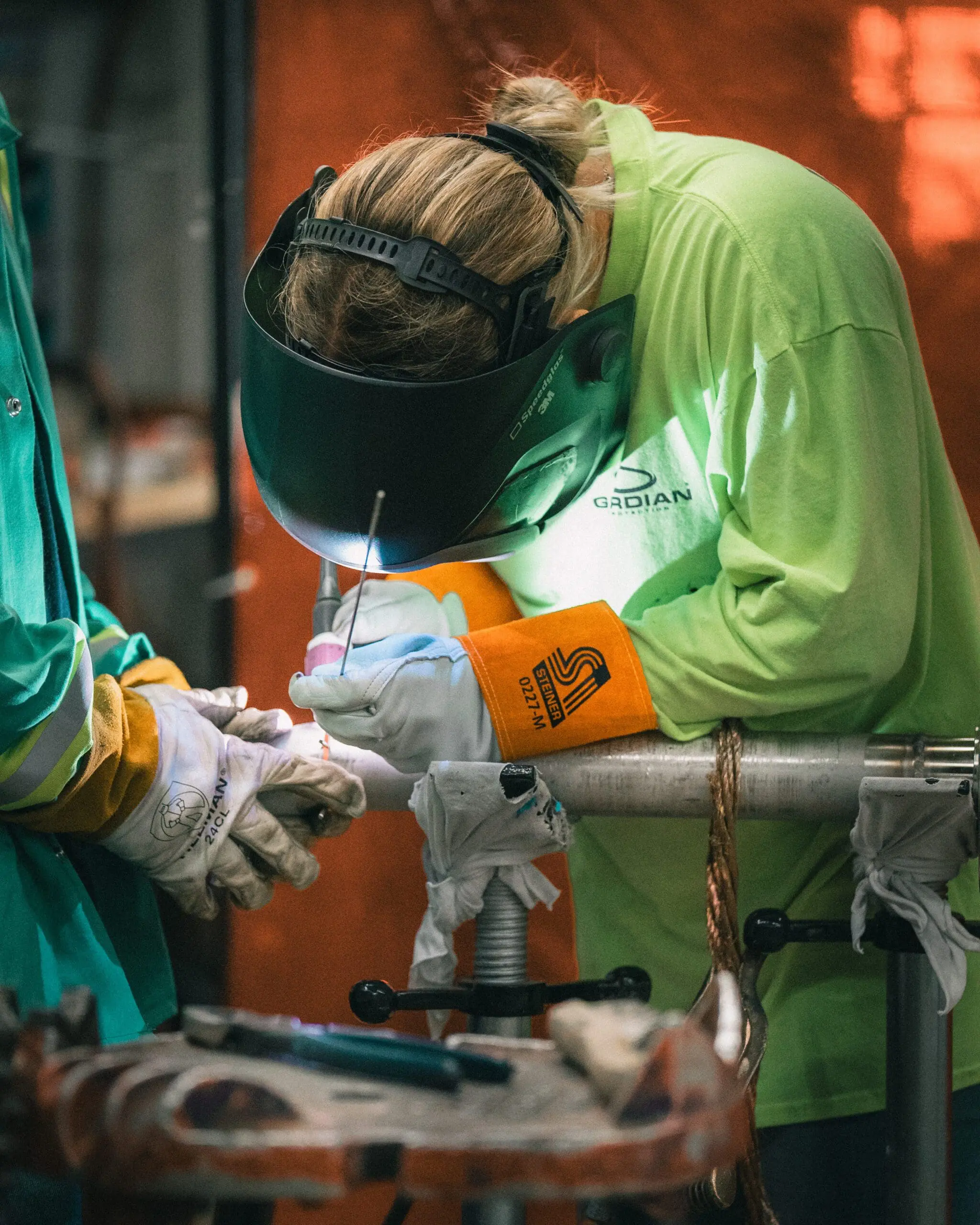
Related Piping Services
- Industrial Piping Contractor in Illinois
- Process Piping Contractor in Illinois
- Food-Grade & Sanitary Piping Contractor in Illinois
- Pipe Fabrication Contractor in Illinois
- Shutdown Piping Contractor in Illinois
- Water & Wastewater Piping Contractor in Illinois
Need more information?
Let's Talk Piping ScopeRequest Industrial Utility Piping Support
Review Your Utility Piping Scope
Send drawings, photos, equipment layouts, P&IDs, isometrics, or a written piping scope. DePue can support early planning, field verification, budget discussions, bid packages, shutdown preparation, fabrication, installation, testing, and turnover.