Serving Illinois
Municipal Mechanical Services
- Municipal Building HVAC and Mechanical Services
- HVAC Installation and Replacement for Municipal Buildings
- Municipal Rooftop Unit Replacement
- Boiler, Chiller, Cooling Tower, and Central Equipment Projects
- Capital Planning and Phased Equipment Replacement
- Public Works, Fleet, and Municipal Maintenance Facilities
- Police, Fire, and Emergency-Response Facilities
- Village Halls, City Halls, and Municipal Offices
- Libraries, Parks, Community Centers, and Recreation Facilities
- Mechanical Work in Occupied Public Buildings
- Mechanical Piping, Sheet Metal, and Equipment Support
- Preventive Maintenance and Municipal HVAC Repair
- Preconstruction, VDC, and Multi-Trade Coordination
- Municipal Facilities We Support
Municipal Building HVAC and Mechanical Services
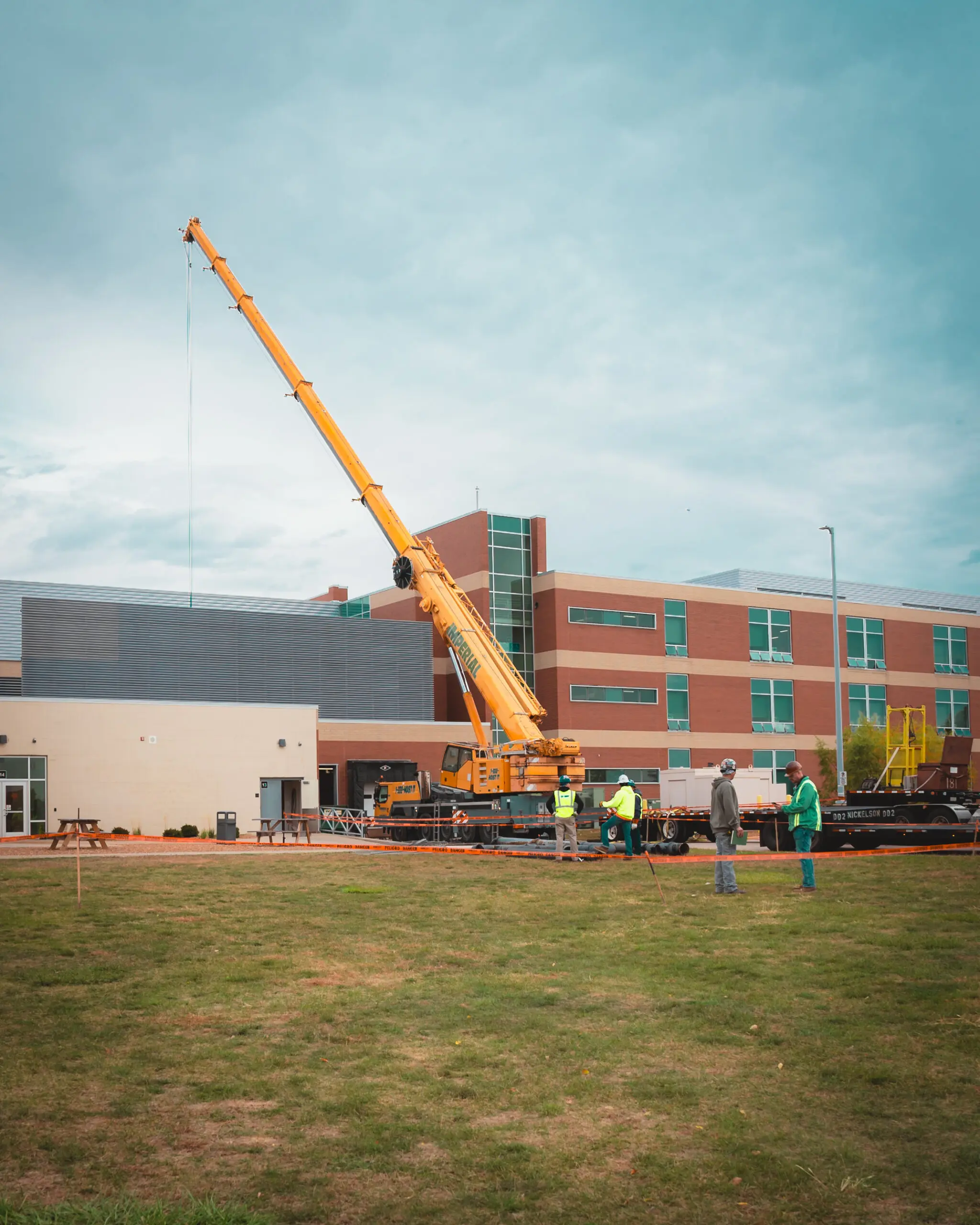
Municipal projects rarely involve one isolated piece of equipment. Replacing an HVAC unit may also require ductwork modifications, piping reroutes, equipment supports, roofing, electrical work, controls coordination, crane access, or structural modifications.
DePue approaches municipal work as a complete mechanical project rather than a standalone equipment transaction. Our team can support planning, field verification, fabrication, installation, startup, maintenance, and coordination with municipal staff, engineers, general contractors, construction managers, and supporting trades.
Municipal mechanical services may include:
- HVAC installation and replacement
- Rooftop unit replacement
- Air-handling and make-up air systems
- Boiler and hydronic heating systems
- Chillers and chilled-water systems
- Cooling tower replacement
- Exhaust and ventilation systems
- Mechanical piping
- Natural gas piping
- Commercial ductwork and sheet metal
- Pump and heat-exchanger connections
- Equipment removal and setting
- Structural equipment supports
- Mechanical-room renovations
- Preventive maintenance
- Emergency HVAC and mechanical repairs
- Preconstruction and VDC coordination
- Prime mechanical and multi-trade project coordination
Discuss a Municipal Mechanical Project
Talk to a Project Lead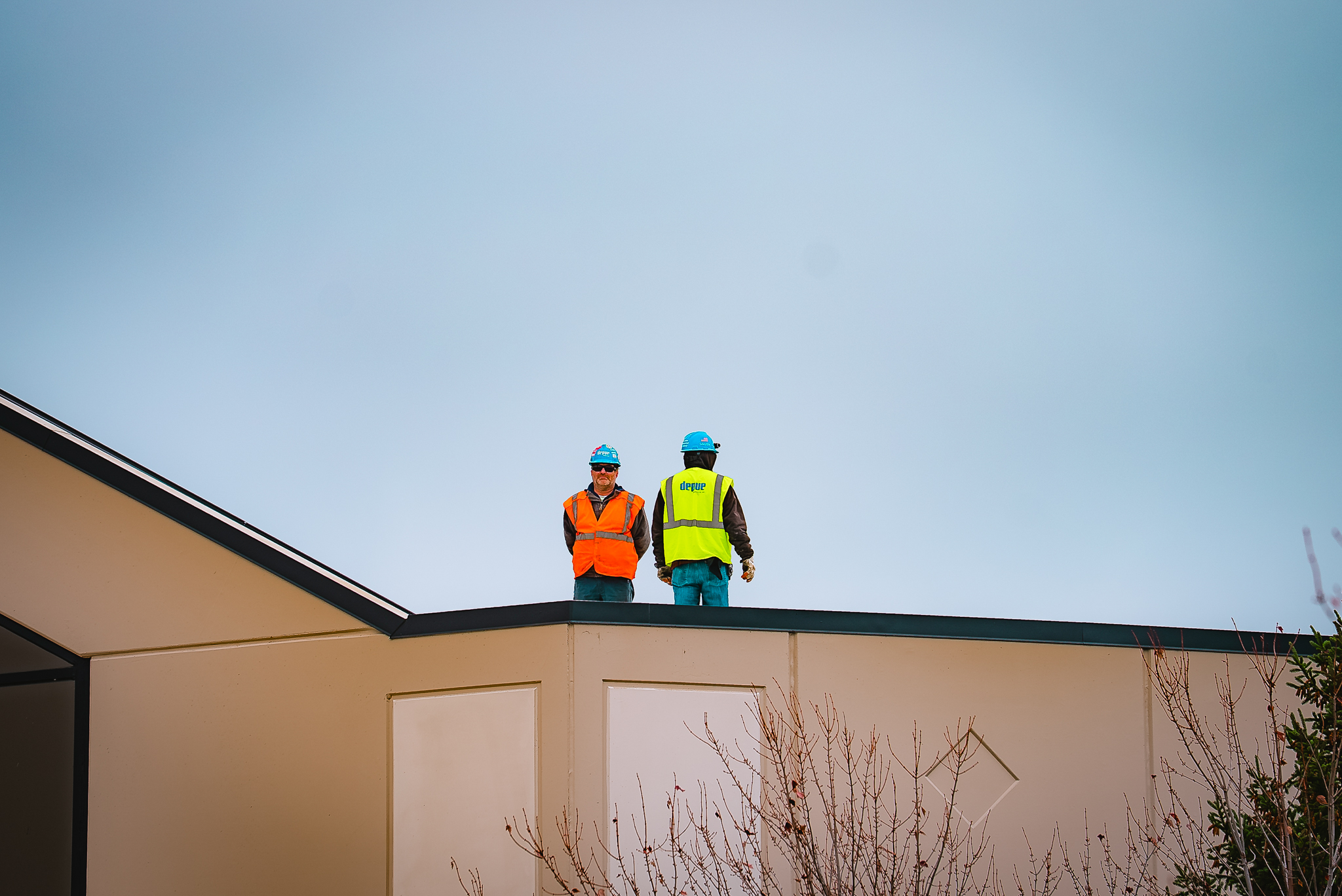
HVAC Installation and Replacement for Municipal Buildings
Municipal HVAC projects often begin with equipment that has become unreliable, inefficient, expensive to repair, or unable to maintain acceptable building conditions. Replacement may also be required as part of a facility renovation, department expansion, energy-efficiency initiative, accessibility project, or long-term capital improvement plan.
The objective is not simply to remove one unit and install another. The replacement equipment must fit the building, connect correctly to existing systems, perform as intended, meet applicable requirements, and remain accessible for future maintenance.
DePue supports municipal HVAC projects from the initial equipment review through removal, installation, startup, and turnover. Because DePue also provides piping, sheet metal fabrication, equipment setting, and project coordination, many of the supporting mechanical requirements can remain under one coordinated team.
Depending on the facility and system, the work may include:
- Rooftop HVAC units
- Packaged heating and cooling equipment
- Air-handling units
- Make-up air units
- Unit heaters
- Commercial boilers
- Hydronic heating equipment
- Chillers
- Cooling towers
- Pumps and heat exchangers
- Exhaust and ventilation systems
- Commercial ductwork
- Custom sheet metal transitions
- Natural gas piping
- Condensate piping
- Hot-water and chilled-water piping
- Equipment supports and bases
- Controls coordination
- Electrical and roofing coordination
- Equipment startup and operational verification
Discuss an HVAC Replacement
Connect with Us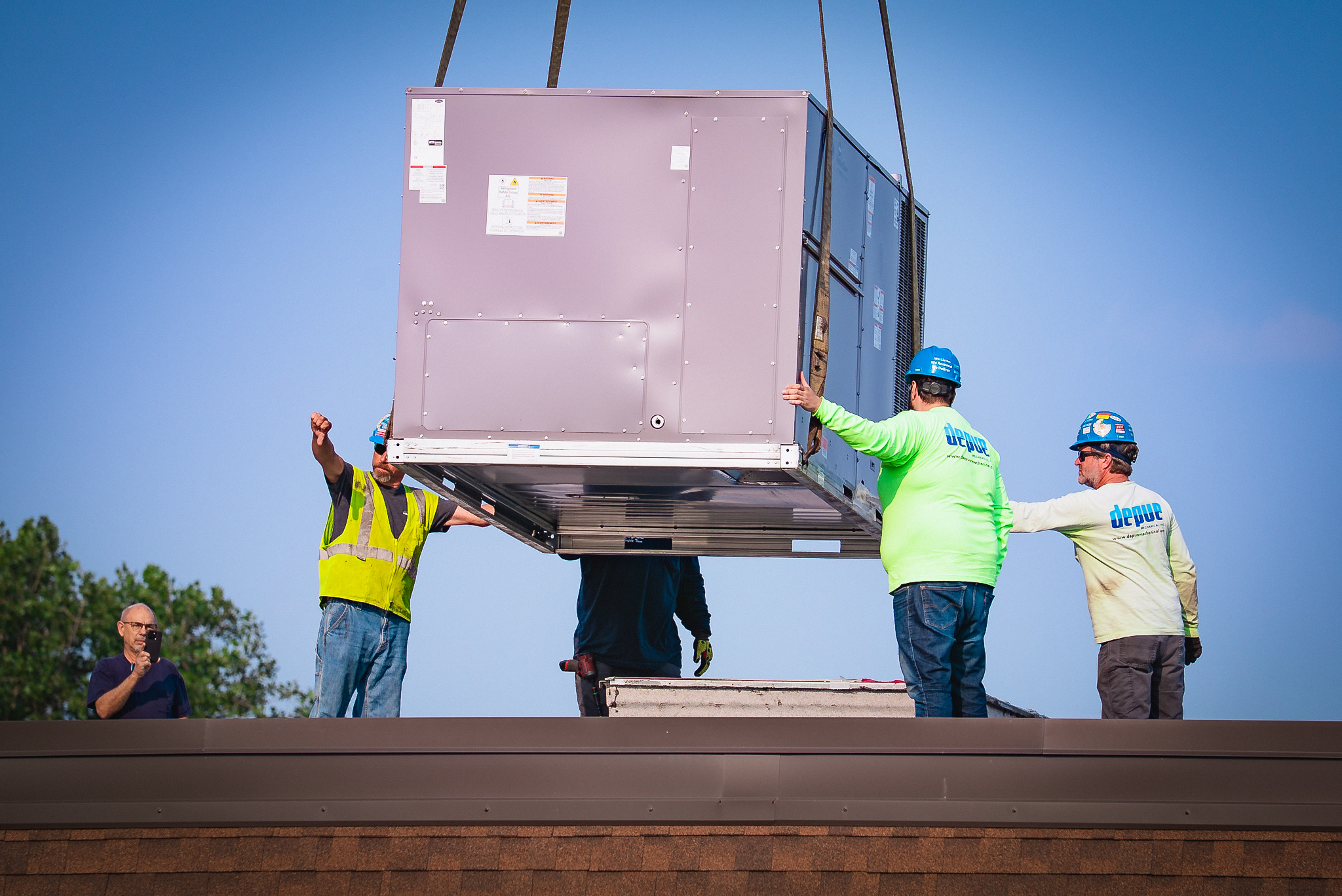
Municipal Rooftop Unit Replacement
Rooftop HVAC units are common in village halls, police stations, fire stations, public works buildings, libraries, recreation facilities, and other municipal properties. Replacing them requires more than selecting a comparable model and scheduling a crane.
DePue can coordinate the mechanical portion of a municipal rooftop unit replacement from field verification through final startup. For municipalities with multiple buildings or several aging rooftop units, DePue can also help organize replacements into phases based on equipment condition, operational importance, facility schedules, and available capital funding.
Existing roof curbs, duct openings, structural conditions, gas piping, electrical service, controls, condensate drainage, access, clearances, roofing conditions, and equipment dimensions must all be verified before installation.
Typical support may include:
- Existing equipment assessment
- Replacement-equipment planning
- Field measurements
- Equipment procurement coordination
- Removal and disposal
- Crane and rigging coordination
- Roof curb review
- Curb adapters or modifications
- Custom duct transitions
- Sheet metal fabrication
- Natural gas piping
- Condensate piping
- Electrical coordination
- Controls coordination
- Roofing coordination
- Startup and operational verification
- Project closeout documentation
Plan a Rooftop Unit Replacement
Let's Talk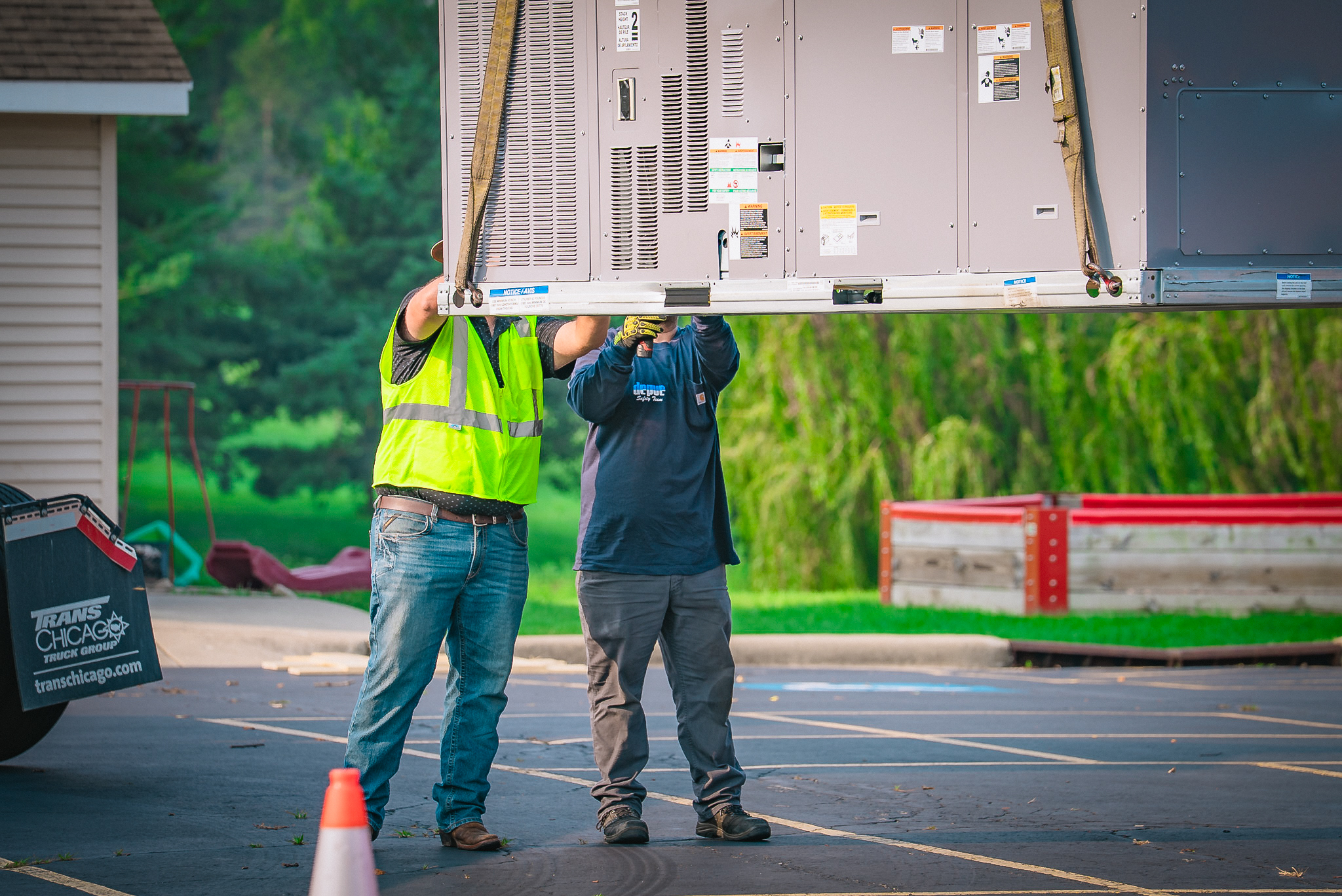
Boiler, Chiller, Cooling Tower, and Central Equipment Projects
Boilers, chillers, cooling towers, pumps, air-handling systems, and other central equipment can affect more than building temperature. These systems influence facility reliability, maintenance workload, freeze protection, indoor conditions, energy use, and whether a building can remain occupied.
DePue supports planned replacement and mechanical-room projects involving central equipment where multiple systems must be coordinated together. When a municipality needs one point of coordination, DePue can also manage qualifying supporting scopes such as controls, electrical work, roofing, structural steel, concrete, demolition, crane service, and restoration.
For applicable boiler and pressure-piping work, DePue also provides boiler installation and code-welding services.
Central equipment projects frequently involve several connected scopes. Piping may need to be replaced or rerouted. Pumps and valves may need modification. Equipment may require new bases or structural supports. Electrical service, controls, ventilation, rigging, demolition, roofing, and restoration may also be required.
DePue supports work involving:
- Commercial boilers
- Hydronic heating systems
- Chillers
- Cooling towers
- Air-handling units
- Pumps
- Heat exchangers
- Expansion tanks
- Hot-water distribution systems
- Chilled-water distribution systems
- Steam and condensate systems
- Equipment ventilation
- Combustion air
- Natural gas piping
- Mechanical piping and tie-ins
- Equipment demolition
- Rigging and equipment setting
- Equipment bases and steel supports
- Startup and testing coordination
- Permit and inspection coordination
Review a Central Equipment Project
Contact Us Today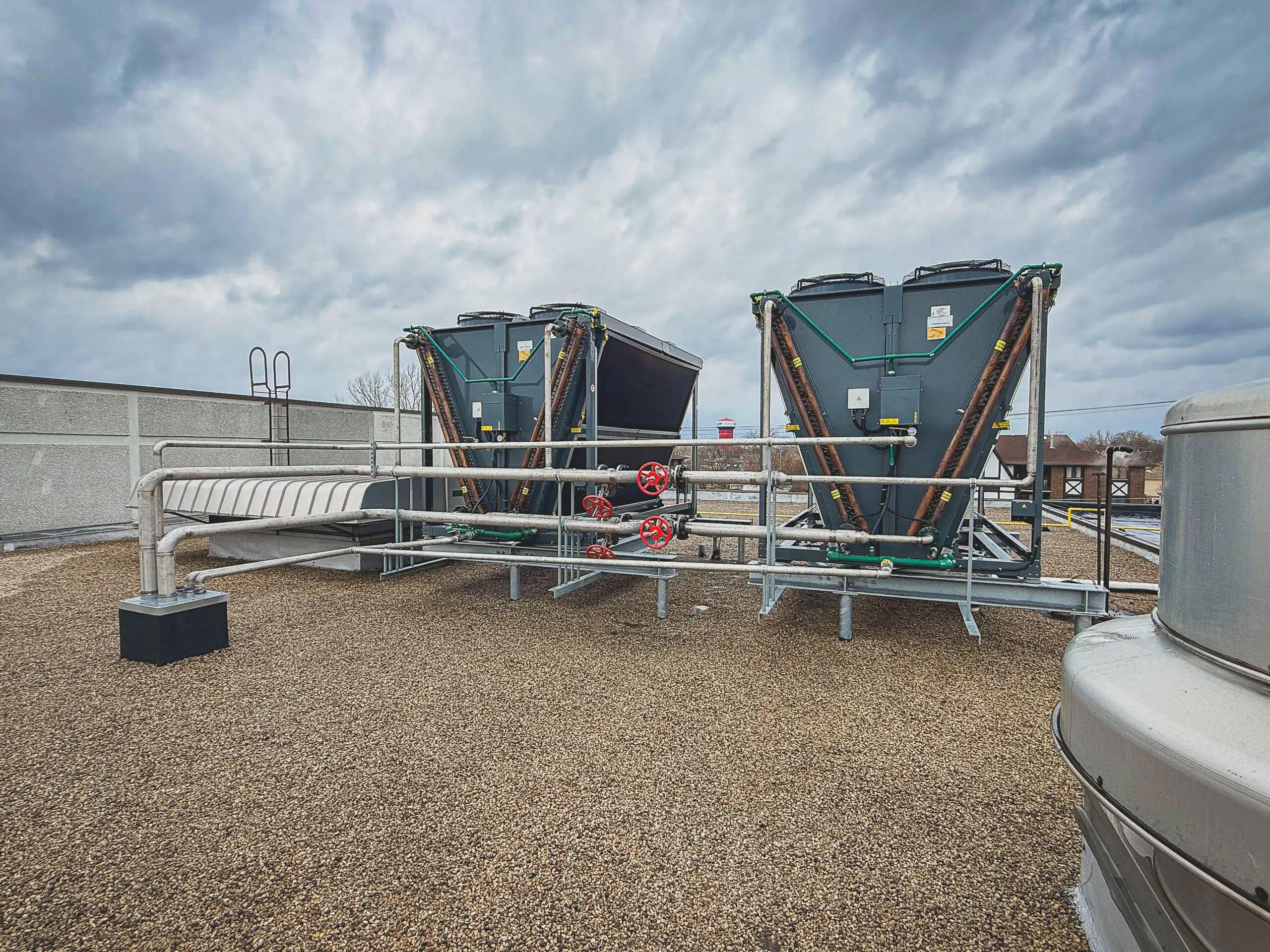
Capital Planning and Phased Equipment Replacement
Municipalities often manage several buildings with mechanical equipment of different ages, manufacturers, conditions, and operating requirements. Replacing every aging system at once may not be practical, but waiting for each unit to fail can create emergency costs, rushed purchasing decisions, and avoidable disruption.
DePue can help municipal facility teams assess existing equipment and organize replacement priorities. A phased equipment plan can help identify which systems present the greatest operational risk, prepare more accurate capital requests, coordinate replacements across multiple facilities, and reduce unplanned emergency work.
The review may also identify equipment that can remain in service through targeted repairs or preventive maintenance, allowing available funding to be directed toward higher-risk systems.
Replacement priorities may be organized around:
- Equipment age and condition
- Repair history
- Frequency of service calls
- Parts availability
- Reliability problems
- Occupant complaints
- Operational importance
- Energy performance
- Expected remaining service life
- Access and installation difficulty
- Seasonal requirements
- Facility schedules
- Available capital funding
- Opportunities to group related work
Schedule an Equipment-Planning Walkthrough
Contact Us Today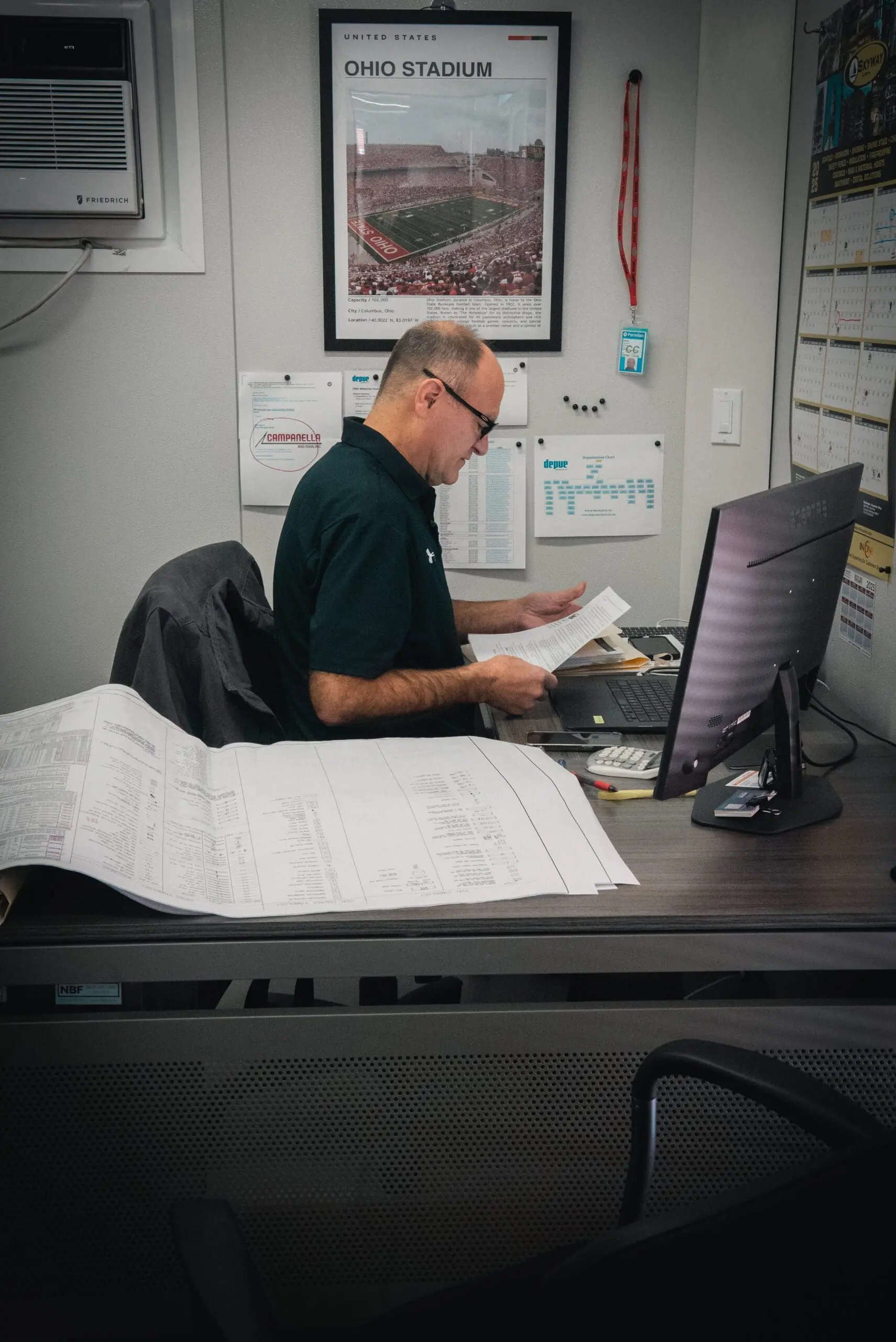
Public Works, Fleet, and Municipal Maintenance Facilities
Public works and municipal maintenance buildings may include offices, fleet garages, repair bays, workshops, wash areas, fabrication spaces, vehicle storage, equipment rooms, and material-storage areas.
DePue supports mechanical work for public works, fleet, and maintenance facilities by evaluating how each portion of the building is used and how systems can be installed or replaced without unnecessarily interrupting operations. These environments often require both comfort HVAC and task-specific ventilation depending on the space.
This page addresses public works buildings, maintenance facilities, fleet garages, and non-water public properties. Treatment plants, sanitary districts, pump stations, lift stations, and treatment-related infrastructure are covered under DePue’s dedicated Water and Wastewater Mechanical Contractor page.
Mechanical work may include:
- Office heating and cooling
- Garage and shop ventilation
- Vehicle-bay ventilation
- Vehicle exhaust coordination
- Make-up air systems
- Unit heaters
- Rooftop HVAC units
- Exhaust fans
- Air-handling equipment
- Boilers and hydronic heating
- Natural gas piping
- Ductwork and sheet metal
- Mechanical-room renovations
- Equipment replacement
- Preventive maintenance
- Emergency HVAC repair
Request a Public Works Facility Walkthrough
Request a Walkthrough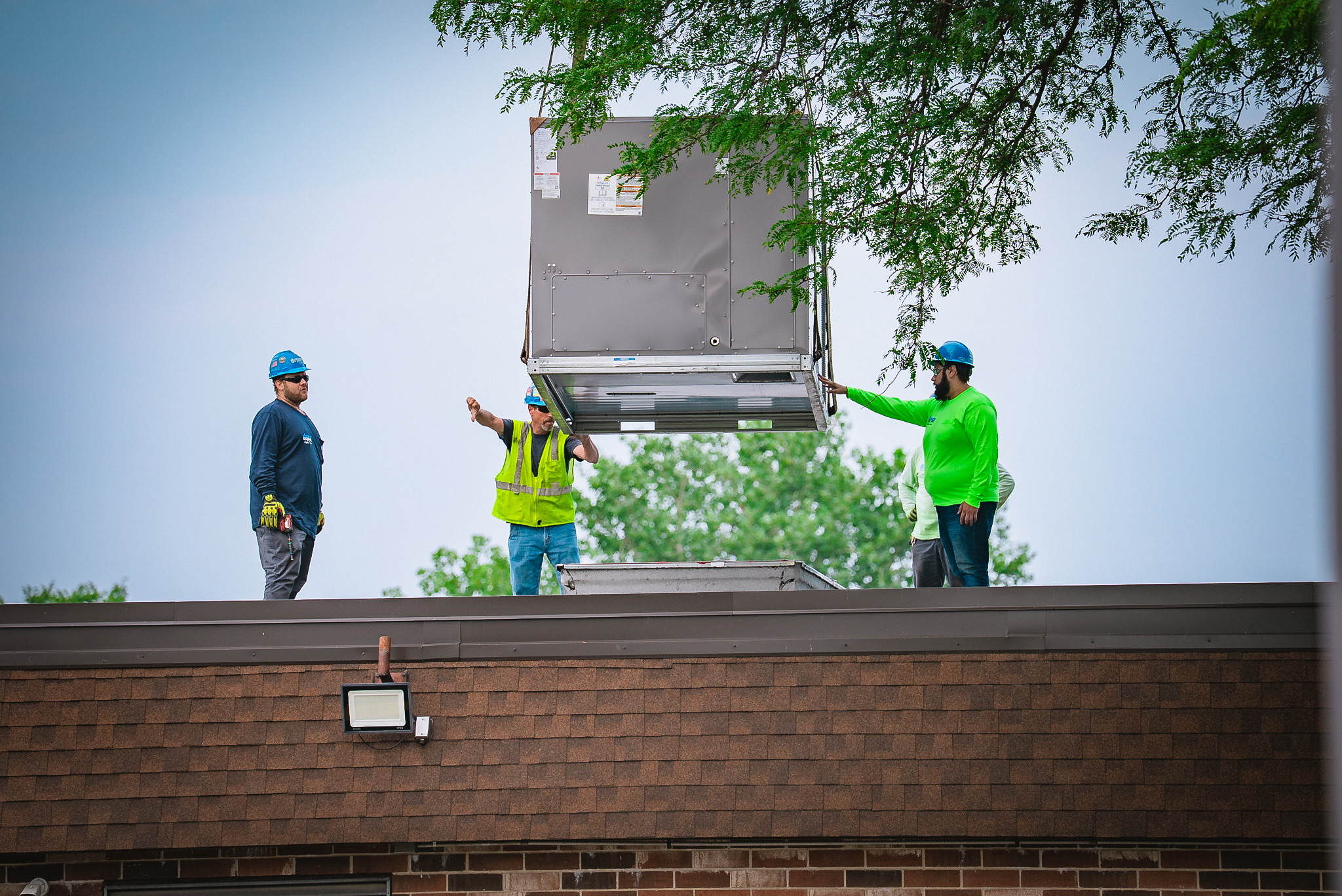
Police, Fire, and Emergency-Response Facilities
Police stations, fire stations, emergency-response buildings, and other public-safety facilities may operate continuously. Their mechanical systems must support personnel, administrative areas, sleeping quarters, training rooms, apparatus bays, equipment rooms, locker rooms, communications areas, and secured spaces.
DePue can support public-safety facility projects by planning work around continuous operations, emergency access, vehicle movement, shift schedules, secured areas, and the need to maintain critical building functions. Planning begins by identifying which areas must remain operational and when equipment changeovers can occur without affecting public-safety response.
Mechanical work may include:
- Heating and cooling equipment replacement
- Rooftop unit replacement
- Air-handler replacement
- Apparatus-bay ventilation
- Exhaust-system modifications
- Make-up air equipment
- Boiler and hydronic-system work
- Mechanical-room renovations
- Ductwork modifications
- Natural gas piping
- Phased HVAC installation
- Temporary heating or cooling evaluation
- Controls coordination
- Supporting-trade coordination
- Evening or weekend work
- Preventive maintenance
- Emergency HVAC service
Discuss a Public-Safety Facility
Contact Us Today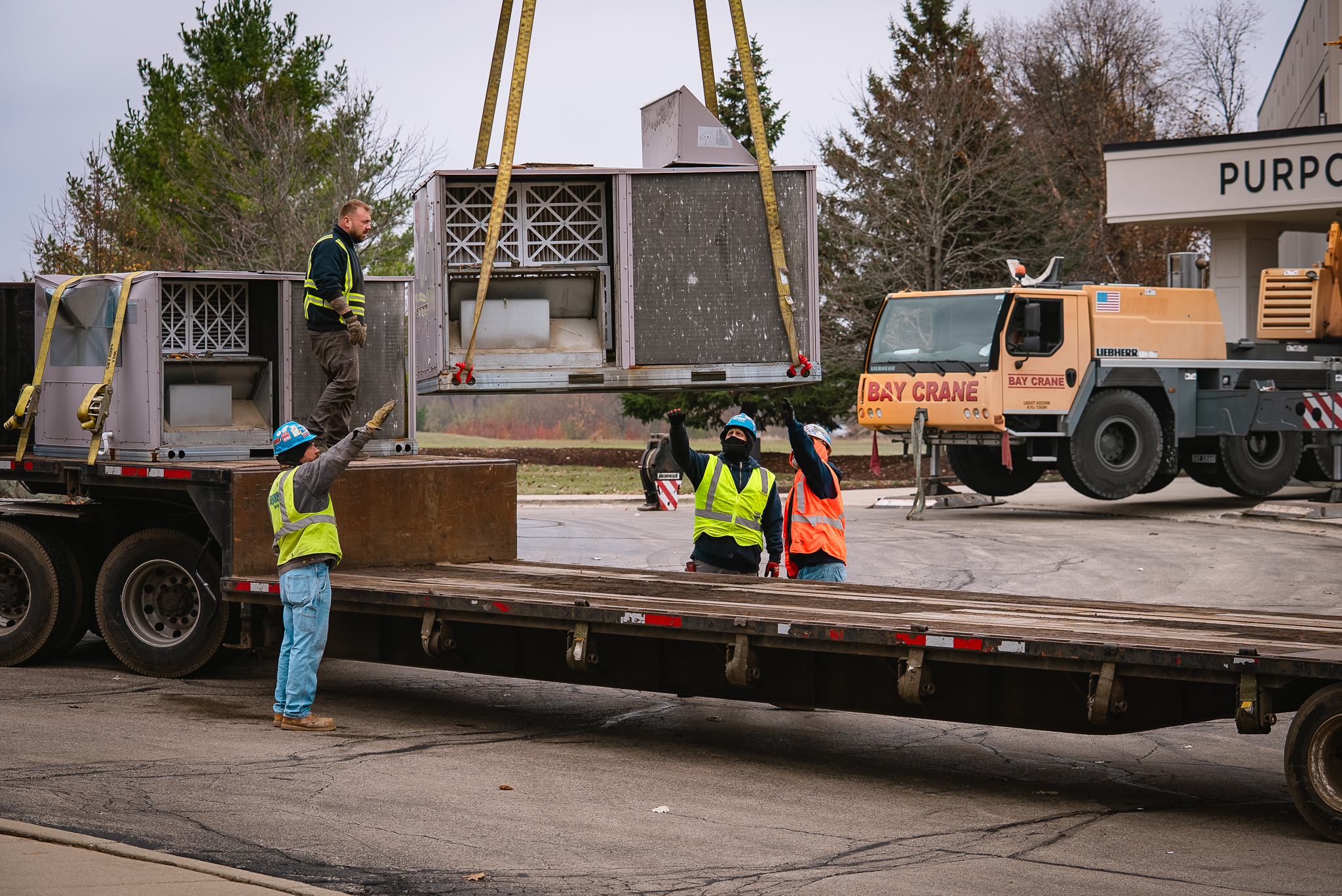
Village Halls, City Halls, and Municipal Offices
Village halls, city halls, government centers, and administrative offices need reliable heating, cooling, and ventilation for employees, residents, public meetings, records, administrative functions, and community services.
DePue supports municipal office and civic-building projects, especially when older buildings have limited mechanical space, inaccessible ductwork, obsolete equipment, uneven temperatures, or systems that have been modified over time. The project plan should also account for public access, employee work areas, service counters, meeting schedules, and secured departments.
Mechanical work may include:
- Village hall HVAC replacement
- City hall HVAC replacement
- Administrative office upgrades
- Rooftop unit replacement
- Boiler replacement
- Chiller replacement
- Air-handler replacement
- Ductwork modifications
- Hydronic piping
- Ventilation improvements
- Mechanical-room renovations
- Building additions
- Interior renovation support
- Phased installation
- Work around public meetings and operating hours
Discuss a Municipal Office Project
Contact Us Today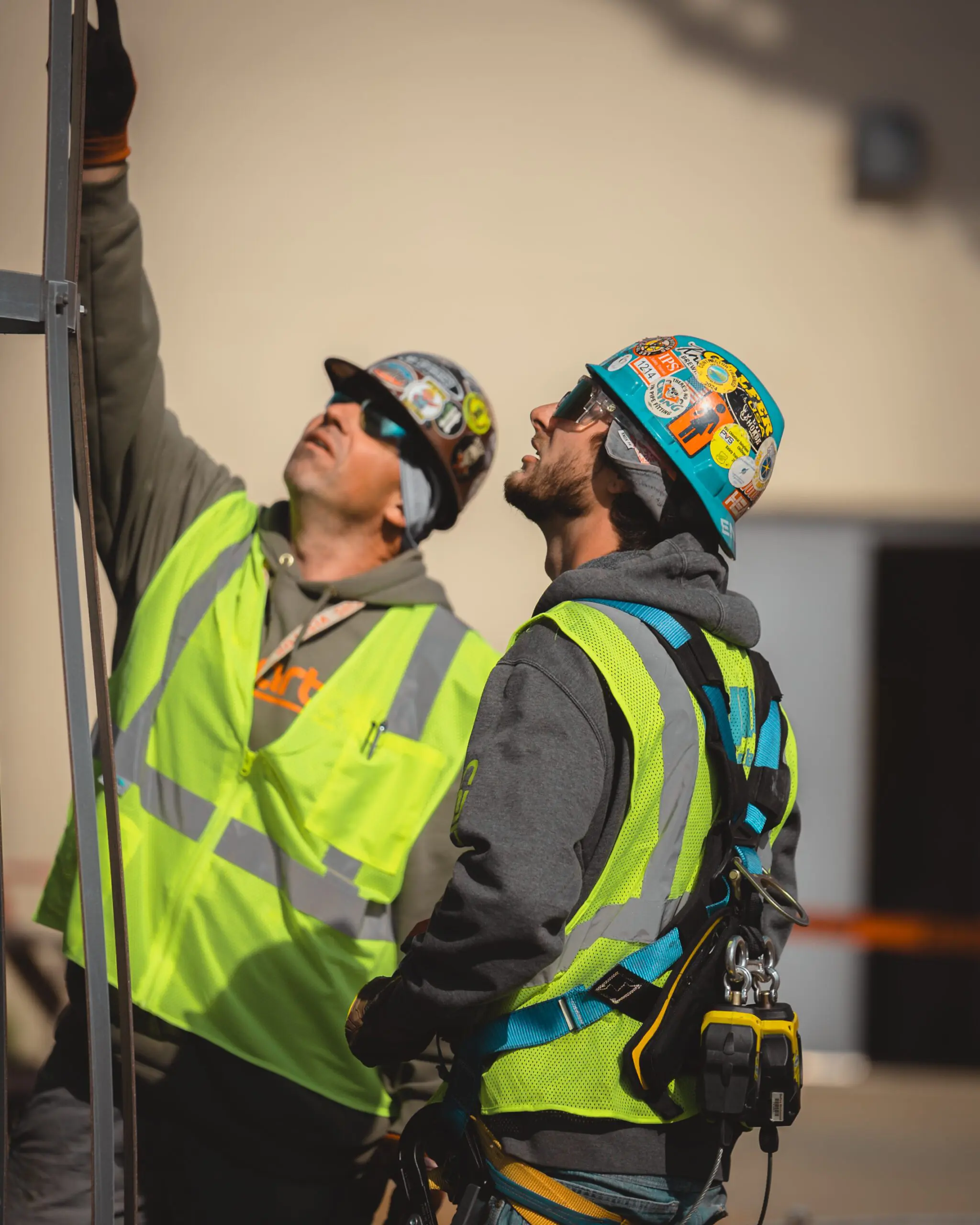
Libraries, Parks, Community Centers, and Recreation Facilities
Libraries, community centers, recreation facilities, fieldhouses, park district buildings, and other public-use properties experience changing occupancy throughout the day and year.
DePue supports HVAC and mechanical work for these facilities by planning around public programs, seasonal use, recreation schedules, elections, community meetings, and other periods when portions of the building must remain available. Each space may have different temperature, ventilation, humidity, and scheduling requirements.
Mechanical work may include:
- Rooftop HVAC equipment
- Air-handling systems
- Boilers and hydronic heating
- Chillers and chilled-water systems
- Exhaust and ventilation
- Make-up air equipment
- Ductwork modifications
- Temperature-control problems
- Equipment replacement
- Mechanical renovations
- Preventive maintenance
- Emergency repair
- Phased installation
- Evening and weekend work
Plan a Public Facility Project
Talk with Us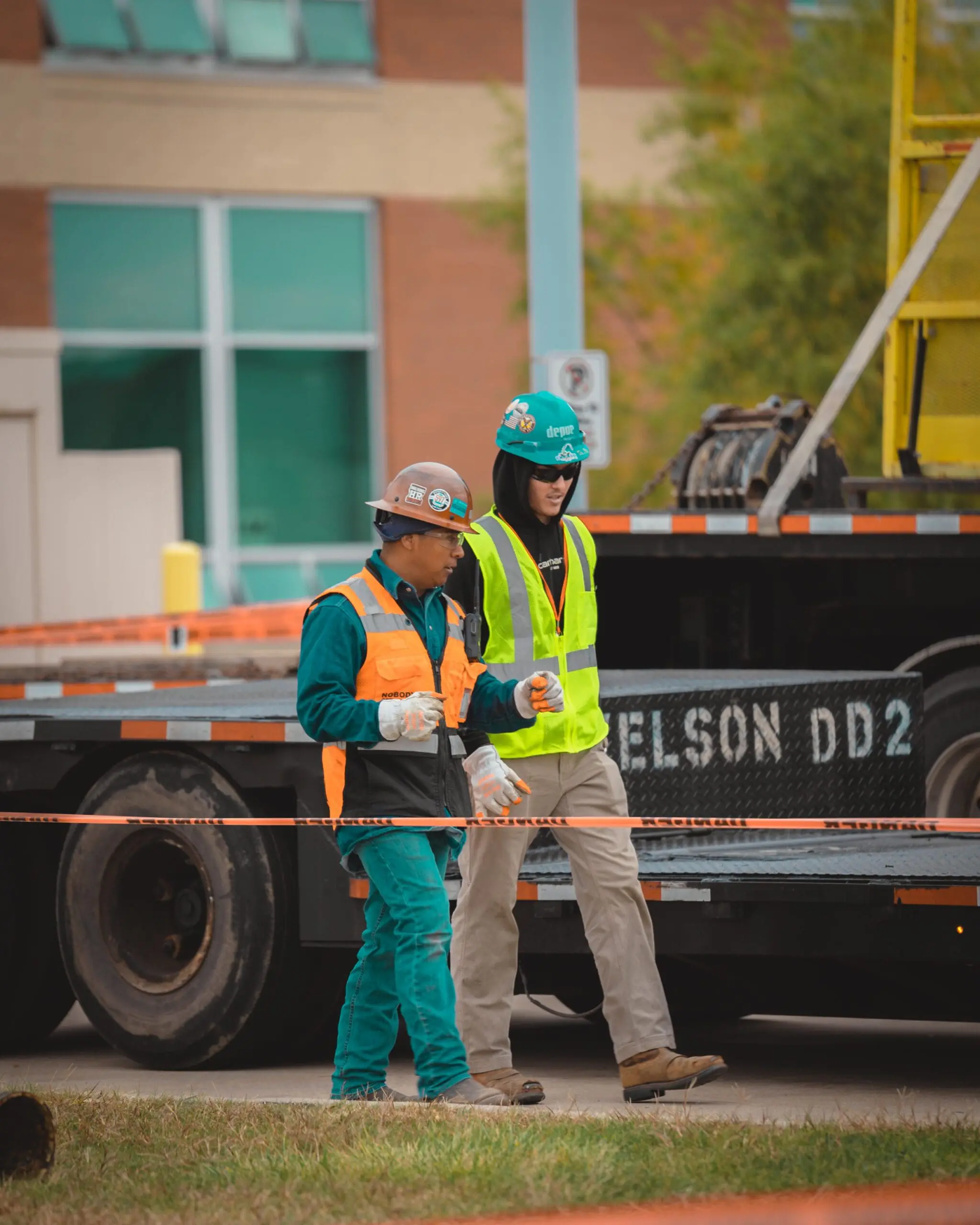
Mechanical Work in Occupied Public Buildings
Many municipal buildings must remain open while construction or equipment replacement is completed. DePue plans occupied-building work by first identifying critical systems, allowable shutdown windows, and whether temporary heating or cooling is required.
Clear sequencing and communication help limit disruption while ensuring crews can complete work safely and efficiently. Work is planned around public operating hours, emergency access, secured spaces, and equipment delivery and installation constraints.
Occupied-building planning may include:
- Public operating hours
- Employee work areas
- Emergency access
- Vehicle access
- Secured spaces
- Public meetings
- Recreation programs
- Noise restrictions
- Dust-control requirements
- Temporary heating or cooling
- Restricted shutdown windows
- Equipment deliveries
- Crane operations
- Safe separation of work areas
- Evening and weekend work
- Startup and changeover timing
Plan Work Around Facility Operations
Let's ChatMechanical Piping, Sheet Metal, and Equipment Support
HVAC and central equipment projects frequently require mechanical work beyond the equipment itself. DePue provides coordinated piping, sheet metal, rigging, and equipment-setting services to ensure systems integrate properly with existing building conditions.
Keeping core mechanical work under one coordinated team can reduce handoffs, improve constructability, and help resolve field conditions before they affect the installation schedule.
Supporting mechanical capabilities may include:
- Hydronic heating piping
- Chilled-water piping
- Hot-water piping
- Steam and condensate piping
- Natural gas piping
- Pump and heat-exchanger connections
- Equipment tie-ins
- Custom duct transitions
- Commercial ductwork
- Equipment curbs
- Sheet metal fabrication
- Exhaust and ventilation systems
- Equipment removal
- Equipment setting
- Rigging coordination
- Equipment bases
- Structural supports and frames
- Field verification and layout
- Prefabricated piping assemblies
- Prefabricated sheet metal assemblies
Review the Complete Mechanical Scope
Request a Review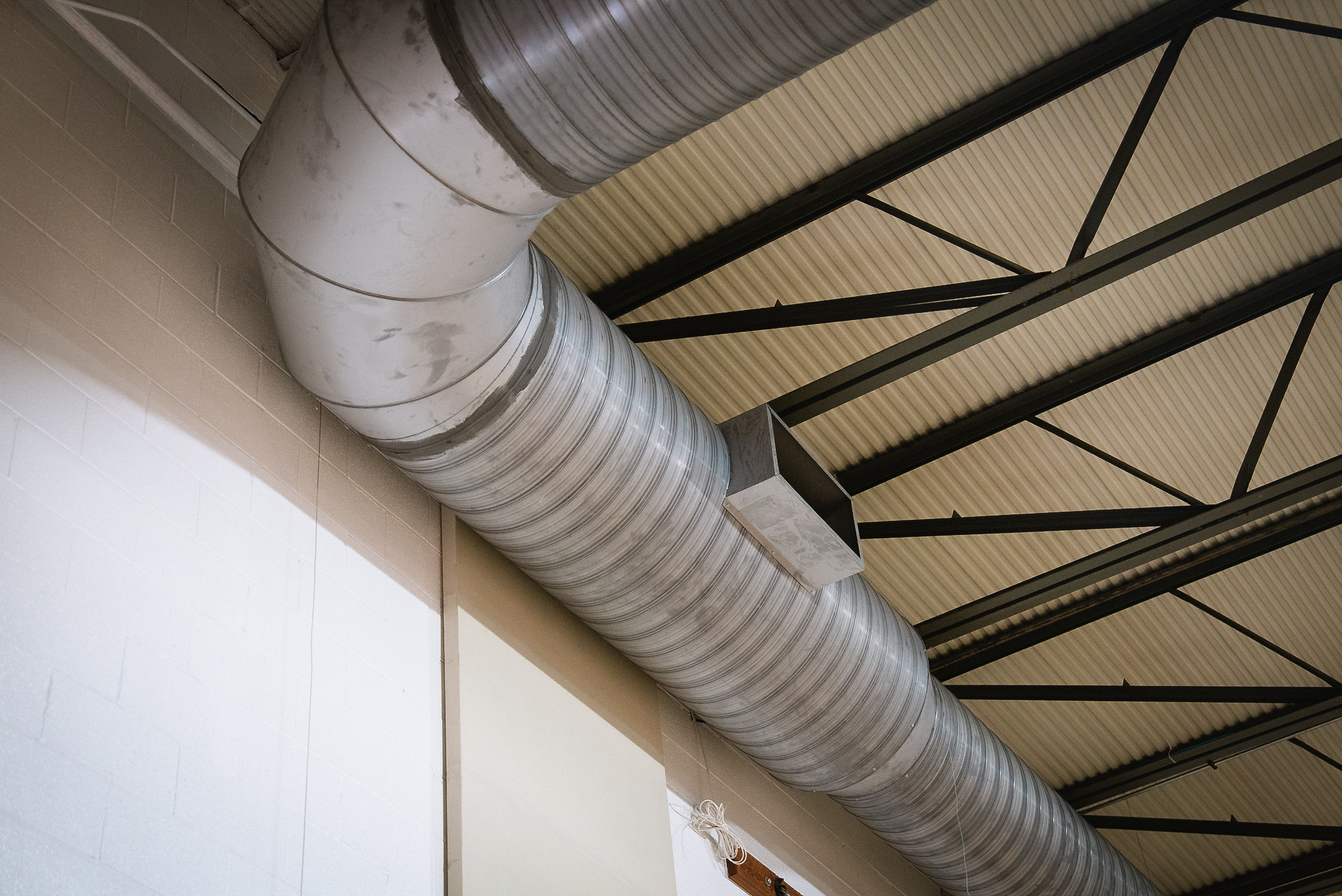
Preventive Maintenance and Municipal HVAC Repair
Municipal facility teams are responsible for keeping equipment operational while managing staffing, inspections, procurement, and long-term capital planning. A structured preventive maintenance program helps improve visibility into equipment condition and reduce unexpected failures.
DePue develops maintenance programs based on equipment type, building use, operating schedule, service history, risk, and budget. Emergency HVAC and mechanical service is also available 24/7 for urgent issues.
Service may include:
- Rooftop unit inspections
- Air-handler maintenance
- Filter replacement
- Belt inspection and replacement
- Coil inspection and cleaning
- Refrigerant-system checks
- Boiler maintenance
- Chiller maintenance
- Cooling tower maintenance
- Pump and hydronic-system checks
- Exhaust-system inspections
- Make-up air equipment maintenance
- Thermostat and controls diagnostics
- Equipment-condition reporting
- Repair recommendations
- Capital-replacement prioritization
- Multi-building service coordination
Request Municipal HVAC Service
Contact Us Today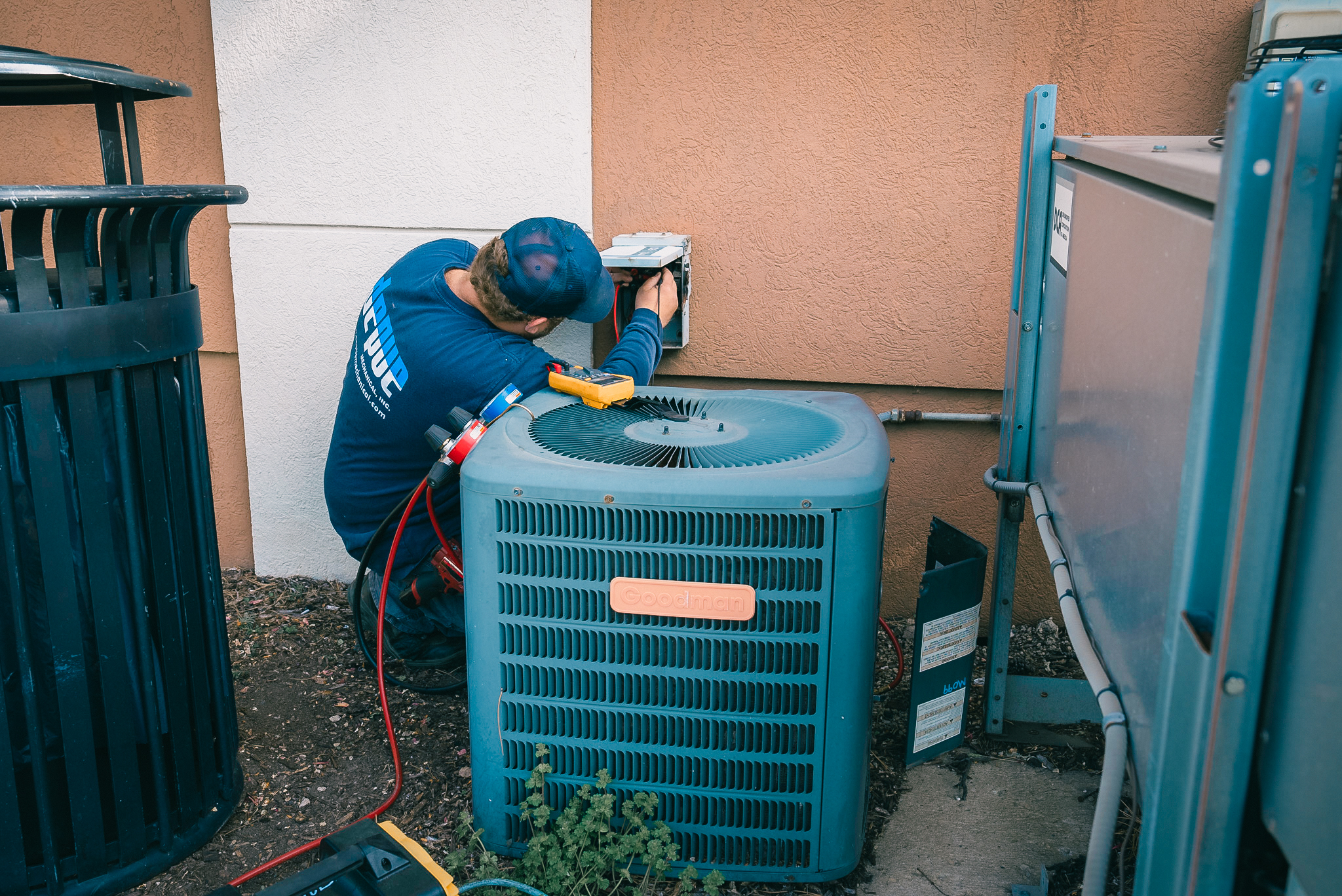
Preconstruction, VDC, and Multi-Trade Coordination
Municipal mechanical projects are easier to control when planning begins before installation. DePue supports early-stage coordination to evaluate equipment access, routing, structural requirements, shutdowns, phasing, and supporting trades.
DePue can also serve as a prime contractor on qualifying projects and coordinate roofing, controls, electrical work, structural steel, concrete, demolition, crane service, and restoration. The team also works as a mechanical subcontractor on plan-and-spec, design-build, GC-led, and construction-manager-led projects.
Early coordination may include:
- Facility walkthroughs
- Existing-condition assessments
- Field measurements
- Repair-versus-replace evaluations
- Equipment layouts
- Constructability reviews
- Budget and phasing discussions
- Equipment-access planning
- Mechanical design support
- VDC and BIM coordination
- Clash detection
- Prefabrication planning
- Installation sequencing
- Shutdown planning
- Bid-scope review
- Coordination with architects and engineers
- Coordination with general contractors and construction managers
Discuss Preconstruction and Project Delivery
Talk with Us Today
Municipal Facilities We Support
DePue supports and services a variety of municipal facilities.
For treatment plants, sanitary districts, pump stations, lift stations, and treatment-related piping, visit our Water and Wastewater Mechanical Contractor page.
DePue’s municipal mechanical services are intended for non-water public properties such as:
- Public works buildings
- Fleet maintenance facilities
- Municipal garages
- Municipal repair shops
- Village halls
- City halls
- Government centers
- Municipal administrative offices
- Police stations
- Fire stations
- Emergency response facilities
- Libraries
- Community centers
- Recreation centers
- Park district buildings
- Fieldhouses
- Public meeting facilities
- Municipal storage and operations buildings
- Other local-government buildings
Request a Facility Walkthrough
Talk to us Today
Common Questions About Municipal Mechanical Projects
-

Can DePue work directly with a municipality before plans and specifications are complete?
Yes. DePue can begin with a facility walkthrough, existing-condition review, equipment assessment, and discussion of project priorities. Depending on the project-delivery method, our team can support budgeting, constructability, phasing, equipment planning, and coordination before the final construction documents are complete.
-
Can DePue bid plan-and-spec municipal projects?
Yes. DePue can bid qualifying municipal mechanical projects as a mechanical subcontractor, prime mechanical contractor, or project partner working with a general contractor or construction manager. Plans, specifications, bid dates, addenda, site-walk information, and applicable procurement requirements should be provided when available.
-
Can municipal mechanical work be phased while the building remains open?
In many cases, yes. DePue evaluates occupied areas, public access, emergency operations, allowable shutdown periods, temporary heating or cooling needs, equipment changeovers, and off-hours work before developing the installation sequence.
-
Can DePue help prioritize equipment across multiple municipal buildings?
Yes. DePue can review equipment condition, service history, reliability, parts availability, operational importance, access, and expected service life to help municipal facility teams organize repairs and replacements across multiple buildings and capital-budget cycles.
-
What information should we provide when requesting a municipal project quote?
Provide the facility address, building type, affected equipment or system, current problem, preferred project timing, and whether the need is immediate or part of a future capital plan. Equipment schedules, photographs, service records, plans, specifications, and bid documents are also helpful when available.

Request a Facility Walkthrough
Request a Facility Walkthrough
If your Illinois municipal facility is planning piping work, mechanical upgrades, equipment tie-ins, a shutdown, or an emergency repair, request a facility walkthrough. We can help your team review the scope, identify field constraints, evaluate prefabrication opportunities, and build a practical plan for completing the work safely and efficiently.