Industrial Prime General Contractor & Design-Build Services
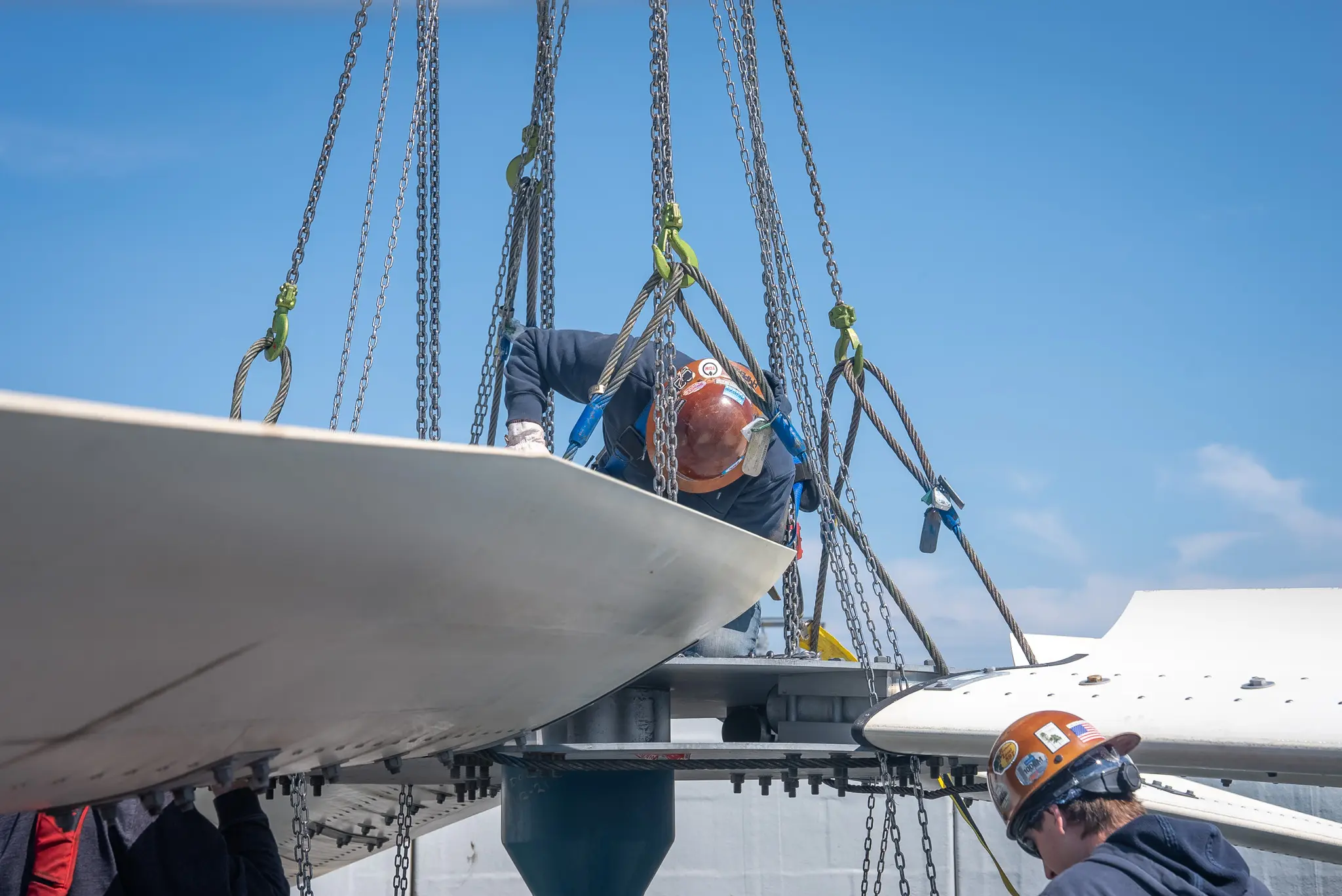
INDUSTRIAL PRIME GENERAL CONTRACTING
One Prime Contractor. Critical Mechanical Work Self-Performed.
DePue Mechanical serves as Prime General Contractor and design-build partner for mechanically complex industrial, commercial, and municipal capital projects across Northern Illinois and Greater Chicago. When the mechanical systems are central to the project, our team can manage the full scope while self-performing piping, HVAC, sheet metal, boiler and code welding, equipment setting, rigging, and structural steel work.
From early scope development, ROM budgeting, engineering coordination, and procurement through subcontractor management, scheduling, safety, permitting, construction, commissioning coordination, and turnover, DePue gives plant management one accountable team responsible for moving the project from concept to completion.
PRIME GENERAL CONTRACTING
Mechanical Expertise. Full Project Accountability.
- When DePue Should Hold the Prime Contract
- Industrial Capital Projects We Prime
- Self-Performed Mechanical Construction
- One Prime Contract. Coordinated Specialty Trades.
- Preconstruction Before the Scope Is Fully Defined
- Industrial Design-Build & Engineering Coordination
- Schedule, Cost & Procurement Control
- Built Around an Operating Facility
- Safety Leadership Across the Entire Project
- Permits, Inspections & Project Compliance
- Startup, Commissioning Coordination & Turnover
- Contracting Options That Match the Project
- Industrial Markets We Serve
- $7M Design-Build Extruder Addition
- $3M Automated Caramel Plant
- Food Plant Expansion With No Schedule Overruns
When DePue Should Hold the Prime Contract
DePue is best positioned as Prime General Contractor when piping, utilities, equipment, HVAC, boilers, structural systems, or other mechanical scopes drive the project's complexity, schedule, shutdown requirements, or constructability.
Instead of placing a traditional building contractor between the owner and the mechanically critical work, DePue can hold the prime contract, self-perform core mechanical scopes, and manage the specialty trades required to complete the rest of the project. That gives plant management one point of accountability for scope, schedule, cost, safety, coordination, and closeout.
- Mechanical systems represent a major portion of the project
- Multiple trades must be coordinated around one capital improvement
- Construction must occur inside or around an operating facility
- A shutdown or tie-in window affects the project schedule
- The owner wants one contractor responsible for the complete project
- Project scope still needs to be developed before final design
- Equipment, piping, utilities, and structural work must be coordinated together
- The project requires design-build or early preconstruction support
- The owner wants critical mechanical work self-performed by the Prime GC
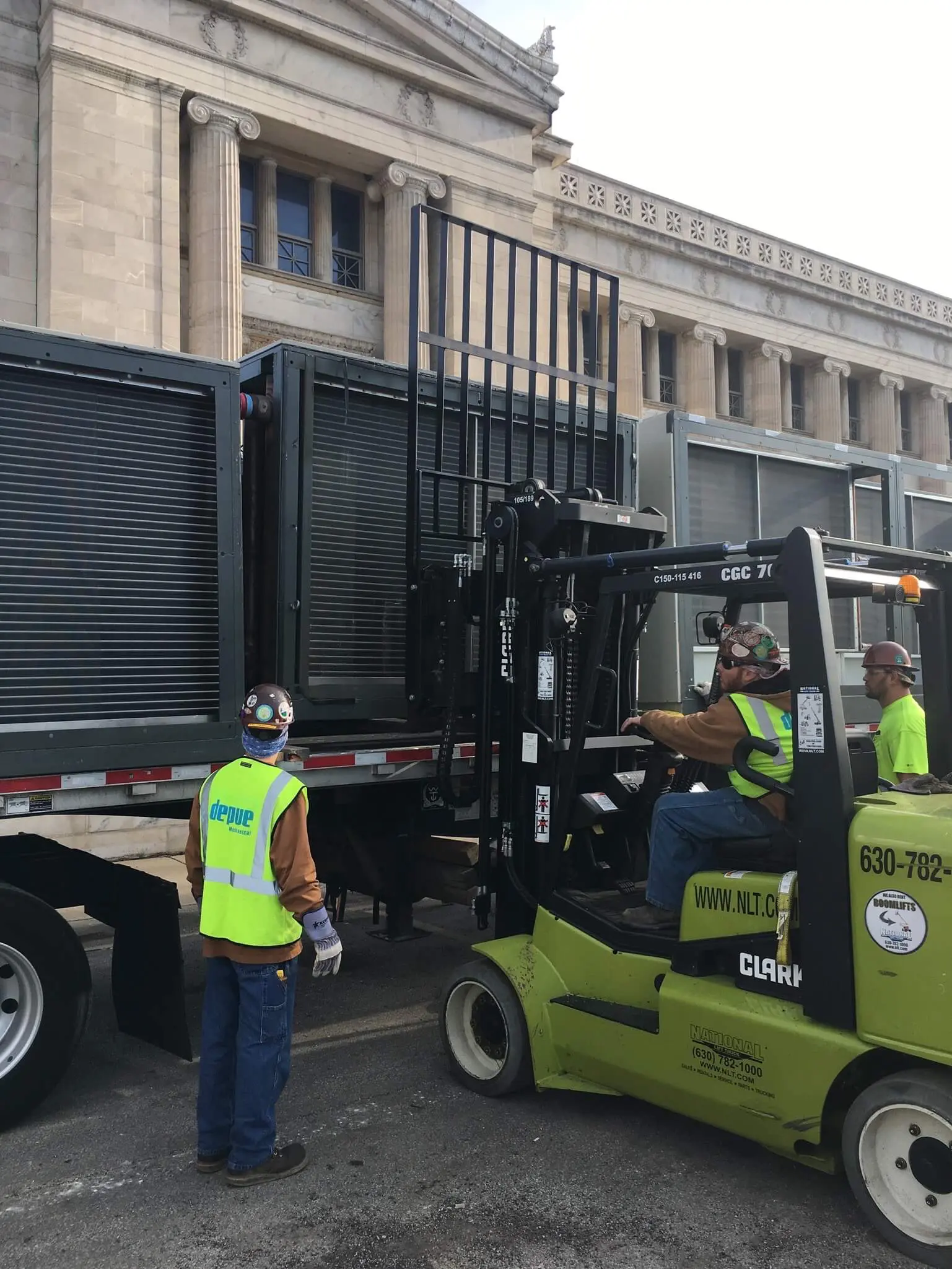
Industrial Capital Projects We Prime
DePue's Prime GC work is centered on projects where industrial and facility mechanical systems are integral to the overall construction scope.
Projects may begin as a defined bid package, an owner-direct capital improvement, or an operational need that still requires scope development and engineering. DePue can build the project team and delivery approach around the stage of the project rather than requiring every owner to arrive with a complete construction package.
- Plant expansions
- New process-line installations
- Production-line modifications
- Utility upgrades
- Equipment installations and replacements
- Boiler and mechanical-room projects
- HVAC capital replacements
- Multi-trade process-piping projects
- Facility renovations
- Shutdown and turnaround projects
- Structural and equipment-setting projects
- Water and wastewater upgrades
- Commercial mechanical renovations
- Municipal projects
- Ground-up industrial construction
- Industrial building additions
Planning a multi-trade capital project?
Review Project Scope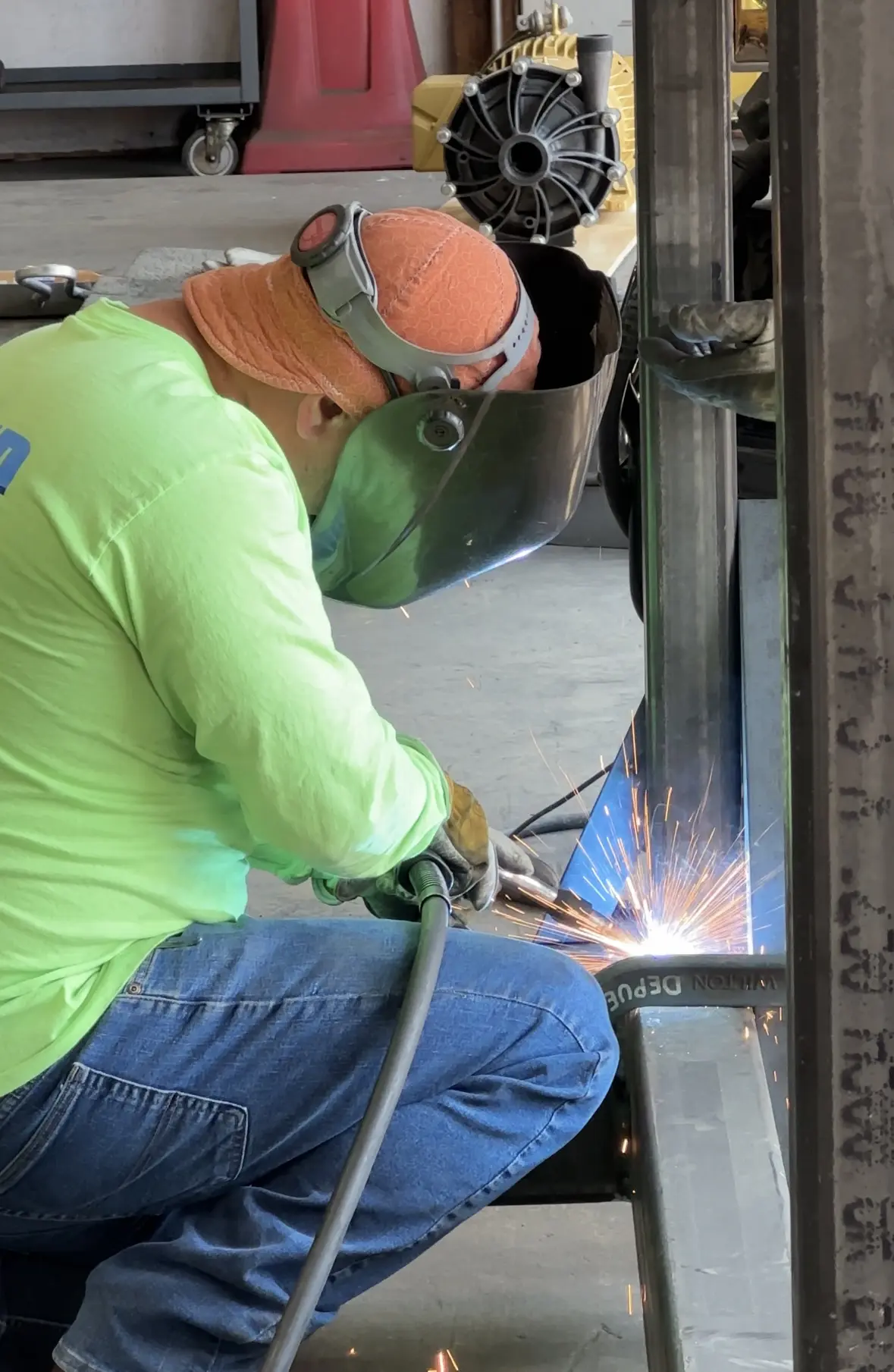
Self-Performed Mechanical Construction
A major advantage of making DePue the Prime GC is that many of the trades most likely to affect an industrial project's critical path are performed by DePue's own field and fabrication teams.
Our self-perform capabilities include industrial process piping, utility piping, pipe fabrication, HVAC, sheet metal, boiler and code welding, equipment setting, rigging, and structural steel fabrication and erection.
That reduces the number of handoffs between the Prime GC and the contractors responsible for the core mechanical scope while giving the project team direct control over coordination, fabrication, installation, shutdown work, and field execution.
- Industrial and process piping
- Utility piping
- Pipe fabrication and prefabrication
- Commercial and industrial HVAC
- Sheet metal and ductwork
- Boiler and code welding
- Equipment setting
- Rigging
- Structural steel fabrication
- Structural steel erection
- Project-dependent demolition
- Project-dependent testing and balancing
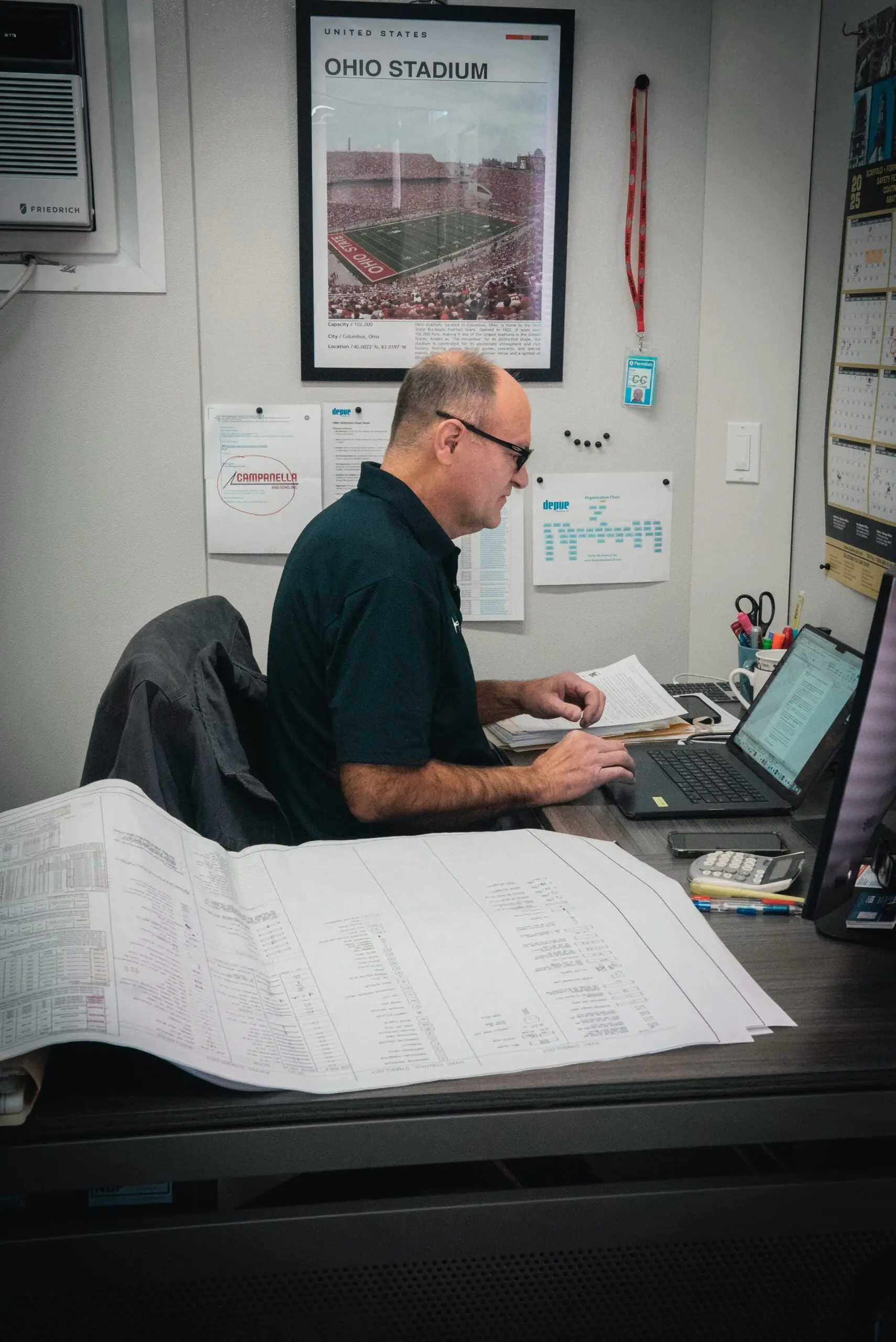
One Prime Contract. Coordinated Specialty Trades.
Not every project scope needs to be self-performed for DePue to remain accountable for the overall result.
As Prime GC, DePue solicits, evaluates, contracts, schedules, and manages the specialty subcontractors needed to complete the project. We typically work with established trade partners with whom we have existing relationships, but we can also incorporate facility-preferred contractors when the owner has electrical, controls, civil, or other partners they want involved.
DePue remains responsible for coordinating those scopes with the project schedule, safety requirements, construction sequence, owner communication, and the mechanically critical work being performed by our own team.
- Electrical
- Controls and automation
- Engineering consultants
- Excavation
- Concrete
- Civil and site work
- Insulation
- Painting and coatings
- Fire protection
- Roofing when required as part of a larger project
- Architectural scopes when required as part of a larger project
- Crane services
- Specialty testing and balancing
- Project-specific commissioning providers

Preconstruction Before the Scope Is Fully Defined
Plant capital projects do not always begin with a finished drawing set. Sometimes the owner knows what production, utility, capacity, reliability, or facility problem needs to be solved but still needs help turning that need into a buildable project.
DePue can become involved during conceptual and preconstruction stages to walk the facility, develop scope, establish ROM budgeting, identify constructability concerns, evaluate phasing, coordinate engineering requirements, and determine what information is still needed before construction begins.
Our BIM and VDC capabilities can also support existing-condition verification, coordination, fabrication planning, and constructability on projects where mechanical systems must fit around active production and existing infrastructure.
- Site walks and existing-condition review
- Early scope development
- ROM budgeting
- Constructability review
- Preliminary project scheduling
- Project phasing
- Shutdown planning
- Engineering-scope development
- Equipment and procurement planning
- Subcontractor-budget development
- VDC and coordination planning
- Identification of long-lead items
- Early project-risk identification
Still developing the project?
Start Preconstruction Planning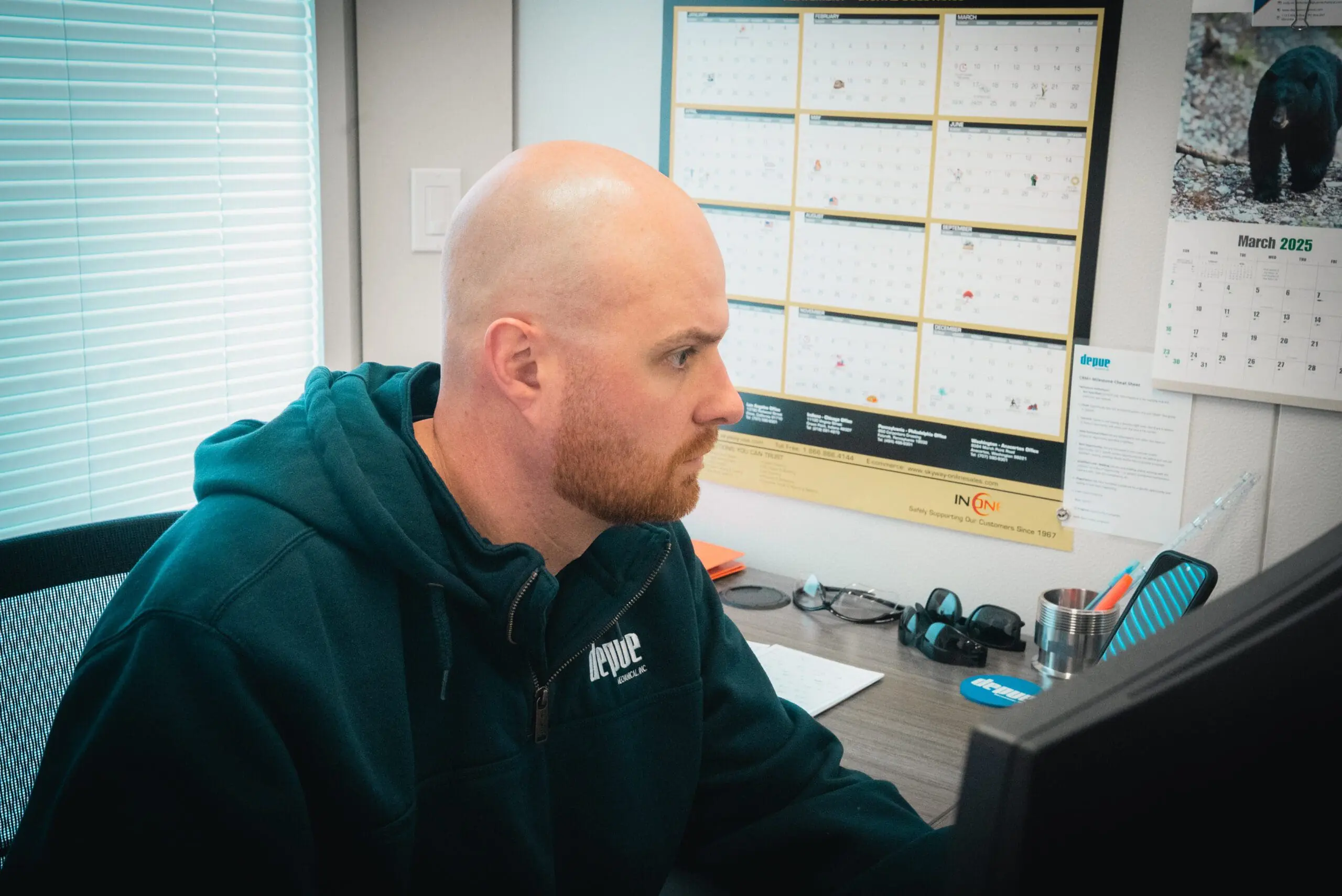
Industrial Design-Build & Engineering Coordination
DePue supports plan-and-spec, owner-direct, and design-build project delivery depending on how the project begins and how the owner wants responsibility structured.
For design-build work, DePue can contract and manage the appropriate engineering consultants while coordinating constructability and construction execution under the Prime contract. On other projects, the owner may retain its own engineer and DePue will coordinate directly with that design team.
This gives the owner flexibility to involve DePue early without implying that every engineering discipline must be performed in-house. The appropriate process, structural, architectural, electrical, or other professional engineering resources are incorporated based on the project's requirements.
- Design-build project delivery
- Owner-direct project development
- Plan-and-spec construction
- Engineering consultant management
- Coordination with owner-retained engineers
- Mechanical constructability review
- BIM and VDC coordination
- Design-to-construction handoff
- Equipment and system coordination
- Field-driven constructability input
Schedule, Cost & Procurement Control
Plant management should not have to assemble separate subcontractor schedules, chase procurement dates, and determine how one trade's delay affects the rest of the project.
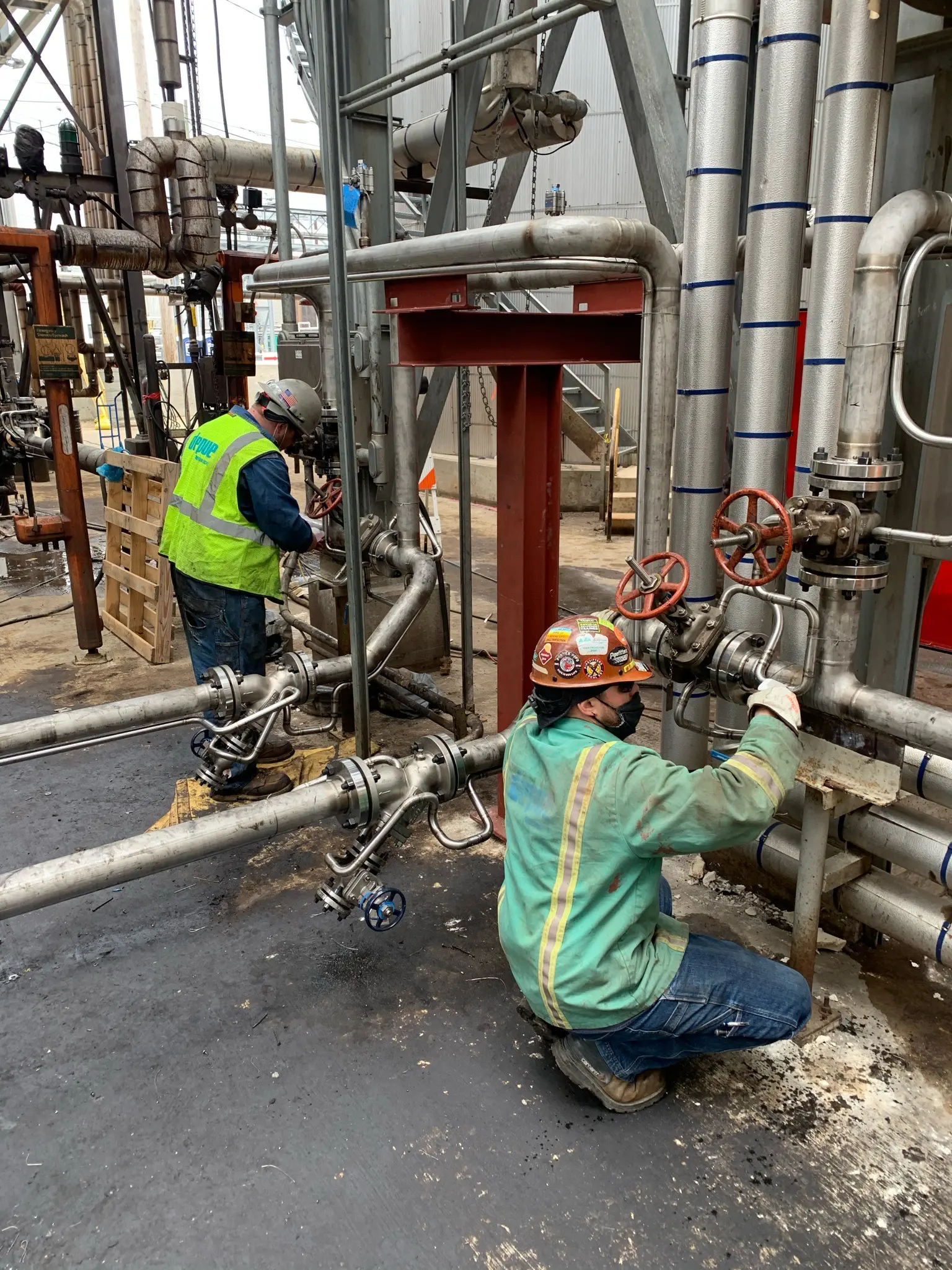
DePue develops and manages the master project schedule with input from the facility and project team. Depending on project complexity, that can include CPM scheduling, look-ahead schedules, procurement tracking, milestone management, subcontractor sequencing, shutdown planning, and daily coordination during critical construction windows.
Cost management can include budget tracking, committed-cost tracking, subcontractor cost management, change-order logs, owner approval workflows, and forecast-at-completion reviews. DePue's quality and cost management approach is intended to keep the owner informed as conditions, scope, and project decisions evolve.
- Master project scheduling
- CPM scheduling when appropriate
- Short-term look-ahead schedules
- Milestone tracking
- Shutdown and tie-in schedules
- Long-lead procurement tracking
- Equipment procurement
- Subcontractor scheduling
- Budget tracking
- Committed-cost tracking
- Change-order management
- Owner change approval
- Cost forecasting
- Project progress reporting
Built Around an Operating Facility
Industrial construction becomes more complicated when the facility around the project cannot simply stop operating.
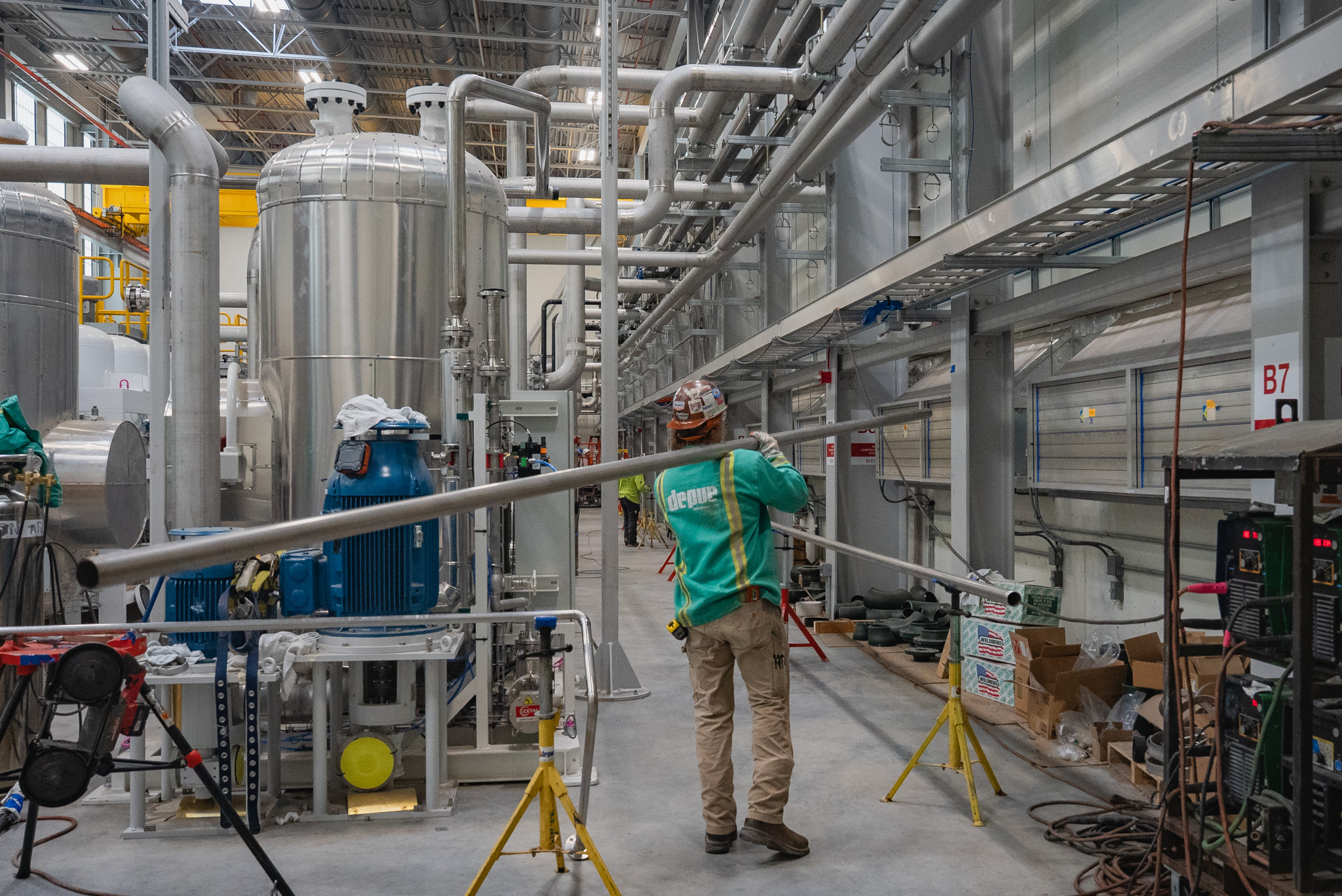
DePue develops schedules and work plans with the plant to account for production, access, sanitation, safety, existing utilities, equipment movement, shutdown windows, tie-ins, temporary conditions, and other facility-specific constraints.
Our experience with shutdown and turnaround work also helps the Prime GC team plan backwards from the moments when systems must be taken offline, modified, tested, and returned to service.
- Work around active production
- Shutdown and outage planning
- Tie-in sequencing
- Production-impact planning
- Temporary-system coordination
- Access and logistics planning
- Equipment-movement planning
- Existing-utility coordination
- Prefabrication and staging
- Field verification
- Critical-path mechanical scheduling
- Restart coordination
Have a project tied to a shutdown window?
Discuss Your Project Schedule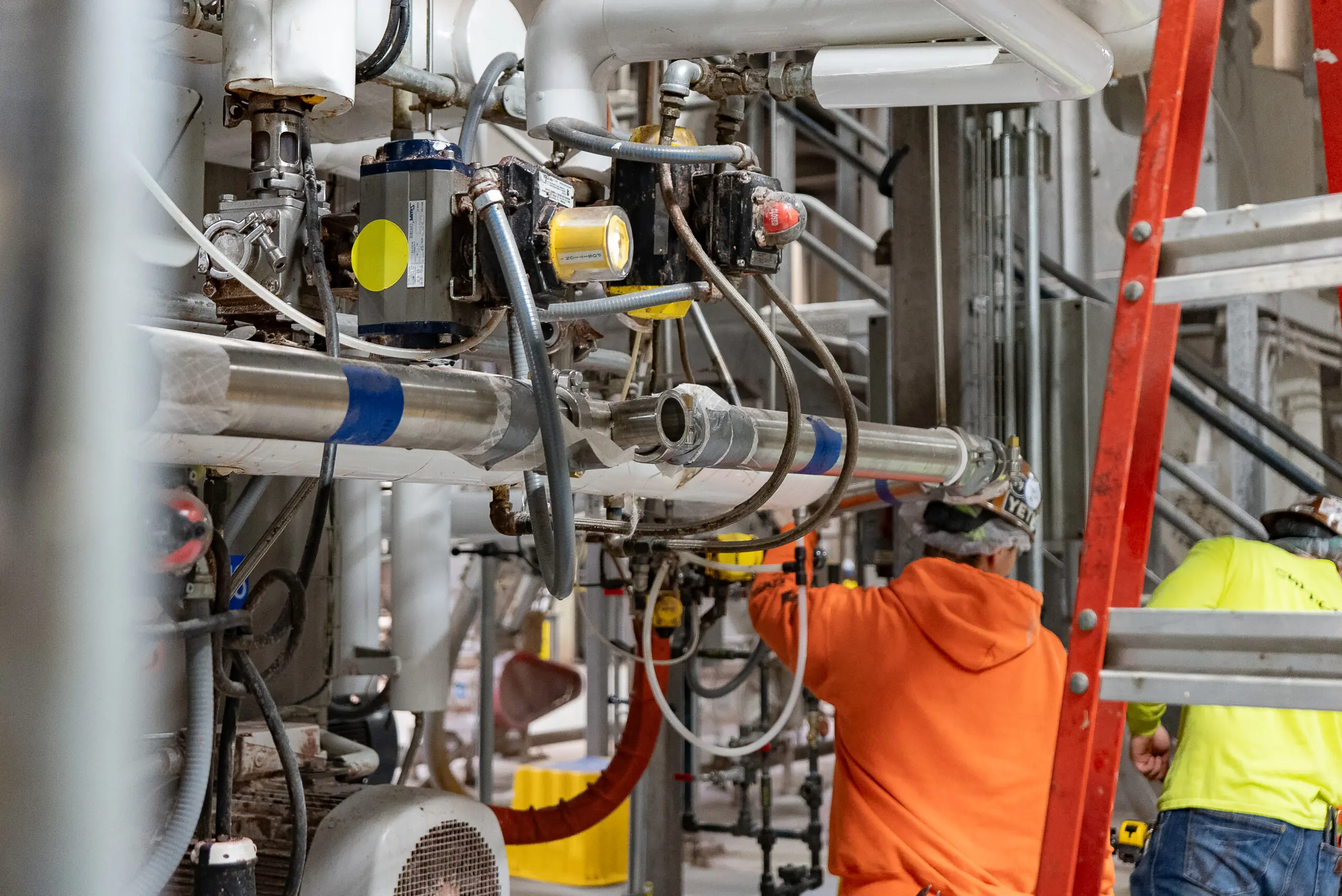
Safety Leadership Across the Entire Project
When DePue holds the Prime contract, our safety responsibility extends beyond our own mechanical workforce to the coordination and expectations established for the broader project team.
DePue manages subcontractor safety orientation, JHAs, site requirements, and coordination with facility-specific safety procedures. All DePue foremen are OSHA-30 trained, and our current EMR is 0.79.
That experience is particularly important in PSM and other highly regulated operating environments, including food and beverage, chemical and process, oil and refining, power generation, and facilities operating under GMP, FDA, USDA, or other site-specific requirements. Additional information about our safety program is available on our Safety page.
- Current EMR of 0.79
- OSHA-30-trained DePue foremen
- Prime-contractor site safety responsibility
- Subcontractor safety coordination
- Job Hazard Analyses
- Site-specific orientations
- Facility safety-rule compliance
- PSM facility experience
- Regulated industrial environments
- Shutdown and high-risk work planning
- Safety coordination across multiple trades
Permits, Inspections & Project Compliance
Holding the Prime contract also means managing the administrative and regulatory steps that allow the work to move forward.
DePue can coordinate project permitting, individual trade requirements, inspections, and communication with the applicable authority having jurisdiction. The exact responsibility can vary by municipality and project, but DePue manages those requirements as part of the overall project plan rather than leaving the owner to coordinate each trade independently.
- General and building permit coordination
- Trade-permit coordination
- Authority Having Jurisdiction communication
- Inspection scheduling
- Subcontractor inspection requirements
- Code-compliance coordination
- Project-specific documentation
- Owner and engineer communication
- Punch-list coordination
- Closeout requirements
Startup, Commissioning Coordination & Turnover
Construction completion is not the same as project completion. Equipment, utilities, mechanical systems, controls, and other project components still have to be inspected, tested, started, and turned over in the correct sequence.
As Prime GC, DePue manages startup and commissioning coordination with the appropriate plant personnel, OEM representatives, engineers, electrical contractors, controls contractors, testing providers, and other project partners. The actual commissioning of individual systems may be performed by the party responsible for that system rather than by DePue directly.
Closeout includes management of punch-list work and project-specific turnover requirements, which can include inspection and testing records, QC documentation, redlines or as-built information when applicable, and other required construction records.
- Startup planning
- OEM coordination
- Electrical and controls coordination
- Testing-provider coordination
- Commissioning coordination
- Inspection completion
- Punch-list management
- QC documentation
- Project-specific test records
- Redlines and as-built information when required
- Closeout documentation
- Owner turnover
Contracting Options That Match the Project
The right commercial structure depends on how defined the scope is, how early DePue becomes involved, and how the owner wants project risk and cost visibility managed.
DePue regularly works under lump-sum, time-and-material, negotiated owner-direct, competitive-bid, design-build, and other project-specific arrangements. Cost-plus, GMP, and unit-price structures can also be used when the project delivery model calls for them.
On applicable Construction Management engagements performed for the owner, DePue can also provide open-book cost transparency so the owner has visibility into project and subcontractor costs.
- Lump sum / stipulated sum
- Negotiated owner-direct contracts
- Time and material
- Competitive bid
- Design-build
- Cost-plus when appropriate
- Guaranteed Maximum Price when appropriate
- Unit pricing when appropriate
- Construction Management
- Open-book cost transparency on applicable CM projects
Have questions about how to structure the project?
Discuss Your Capital Project
Industrial Markets We Serve
DePue's Prime GC model is designed around facilities where process equipment, mechanical systems, utilities, production requirements, and operating constraints shape the construction plan.
Our experience spans food and beverage, chemical and process, oil, gas and refining, power generation, industrial and manufacturing, water and wastewater, commercial facilities, and municipal projects. The scope and delivery model are tailored to the facility rather than applying a generic building-construction process to every project.
- Food and beverage
- Chemical and process
- Oil, gas and refining
- Power generation
- Industrial and manufacturing
- Water and wastewater
- Commercial buildings
- Municipal facilities
- Operating production facilities
- Regulated industrial environments
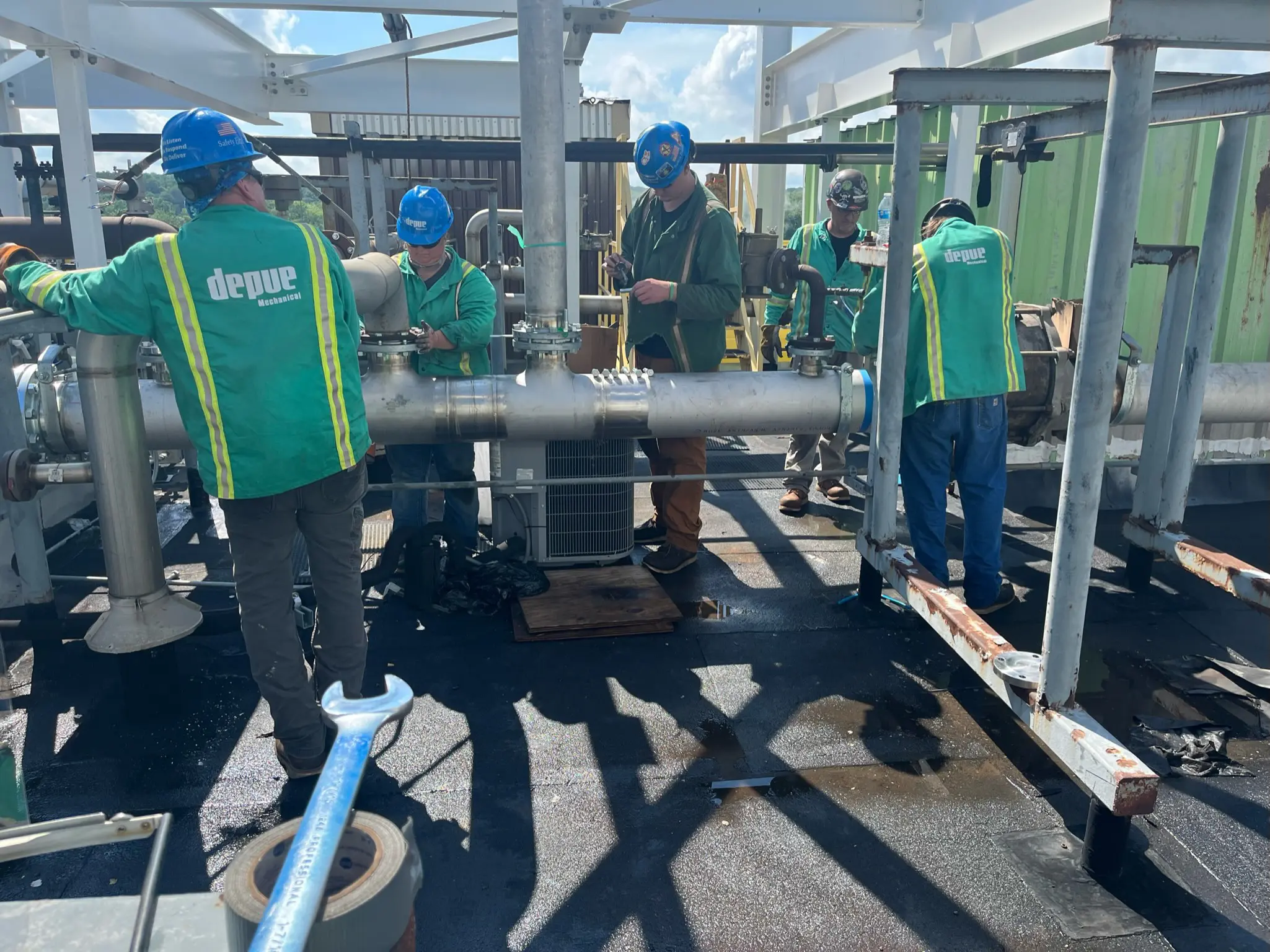
$7M Design-Build Extruder Addition
On a $7 million extruder addition, DePue served in a design-build and Prime GC role to support installation of new process equipment that automated a batch process into bulk storage.
The project required coordination of building modifications, storage tanks, large equipment, process utilities, foundations, and multiple supporting trades. DePue's scope included roof modification and platform installation, heavy equipment setting, process piping, utility piping, and foundation-related coordination.
DePue also managed the engineering, structural steel, civil, millwright, masonry, painting, and other project partners required to deliver the complete capital improvement.
- $7 million project value
- Design-build delivery
- New process equipment installation
- Roof modification and platform work
- Storage tanks
- Heavy equipment setting
- Process piping
- Utility piping
- Foundation scope
- Engineering coordination
- Structural trade coordination
- Civil and specialty subcontractor management
Planning a mechanically complex plant expansion?
Discuss a Similar Project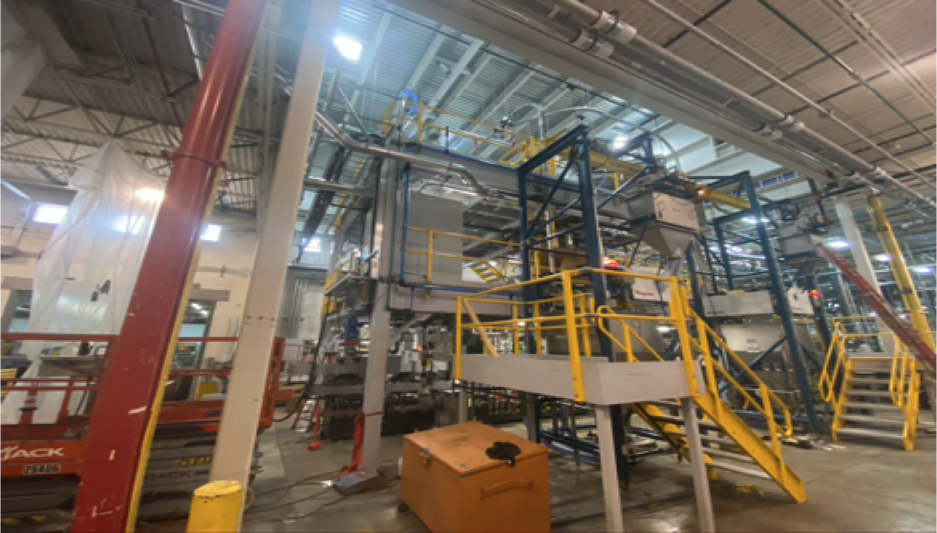
$3M Automated Caramel Plant
A $3 million automated caramel plant project required process equipment, structural systems, sanitary and utility piping, building modifications, and multiple specialty trades to function as one coordinated installation.
The project included design and 3D coordination, a 30-foot by 90-foot stainless-steel platform, equipment setting, sanitary and utility piping, plumbing, insulation, structural fabrication, electrical and controls, and civil foundation work.
DePue managed the multi-trade project while coordinating the mechanical construction around the equipment and process requirements. Additional project details are available in our Automated Caramel Popcorn Plant case study.
- $3 million project value
- Design and 3D coordination
- 30' × 90' stainless-steel platform
- Equipment setting
- Sanitary piping
- Utility piping
- Plumbing coordination
- Structural fabrication
- Electrical and controls coordination
- Civil foundations
- Insulation
- Multi-trade project management
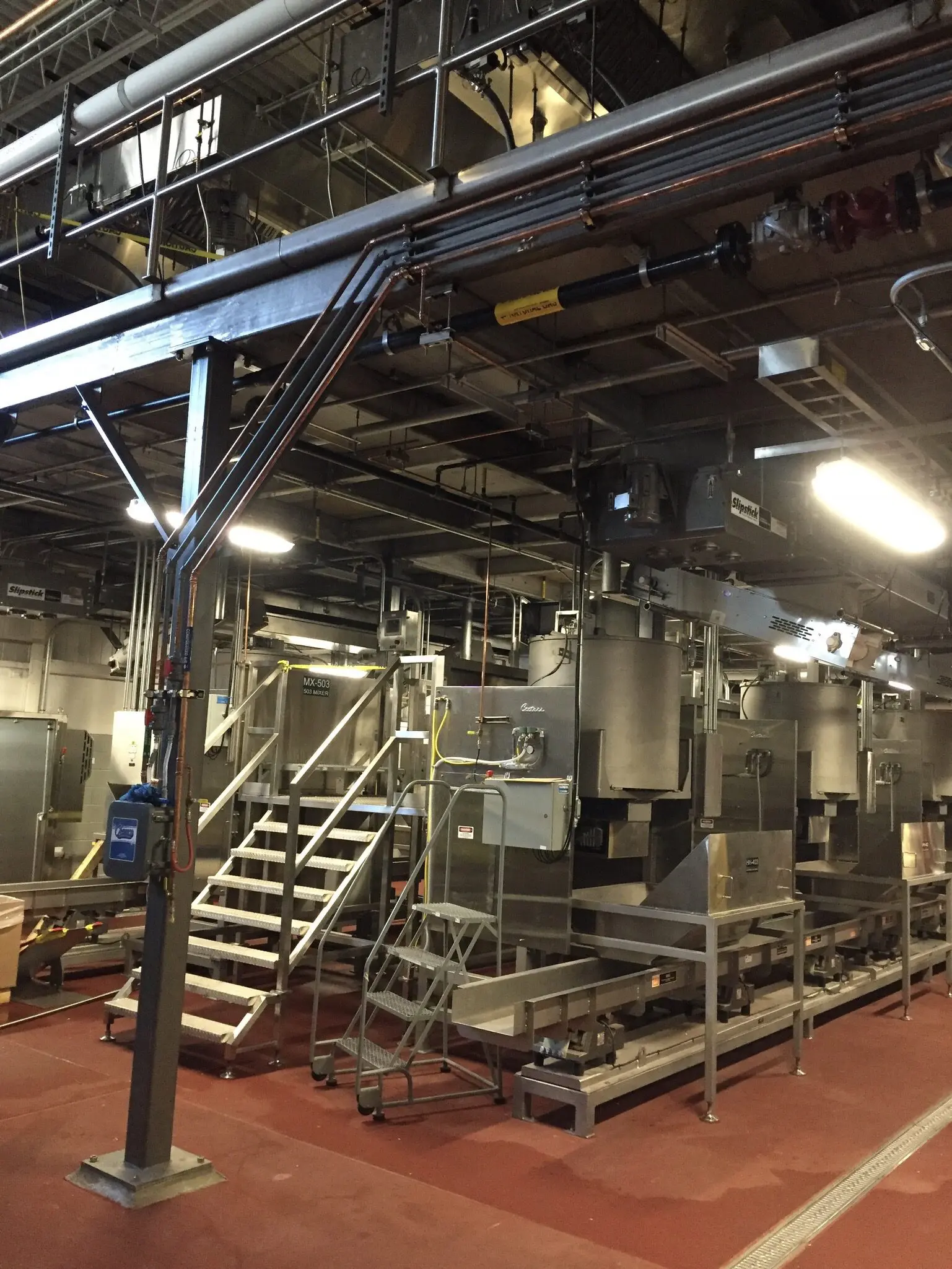
Food Plant Expansion With No Schedule Overruns
At an operating food manufacturing plant in Geneva, Illinois, DePue served as Prime General Contractor for a multi-trade expansion that required mechanical construction, subcontractor coordination, and careful planning around production requirements.
DePue coordinated the project schedule, electrical and controls subcontractors, mechanical installation, and final startup and turnover. The completed project beat the facility's production ramp-up targets and was delivered with zero schedule overruns.
The project demonstrates why a mechanically led Prime GC can be valuable inside an operating facility: the contractor responsible for managing the complete project also understands the piping, utilities, equipment, shutdown requirements, and field conditions driving the work. Read the full Food Manufacturing Plant Expansion case study.
- Prime General Contractor
- Operating food manufacturing facility
- Multi-trade expansion
- Mechanical construction
- Electrical and controls subcontractor coordination
- Schedule management
- Production coordination
- Startup and turnover management
- Production ramp-up targets exceeded
- Zero schedule overruns
Have a plant expansion in planning?
Discuss Your Capital Project
INDUSTRIAL PRIME GC FAQ
What Plant Teams Ask Before Awarding the Prime Contract
A: When DePue holds the Prime contract, we are responsible for managing the overall construction project rather than performing only one mechanical subcontract. That can include preconstruction, budgeting, engineering coordination, procurement, scheduling, subcontractor management, permits, safety, construction, inspection coordination, commissioning coordination, closeout, and turnover.
Q: When does it make sense to use DePue as the Prime GC?
A: DePue is an especially strong fit when piping, utilities, equipment, HVAC, boilers, structural systems, or other mechanical scopes drive the complexity of the project. This commonly includes plant expansions, process-line installations, equipment replacements, utility upgrades, mechanical-room projects, shutdown work, and other multi-trade industrial capital projects.
Q: What construction scopes does DePue self-perform?
A: DePue self-performs industrial and process piping, utility piping, pipe fabrication, HVAC, sheet metal and ductwork, boiler and code welding, equipment setting, rigging, structural steel fabrication, and structural steel erection. Demolition, testing and balancing, and certain other scopes may be self-performed or subcontracted depending on the project.
Q: What trades does DePue subcontract and manage?
A: Depending on the project, DePue may manage qualified subcontractors for electrical, controls, engineering, excavation, concrete, civil work, insulation, coatings, fire protection, roofing, architectural scopes, crane services, and other specialty trades required to complete the project.
Q: Can DePue use our facility's preferred subcontractors?
A: Yes. DePue typically works with established trade partners, but we can also incorporate facility-preferred subcontractors when the owner already has electrical, controls, civil, engineering, or other contractors they want involved. Those contractors are still coordinated through the overall project schedule, safety plan, and Prime GC structure.
Q: Can DePue get involved before the design is complete?
A: Yes. DePue routinely becomes involved during conceptual and preconstruction stages. We can help develop scope, perform site reviews, provide ROM budgeting, evaluate constructability and phasing, identify engineering requirements, develop preliminary schedules, and determine what information is still needed before the project is ready for construction.
Q: Does DePue provide industrial design-build services?
A: Yes. DePue performs design-build projects and can contract and manage the appropriate engineering consultants as part of the project team. On other projects, the owner may retain its own engineer and DePue will coordinate construction directly with that design team.
Q: Does DePue perform all engineering in-house?
A: No. DePue provides construction-led design support, BIM/VDC, field verification, constructability, fabrication coordination, and mechanical project input. When licensed or specialized engineering is required, the appropriate engineering consultant is retained either by DePue or by the owner depending on the project delivery model.
Q: How does DePue control the project schedule?
A: DePue develops the master project schedule with input from the plant or facility. Depending on the project, schedule controls may include CPM scheduling, milestone tracking, short-term look-ahead schedules, subcontractor sequencing, procurement tracking, shutdown and tie-in schedules, and daily coordination during critical construction windows.
Q: How does DePue manage project costs and change orders?
A: Cost management can include budget tracking, committed-cost tracking, subcontractor cost management, change-order logs, owner approval workflows, and forecast-at-completion reviews. Changes are communicated and documented so the owner can understand their scope, cost, and schedule impact before work proceeds when project conditions allow.
Q: Can DePue manage construction while the facility remains operational?
A: Yes. A significant portion of DePue's work takes place inside operating industrial facilities. Construction planning can account for production schedules, access limitations, sanitation requirements, existing utilities, shutdown windows, tie-ins, temporary conditions, equipment movement, and other constraints that affect an active plant.
Q: Who is responsible for site safety when DePue is the Prime GC?
A: DePue has Prime-contractor site safety responsibility and manages subcontractor safety coordination, orientations, JHAs, project requirements, and communication with the facility's safety program. DePue's current EMR is 0.79, and all DePue foremen are OSHA-30 trained.
Q: Does DePue handle permits and inspections?
A: Yes. DePue can manage project permitting, trade-permit coordination, inspection scheduling, and communication with the applicable authority having jurisdiction. Specific responsibilities can vary by municipality, project type, and owner requirements.
Q: Does DePue perform commissioning?
A: DePue manages startup and commissioning coordination as part of the Prime GC role. The actual commissioning of individual equipment or systems may be performed by the appropriate OEM, engineer, controls contractor, testing provider, or other qualified party depending on the project.
Q: What contract and pricing models does DePue use?
A: DePue works under several project structures, including lump-sum or stipulated-sum contracts, negotiated owner-direct contracts, time and material, competitive bid, design-build, and Construction Management. Cost-plus, GMP, and unit-price arrangements can also be used when they fit the project delivery model.
Q: Can DePue provide open-book project cost transparency?
A: Yes, on applicable Construction Management engagements performed for the owner. In those situations, DePue can provide an open-book approach that gives the owner visibility into project and subcontractor costs.
Q: What industries does DePue serve as a Prime General Contractor?
A: DePue's Prime GC experience includes food and beverage, chemical and process, oil, gas and refining, power generation, industrial and manufacturing, water and wastewater, commercial facilities, and municipal projects.
Q: Does DePue build ground-up industrial projects?
A: Yes, when the project has a meaningful mechanical or industrial construction component. DePue is not positioned as a general contractor for residential construction, high-rise construction, or projects driven primarily by architectural interiors, roofing, electrical, or civil/site work with little mechanical scope.
Q: Where does DePue provide Prime General Contracting services?
A: DePue's primary Prime GC market is Northern Illinois and Greater Chicago. We may also manage select projects outside Illinois for established and legacy clients. Self-performed labor availability is coordinated based on the applicable union jurisdiction and project location.
Q: What information should we have before contacting DePue about a capital project?
A: A complete drawing set is not required. DePue can begin with an operational need, project concept, equipment requirement, preliminary scope, existing drawings, budget target, desired completion date, or shutdown requirement. The first step is understanding what the facility needs to accomplish and how far the project has already been developed.
Recent Projects
We listen. We respond. We deliver.
-
Adhesives Chemical Refinery
Adhesives Chemical Refinery
Learn more -
The Field Museum
Field Museum
Learn more