PROJECTS
VDC Coordination and Stainless Steel Process Piping at a Geneva Food Manufacturing Facility
Construction-Focused Routing, Spool Planning, Fabrication, and Installation for a Heated Chocolate Liquor Distribution System
Construction-Focused Routing, Spool Planning, Fabrication, and Installation for a Heated Chocolate Liquor Distribution System
Heated Chocolate Liquor Transfer and Distribution System
Industrial Mechanical Design & VDC/BIM Services in Illinois, Process Piping Contractor in Illinois, Pipe Fabrication Contractor in Illinois, Industrial Utility Piping Contractor in Illinois
2026
Geneva, Illinois
DePue Mechanical used Virtual Design and Construction early in the planning of a new heated chocolate liquor transfer and distribution system at a food manufacturing facility in Geneva, Illinois.
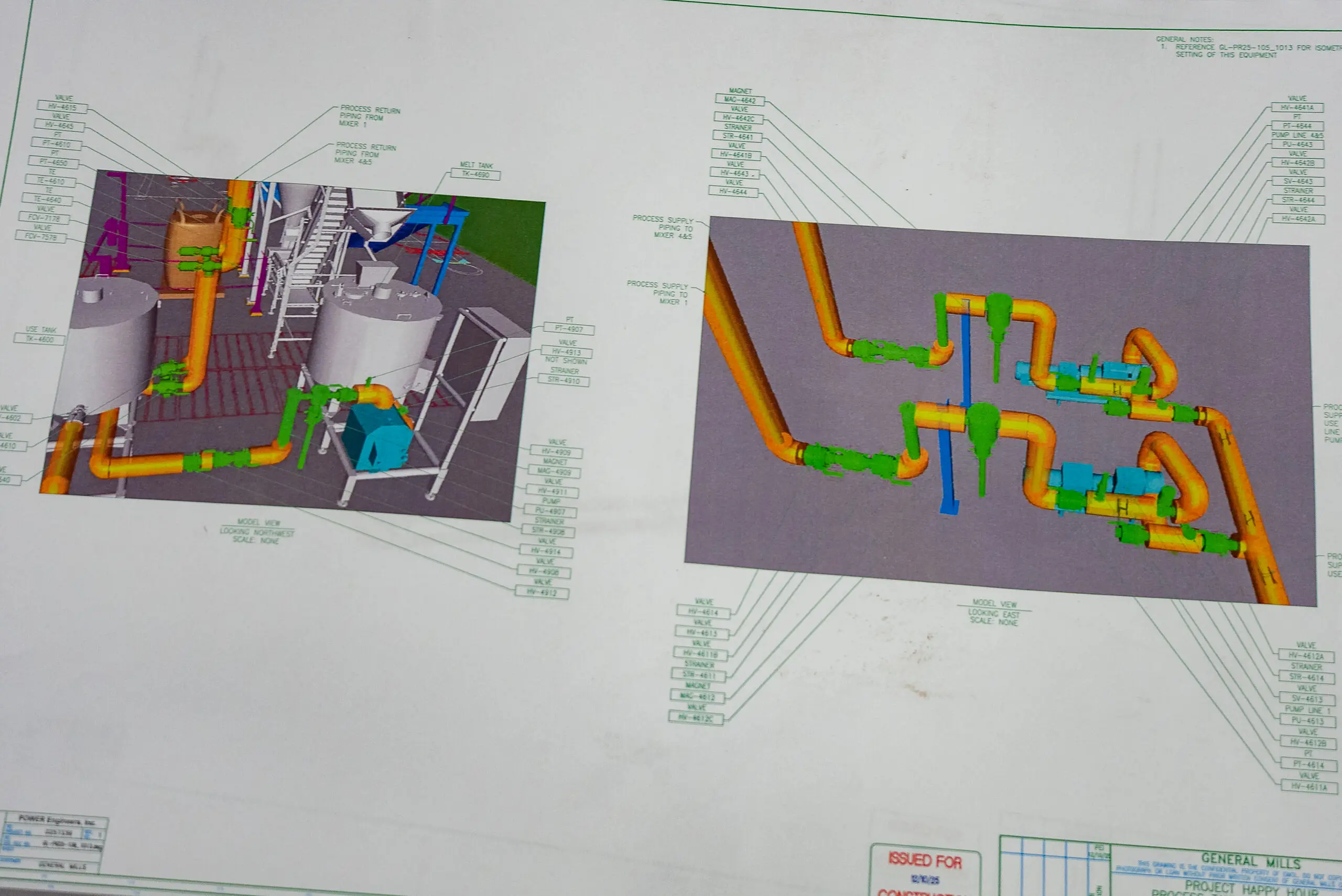
The system needed to move heated product from the melt tank to the use tank, through a distribution skid, and out to multiple mixers and injection points. That required more than drawing a line between pieces of equipment. The project team had to coordinate piping routes, tank and skid connections, supply and return lines, valves, instruments, supports, insulation, spool breakdowns, tie-in locations, and installation access before fabrication began.
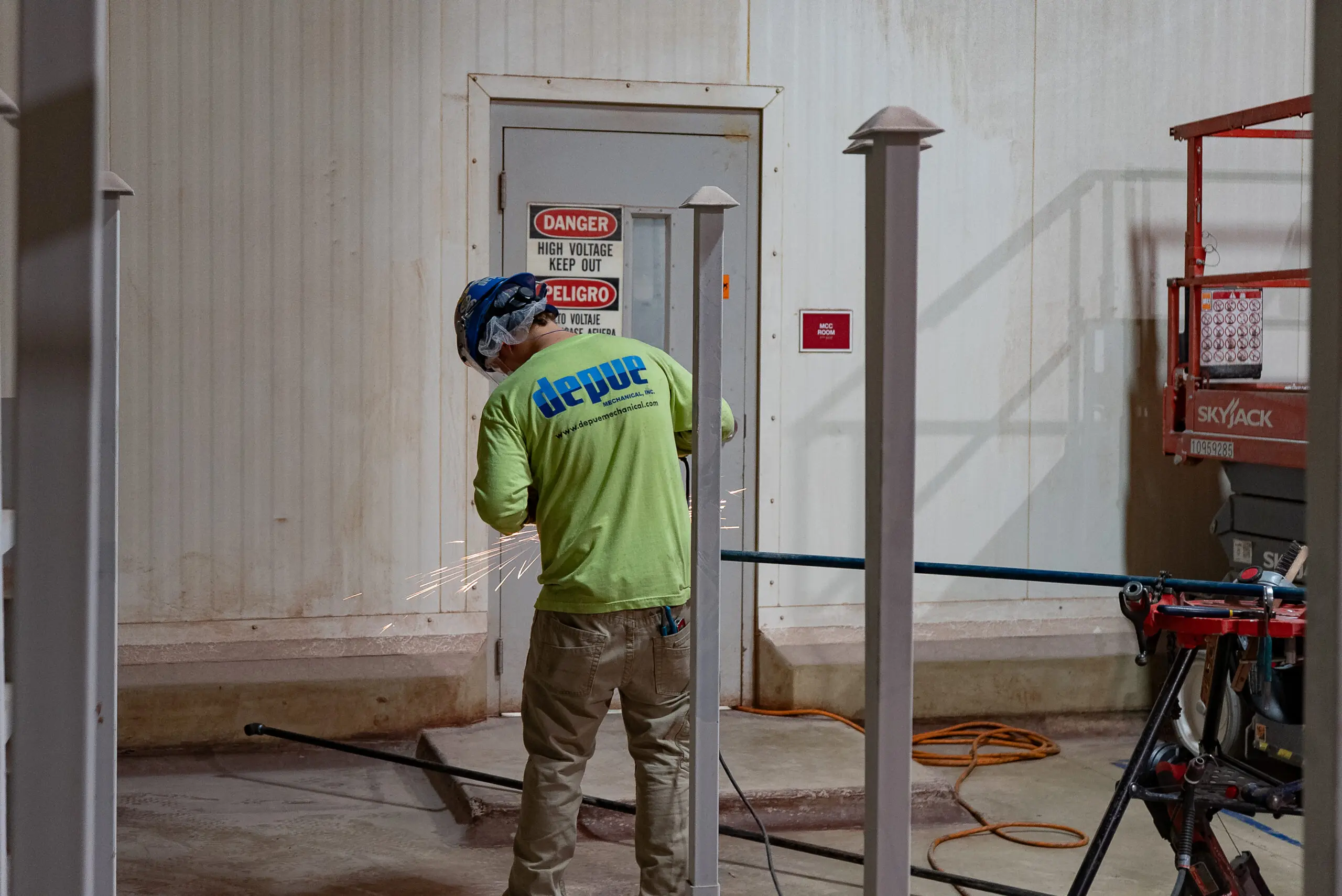
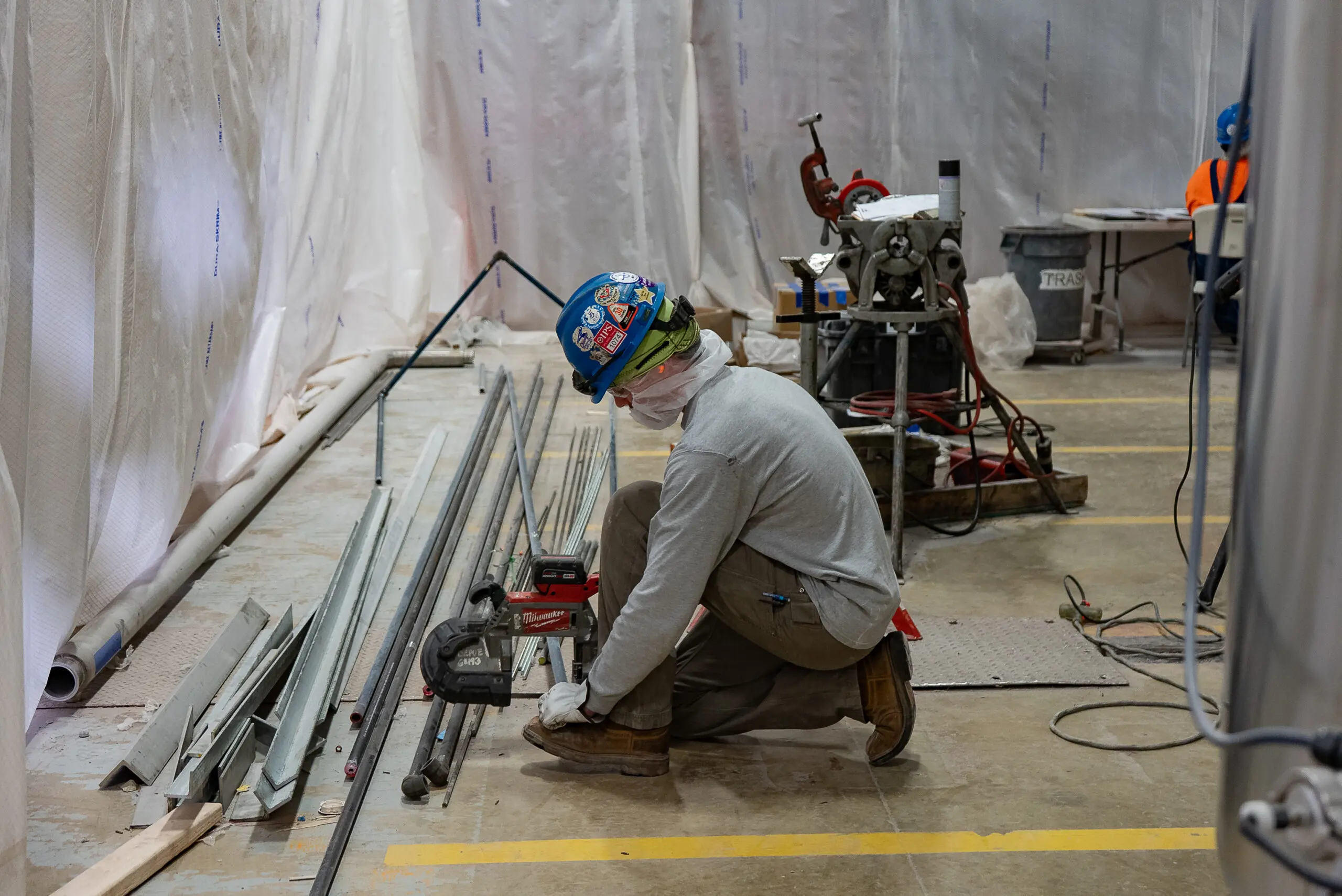
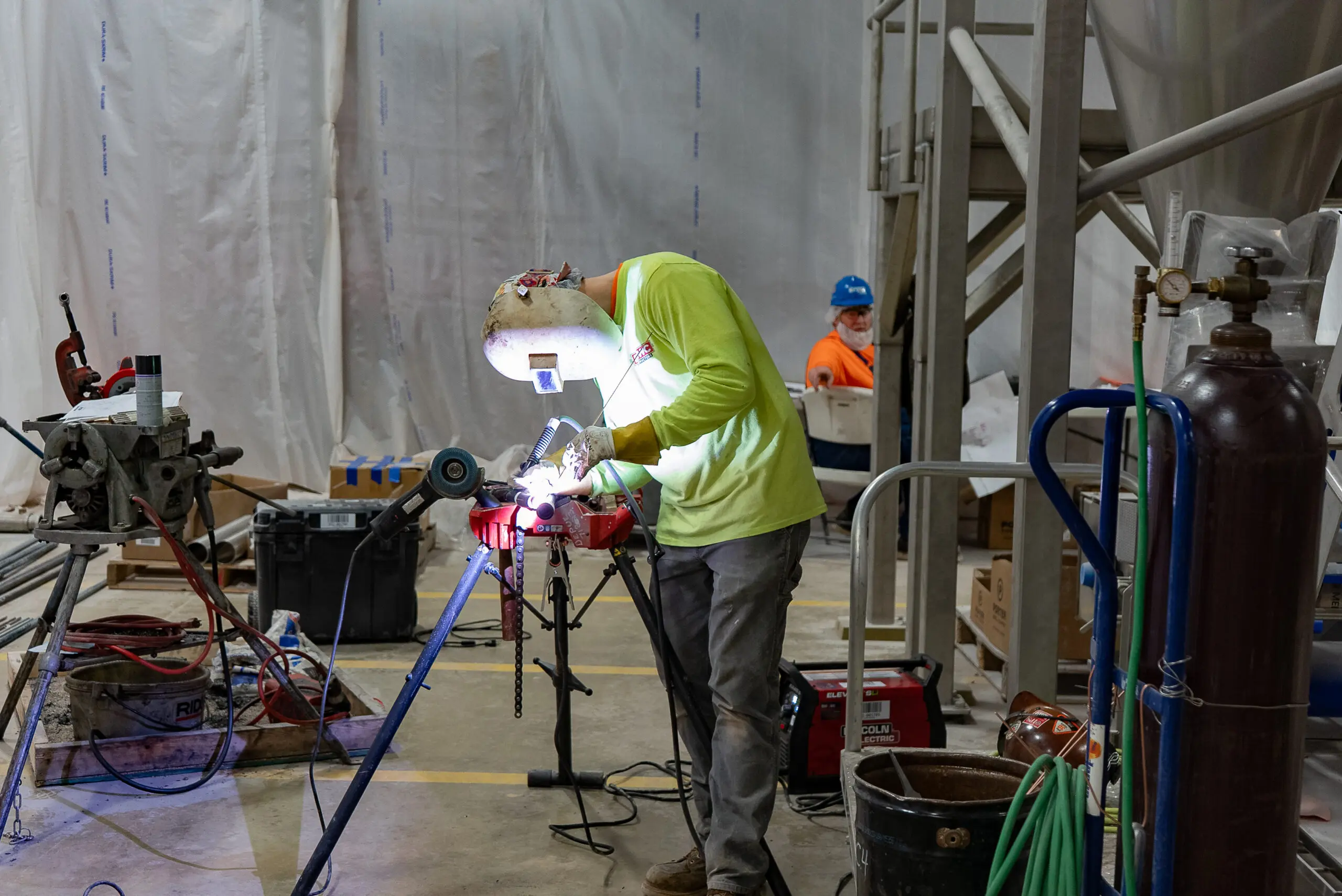
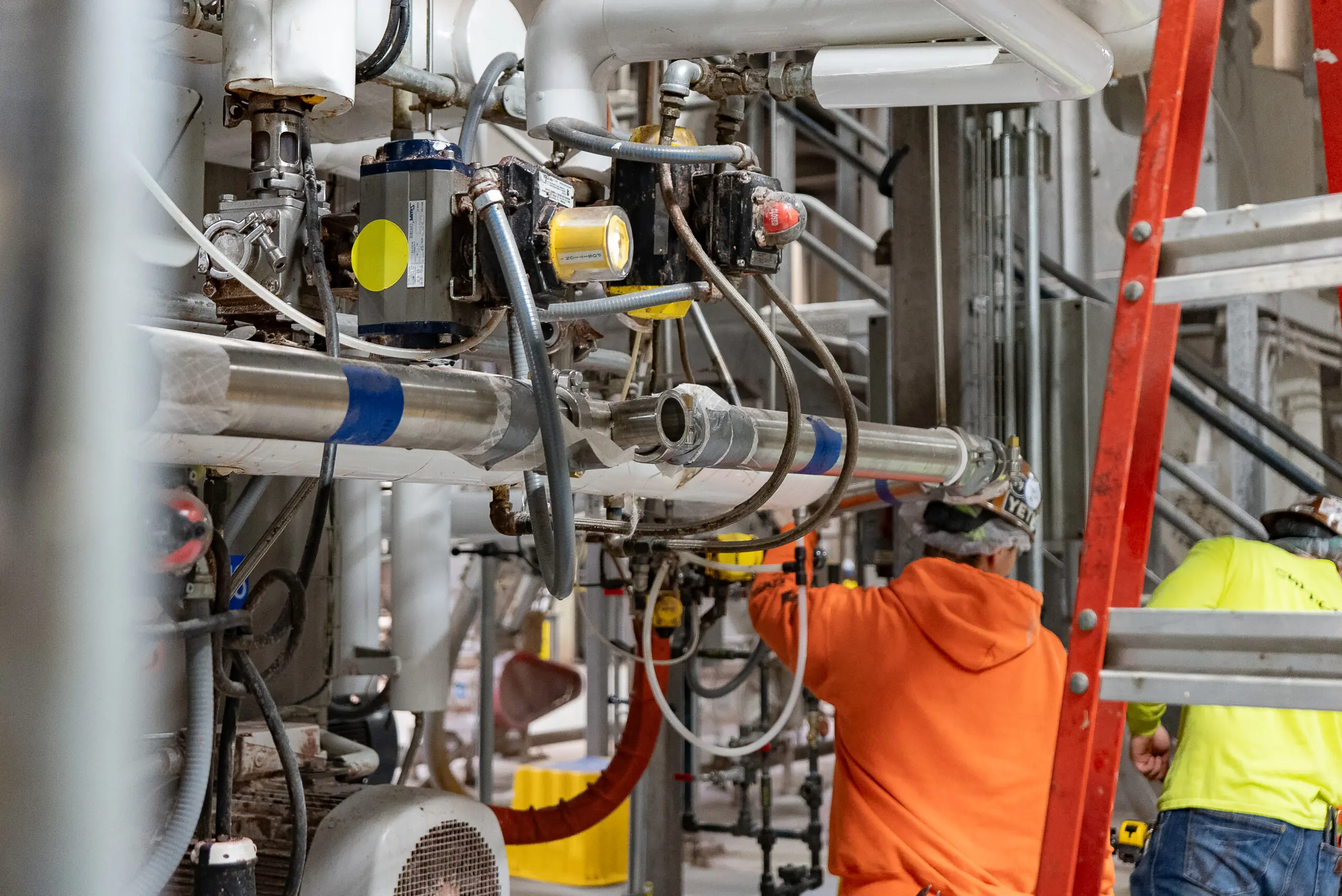
DePue’s VDC, project management, fabrication, and field teams worked from the same coordinated plan. From there, DePue fabricated and installed jacketed 304 stainless steel process piping, equipment connections, jumper assemblies, valves, flowmeters, flexible hoses, insulation, and pipe supports.
The broader mechanical project also included a new glycol heating skid and the utility piping needed to support temperature control, equipment operation, and production. The process scope connected the melt tank, use tank, distribution skid, pipe rack, and mixer areas identified in the project documents.
Moving heated chocolate liquor through a food manufacturing facility may sound straightforward. The complexity becomes clearer when routing, equipment connections, temperature control, supports, instruments, production requirements, and existing facility conditions must all be addressed at once.
The new system needed to connect the melt tank and use tank with the distribution skid and carry product to Mixers 1, 4, and 5. It also required multiple jumper and injection connections, mixer supply and return piping, pump connections, valves, flowmeters, flexible hoses, and temperature-control components.
Because portions of the process piping were constructed as jacketed stainless steel assemblies, the team had to consider more than the centerline of the product pipe. The outside jacket, fitting dimensions, valve and instrument orientation, insulation, support locations, spool sizes, and field installation path all affected whether the planned route could be fabricated and installed successfully.
Leaving those decisions to the field would have increased the risk of interference, difficult fit-up, oversized spools, inaccessible components, and avoidable rework. DePue’s construction-focused VDC approach is built around identifying those practical issues while the project team still has time to adjust the plan.
VDC was incorporated into the project from the start to give the shop and field teams a clearer plan before piping fabrication and installation began.
DePue used the available project information and field conditions to coordinate:
•Piping between the melt tank and use tank
•Connections to and from the distribution skid
•Main piping routes to the mixer areas
•Mixer halo supply and return piping
•Injection and jumper connection locations
•Valve, pump, flowmeter, and instrument orientation
•Pipe support locations
•Spool breakdowns for fabrication and installation
•Tie-in points and field-fit conditions
•Access for installation and future equipment operation
The objective was not simply to produce a visual model. The objective was to translate the process requirements into mechanical information that could be used to plan materials, create fabricable assemblies, coordinate supports, and guide field installation.
This approach reflects DePue’s broader mechanical design and VDC services: field verification, coordination, fabrication detailing, shop planning, and installation support are connected rather than handled as unrelated phases.
A model has limited value if it does not account for how pipe will be fabricated, moved through the facility, supported, lifted, connected, insulated, and maintained. DePue’s VDC team approaches those decisions from the perspective of the contractor responsible for building the work.
Once the routing and connection requirements were coordinated, DePue moved the process piping scope into fabrication and field installation.
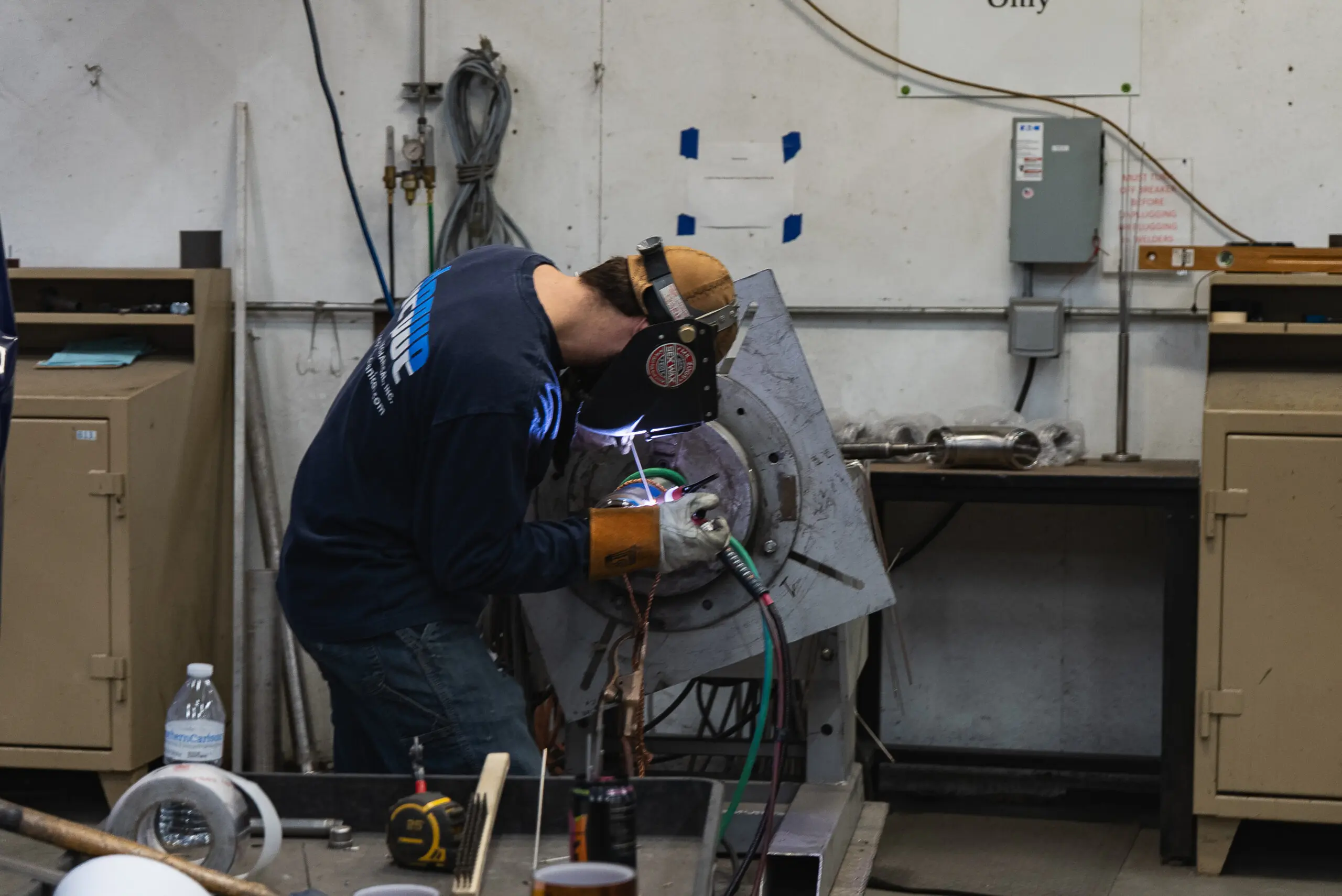
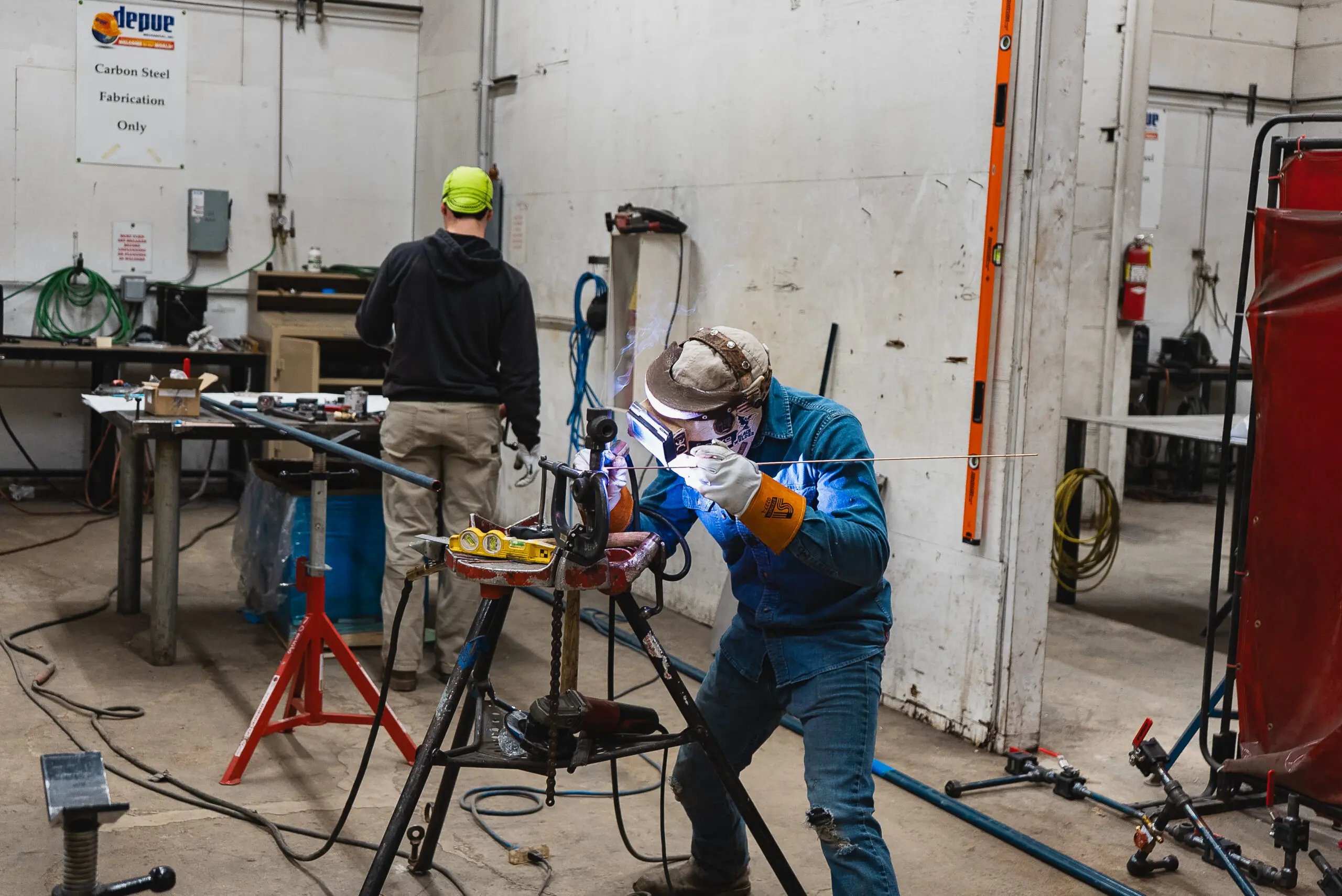
The primary process system included approximately 800 linear feet of 3-inch 304 stainless steel tubing within a 4-inch 304 stainless steel jacket. The scope also included specialty 2-inch and 3-inch jacketed piping segments connecting the melt tank, use tank, distribution skid, pipe rack tie-points, and mixer halos.
DePue’s process piping work included:
•Fabrication of jacketed stainless steel mains and specialty piping
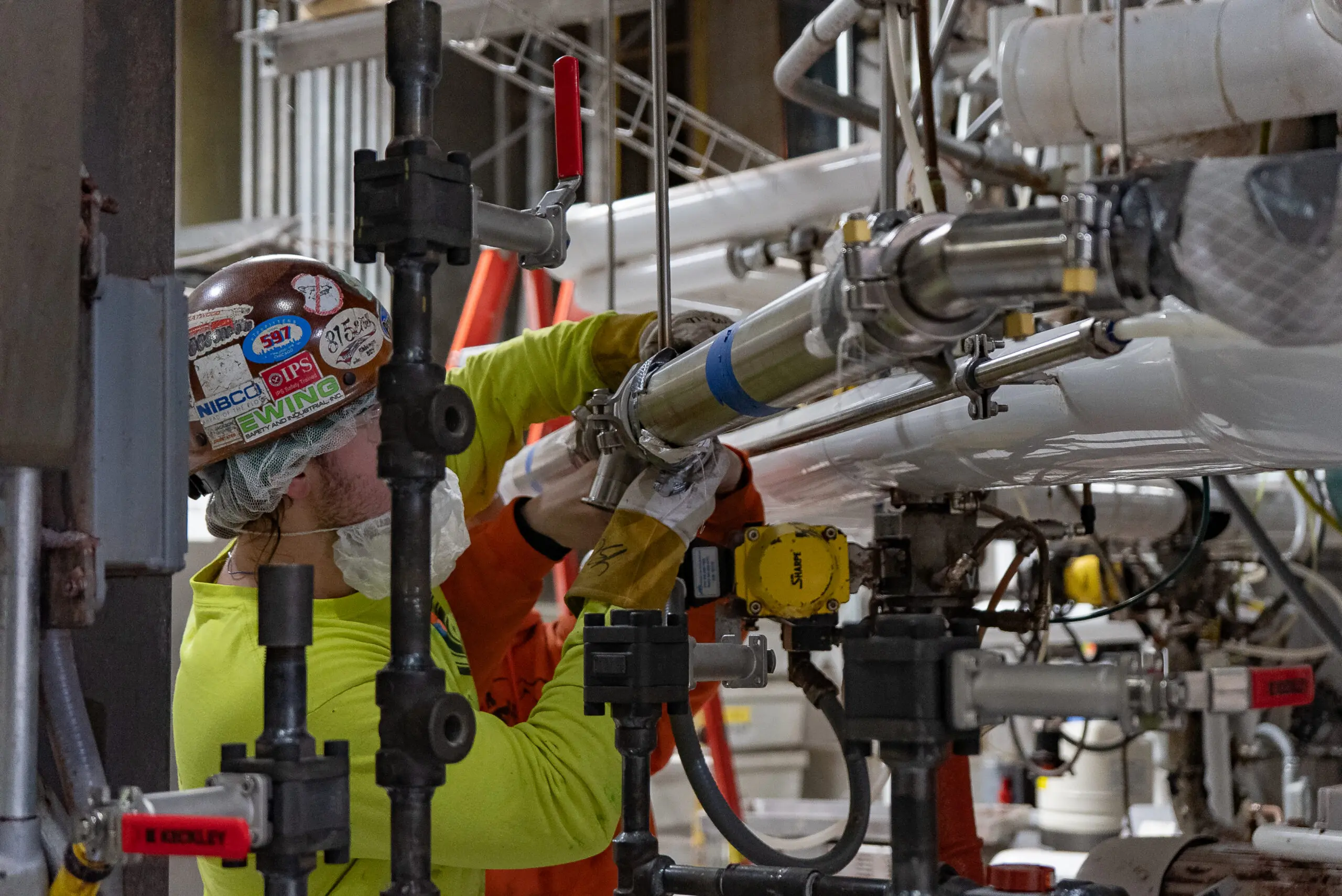
•Installation of process piping from the distribution skid to Mixers 1, 4, and 5
•Piping between the melt tank and use tank
•Piping between the distribution skid and fabricated main line
•Connections from the pipe rack to the use tank
•Connections from the pipe rack to the mixer halos
•Approximately 170 jumper connections within the primary process scope
•Installation of 32 manual valves
•Installation of 32 automated valves
•Installation of three flowmeters
•Compressed-air connections to required mixer users
•Thirty 3-inch flexible hoses with tri-clamp ends
•Insulated dummy connections positioned near injection locations
•Two inches of polyisocyanurate insulation with white PVC jacketing
•Removable insulation blankets around valves, flowmeters, and pumps
•New pipe supports coordinated with the installed piping
The project also included setting the melt transfer pump and completing additional piping and equipment connections around the distribution skid. That portion incorporated pumps, magnets, strainers, valves, specialty components, and additional jumper connections.
DePue’s industrial process piping services and pipe fabrication and prefabrication capabilities allowed the coordinated routing information to move directly into shop and field execution.
The heated product transfer system depended on supporting mechanical utilities as well as the stainless steel product piping.
DePue set and anchored the new glycol heating skid and installed the associated hot-glycol distribution system. The utility scope also included compressed-air and natural-gas piping serving equipment and controls throughout the project area.
The planned utility piping quantities included:
•Approximately 1,200 linear feet of hot-glycol carbon steel piping
•Approximately 400 linear feet of compressed-air copper piping
•Approximately 240 linear feet of natural-gas carbon steel piping
•Hot-glycol pumps
•Ball valves and check valves
•Compressed-air pressure gauges and regulators
•Control valves and circuit setters
•Air vents and instruments
•A natural-gas strainer, regulator, and flexible connection
•Three compressed-air manifolds serving the mixer and tank areas
The project documents also required utility piping supports, valves, insulation, jacketing, specialty components, checkout, and commissioning support.
Connecting the product piping and supporting utility work under one coordinated mechanical scope helped reduce gaps between the process, equipment, temperature-control, and production-support systems.
Learn more about DePue’s industrial utility piping services for glycol, compressed air, natural gas, heating, cooling, and production equipment.
The value of VDC on this project was not limited to what appeared on a screen.
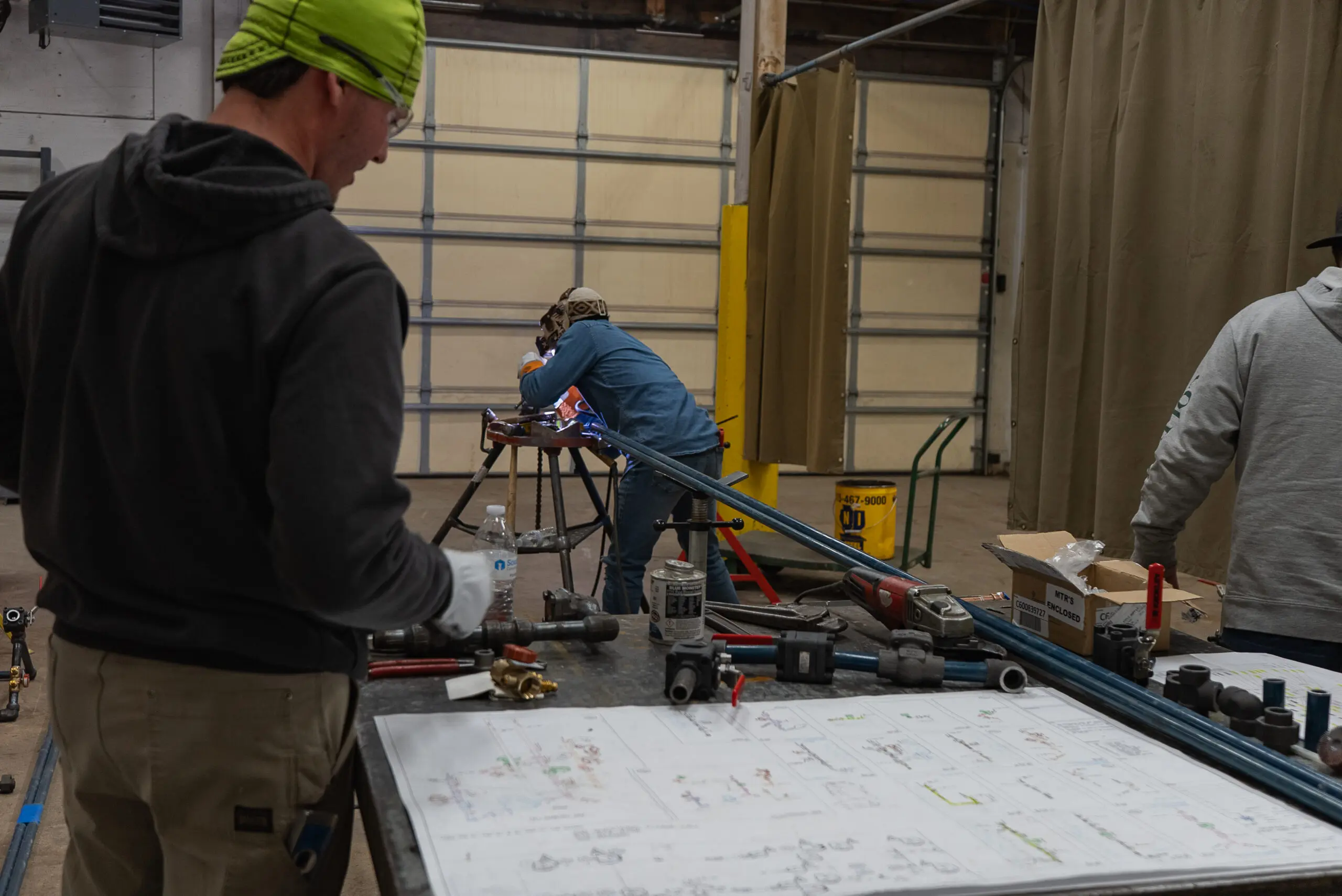
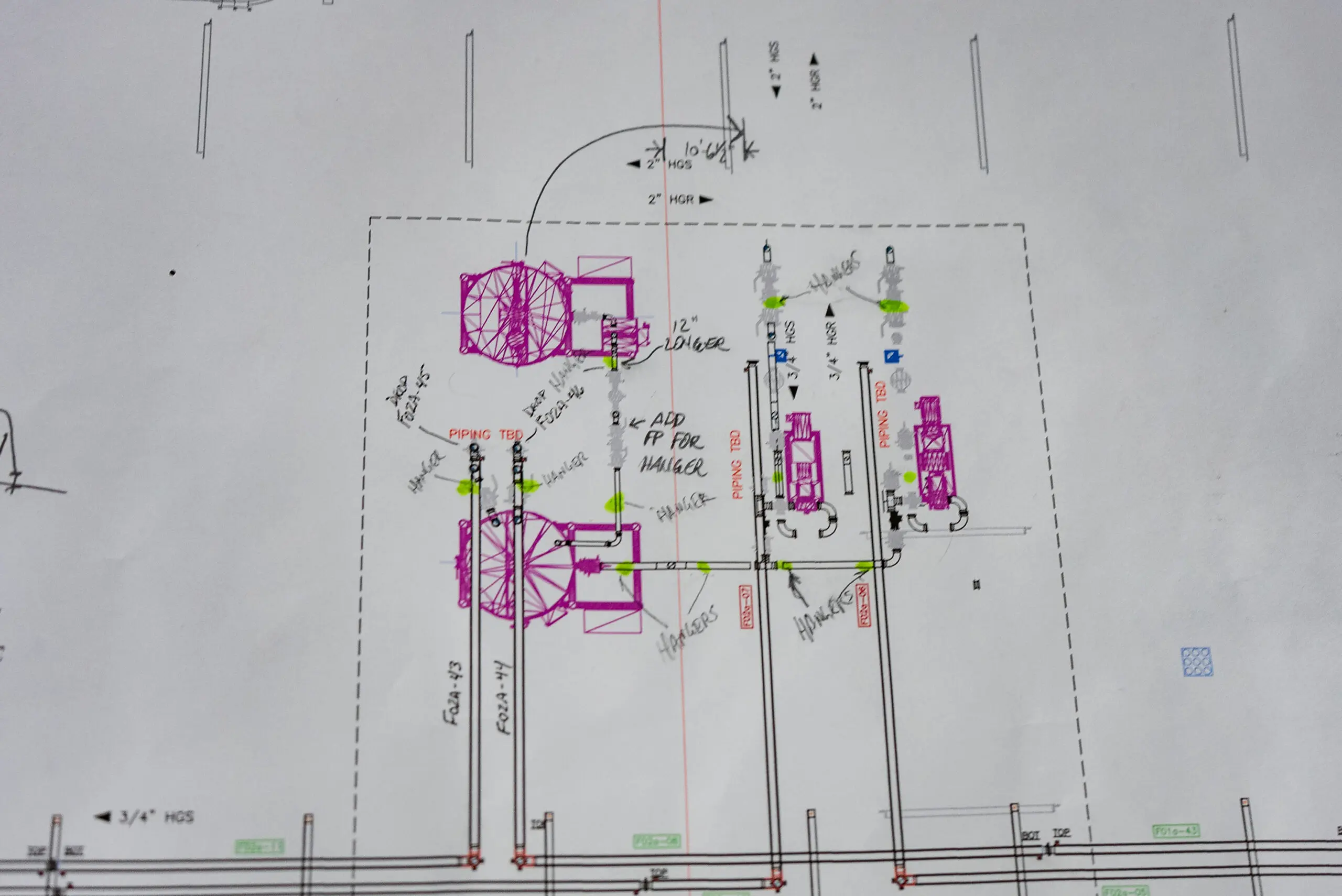
The coordinated drawings helped the project team establish where the piping needed to run, how assemblies should be divided into workable spools, where supports and connection points belonged, and how the system would move from the fabrication shop into the facility.
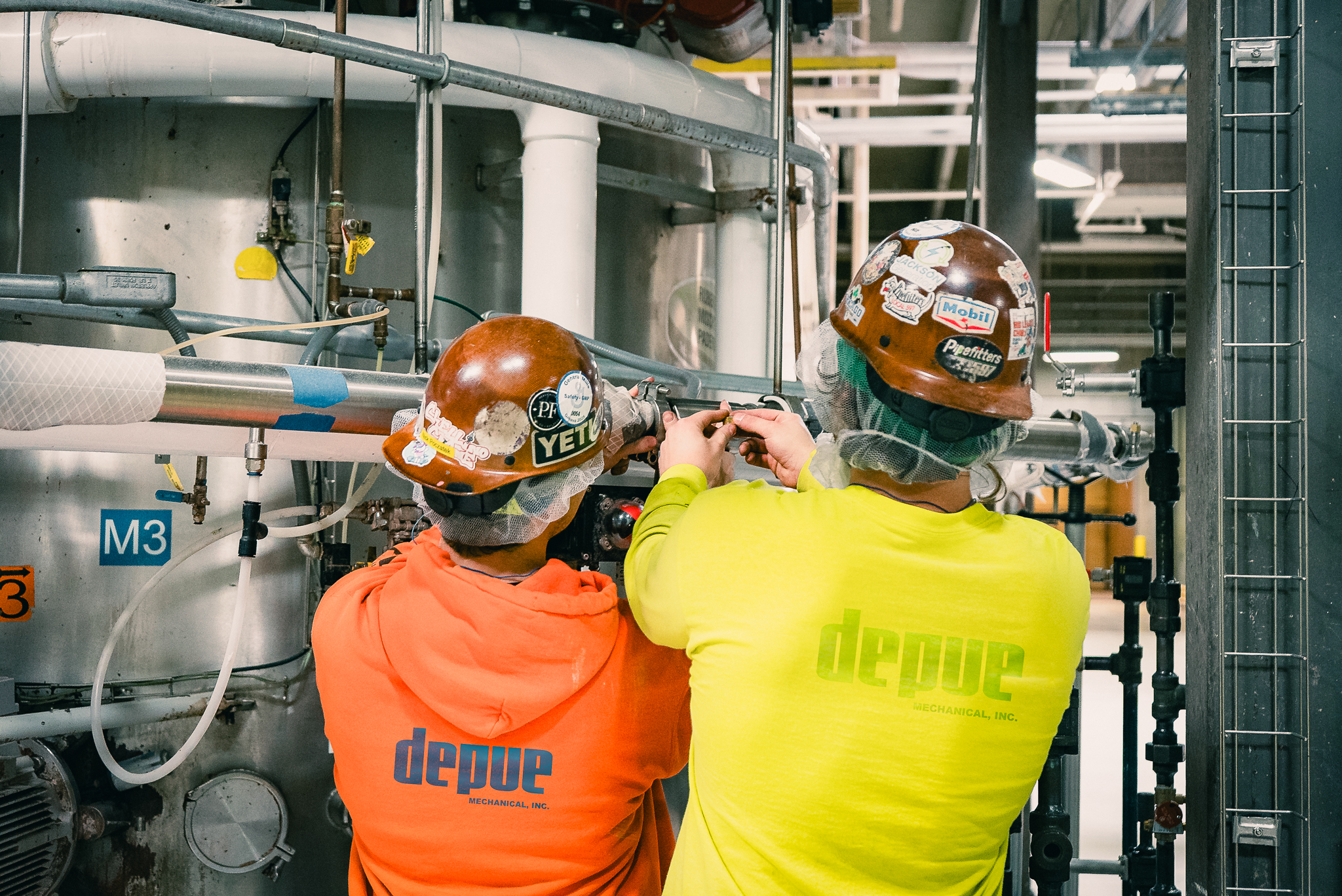
The fabrication team could use that information to prepare piping assemblies around the planned dimensions and connection requirements. Field personnel then had a clearer reference for installation, tie-ins, equipment connections, and support placement.
This connected workflow helped align:
VDC Coordination → Spool Planning → Shop Fabrication → Field Installation → Equipment Tie-Ins
When field-fit conditions arose, the team could evaluate them against the larger system rather than making an isolated routing decision that might create another conflict downstream.
DePue’s VDC service is structured around this model-to-construction relationship. The team considers fabrication, transport, staging, lifting, supporting, testing, and installation when developing fabrication-ready mechanical information.
The completed project provided the food manufacturing facility with a coordinated piping system built to move heated chocolate liquor from the melt and use tanks through the distribution skid and out to multiple mixers and injection locations.
Jacketed stainless steel process piping, hot-glycol utilities, insulation, valves, instruments, pumps, flexible connections, and pipe supports were brought together as connected parts of the same production system.
For the facility team, the project delivered:
•A coordinated product transfer route
•Connections to multiple tanks, mixers, and injection points
•Temperature-control support for the heated product
•Shop-fabricated piping planned around installation conditions
•Clearly established spool, support, and tie-in locations
•Integrated process and utility piping
•One contractor connecting VDC planning with fabrication and field execution
The result was a system built to keep product moving, maintain temperature, and support reliable production.
This project demonstrates why VDC is most useful when it is connected to the people who will fabricate and install the work. Good drawings do more than document the intended route. They help the project team identify problems earlier, make better construction decisions, and reduce the amount of mechanical coordination that must be improvised in the field.
This project demonstrates several DePue capabilities used for food manufacturing expansions, production-line modifications, equipment installations, and process-system upgrades:
Virtual Design and Construction Services
Industrial Process Piping
Pipe Fabrication and Prefabrication
Industrial Utility Piping
Equipment Setting
Mechanical Contracting for Food and Beverage Facilities
DePue Mechanical supports Illinois food and beverage facilities with construction-focused VDC, process piping design and coordination, pipe fabrication, equipment connections, utility piping, and field installation.
Projects involving heated products, tanks, mixers, skids, pumps, multiple injection points, or congested routing conditions benefit from early coordination. Reviewing the equipment information, proposed tie-ins, piping routes, temperature-control requirements, support conditions, fabrication strategy, and installation sequence before field work begins can help reduce avoidable surprises later.
To begin planning, send DePue your available:
•Process flow diagrams or P&IDs
•Equipment and skid drawings
•Existing facility layouts
•Proposed tie-in locations
•Product and utility piping specifications
•Valve and instrument schedules
•Photographs or scans of the project area
•Production and shutdown requirements
•Required fabrication or installation milestones
Request a Project Quote
Schedule a Site Walkdown